answer.
Ask question
Login Signup
Ask question
All categories
  • English
  • Mathematics
  • Social Studies
  • Business
  • History
  • Health
  • Geography
  • Biology
  • Physics
  • Chemistry
  • Computers and Technology
  • Arts
  • World Languages
  • Spanish
  • French
  • German
  • Advanced Placement (AP)
  • SAT
  • Medicine
  • Law
  • Engineering
wariber [46]
2 years ago
8

Many endangered species are predators that belong to the higher trophic levels. Which is the process that primarily affects anim

als at the highest trophic levels?A)eutrophication
B)species diversity
C)biomagnification
D)genetic diversity
E)acid rain
Biology
2 answers:
mariarad [96]2 years ago
5 0

Answer: C). biomagnification

Biomagnification is the phenomena in which toxic chemicals released from industrial and agricultural wastes flow into water bodies and contaminate them. These toxic chemicals causes diseases, genetic mutations,  birth defects and death in organisms which indirectly or directly take them. These toxic chemicals enters into the food chain and affects mainly the  organisms which are at higher trophic levels. They get settle at the bottom of the water body with sediments and organisms feed on these sediments. These toxic chemicals are not digested therefore they are transferred from one trophic level to higher trophic level in an undigested and unchanged form. In the highest trophic level the concentration of these toxic chemicals becomes highest and result in mortality of organisms. This shows magnifying and enlarged destruction of organisms in a food chain hence named biomagnification. It affects endangered species of predators like fishes, aquatic mammals and birds which eat fishes.    


nasty-shy [4]2 years ago
3 0

The correct answer is Biomagnification.

Biomagnification can be defined as the gradual increase in the concentration of the toxic chemicals at each trophic level. Lowest at the producers and highest at the higher trophic level.

The toxic chemicals such as industrial waste, radioactive waste that enters in the food chain and starts effecting the health of the plants and animals and its concentration increases at each trophic level.

The toxic chemicals gets transferred from the producers to consumers (predators except the primary consumers) and during this transfer the concentration increases.  

You might be interested in
The goal of the world resource simulation center is best described as _______.
olya-2409 [2.1K]
The goal of the World Resource Simulation Center is best described as solving current problems regarding world resource use. They also have visual facilities that shows the trends of global and regional issues, the relevance of the issues, and the consequences of the different strategies.

The answer would be letter A.
3 0
2 years ago
Read 2 more answers
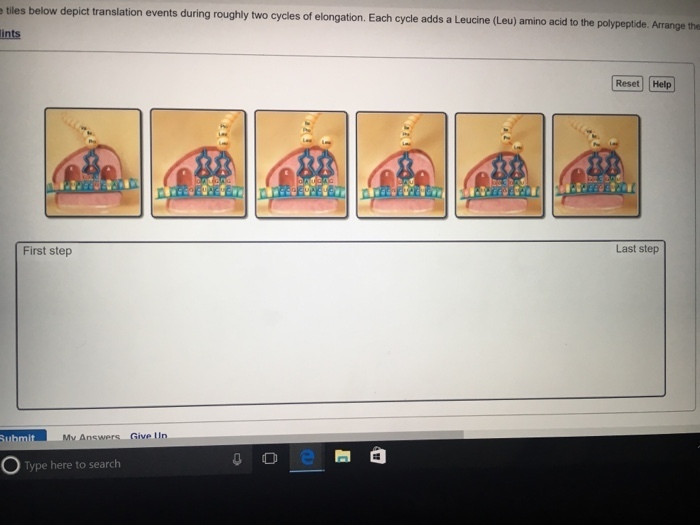
The tiles below depict translation events during roughly two cycles of elongation. each cycle adds a leucine (leu) amino acid to
sergij07 [2.7K]
I found the attached image on the internet and I believe it has the tiles referred to on the question.
As we can see on the image, the A-site, P-site, and E-site are represented. The A-site is occupied by the tRNA linked to the growing peptide chain. The P-site is the one occupied by the tRNA that works accepting the growing protein for peptide bond formation.
Firstly, the protein is formed, it is the first tile from the left.
Then, the first tile from the right is where the Leu is formed.
On the second tile from the right the Leu is then added to the protein.
The process is then repeated again as there are two cycles of elongation adding a Leu in each of them: third tile from the right, third tile from the left, second tile from the left.

7 0
2 years ago
Maggie's Plant Experiment In this exercise you will read the following scenario and identify the parts of the scientific method
ANTONII [103]

Answer:

Please find the identified steps of the scientific method below

Explanation:

A scientific method is a series of steps that aims at solving a problem. The steps in a scientific method include:

1. Making observation: In this experiment, Maggie observed when she read that some plants grow better if the soil is acidic. This is her observation that led to the scientific question: Do plants grow better in an acidic soil?

2. Formulating hypothesis: Hypothesis is a testable explanation to a problem. In this experiment, Maggie's hypothesis is; IF acid is added to the soil, THEN plants will grow better

3. Test hypothesis: the hypothesis is tested by conducting an experiment. In this case, Maggie places two geranium plants of the same size in two pots. Then she added a tablespoon of vinegar to one of the pots and allows the other grow normally without acid. The independent variable in this experiment is the vinegar added while the dependent variable is the height of the plants. The plant group with the vinegar is the experimental group while the plant group without vinegar is the control group. The constants of this experiment are same sunlight, same amount of water, same location etc.

4. Analyse data: The growth of the control and experimental plants were measured every week for five weeks by measuring their heights. The height (cm) of the plants with vinegar for the five weeks as as follows: 10.0, 12.4, 14.8, 18.0, 21.4 while the height in cm for the plants without vinegar for the five weeks is as follows: 10.0, 11.5, 13.0, 15.7, 17.8.

5. Conclusion: Based on the result, the plants exposed to vinegar grew better each week except week 1, which is the week they started. Hence, the hypothesis of this experiment will be ACCEPTED because the experiment proves it.

7 0
2 years ago
Why is the cell theory considered a scientific theory ?
Maru [420]

it is a scientific theory because people haven't proven that it it 100% correct we do not know if it is hence the theory..........

7 0
2 years ago
Read 2 more answers
Mr. Kline's earth science class set up an experiment to compare the heating and cooling rates of sand and water. They filled cup
Allisa [31]

Answer:

Deserts

Explanation:

Based on the data table, we would expect deserts to have the greatest changes in temperatures during a 24-hour period. There is little water or vegetation containing water in desert areas. The data shows the greatest increase and decrease in temperatures to be in the cups of sand.

5 0
2 years ago
Other questions:
  • Which of the following is a feature of exocytosis but not endocytosis?
    13·1 answer
  • View the animation about getting into the fossil record, and write several sentences summarizing how a dinosaur can become a fos
    14·1 answer
  • What is the difference between lycopodium and equisetum
    8·1 answer
  • Cellulose, chitin, and peptidoglycan function as structural molecules and withstand pulling and pushing forces well. which struc
    12·2 answers
  • In this diagram of a long bone, which type of bone marking is circled?
    14·2 answers
  • The diagram illustrates the activity of vesicles during a cellular process. Which statement best explains the function of the ve
    15·2 answers
  • How did the backyard bird feeders in the article increase competition in that ecosystem?
    14·1 answer
  • Scenario: Kenneth and Catherine Lohmann of the University of North Carolina explored the orientation or direction-finding abilit
    12·1 answer
  • Many kangaroo rats live in the Sonoran Desert of the southwestern United States. They have a variety of adaptations for living i
    5·1 answer
  • Suppose that a late succession plant that is surrounded by early succession plants grows at a rate of 0.5 cm per day. If the ear
    8·1 answer
Add answer
Login
Not registered? Fast signup
Signup
Login Signup
Ask question!