answer.
Ask question
Login Signup
Ask question
All categories
  • English
  • Mathematics
  • Social Studies
  • Business
  • History
  • Health
  • Geography
  • Biology
  • Physics
  • Chemistry
  • Computers and Technology
  • Arts
  • World Languages
  • Spanish
  • French
  • German
  • Advanced Placement (AP)
  • SAT
  • Medicine
  • Law
  • Engineering
melisa1 [442]
2 years ago
3

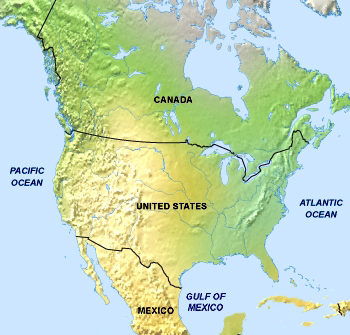
Air masses that originate in the Gulf of Mexico are:

Geography
2 answers:
Alekssandra [29.7K]2 years ago
8 0
The answer is: [B]:  maritime tropical (mT) .
______________________________________________
makkiz [27]2 years ago
6 0
The best and most correct answer among the choices provided by the question is the second choice "maritime tropical"<span>

Some maritime tropical air masses originate<span> in the subtropical Pacific Ocean, where it is warm and </span>air<span> must travel a long distance over water. These rarely extend north or east of southern California. Some maritime tropical </span>air masses originate<span> over the</span>Gulf of Mexico<span> and Caribbean Sea.
</span>
I hope my answer has come to your help. God bless and have a nice day ahead!</span>
You might be interested in
A) Why does NASA publish a different Star Finder every month? (1 point)
Lapatulllka [165]

Answer:

<em><u>The stars and constellations move and change their location from month to month.</u></em>

<em><u>Explanation:</u></em>

Remember, the Earth undergoes a <u>continuous rotation around the sun</u>; Thus, with each day some stars which were ones visible in certain parts of the Earth may not be visible later on.

It is believed due to such circumstances NASA publishes a different Star Finder every month<u> to keep track of the stars and constellations as they move and change their location.</u>

8 0
2 years ago
Rosa was looking for patterns to help predict the products of chemical reactions. She recorded three similar decomposition react
natita [175]

Answer:

2LiCl + 3O2  

Explanation:

I took it on Edgenuity

8 0
2 years ago
Read 2 more answers
Movements that follow a major earthquake often produce smaller earthquakes called _____. elastic rebound seismic waves foreshock
brilliants [131]

Answer:

Answer b.

EXPLANIATIONNN

chicken is good, so it's not a, c, or d.

3 0
2 years ago
Base your answers to questions 40 through 42 on the diagram below and on your knowledge of Earth science. The diagram represents
Paladinen [302]
After doing a lot of research on the answers to questions 40-42 on the Regents exam and studying the map you posted, the answer can be easily figured out. 

It will take approximately 3 hours for the apparent position of the sun to change from point A on the map to point B on the map. 

The correct answer choice will be number 3, 3 hours. 
7 0
2 years ago
What imaginary line cuts across the top of south america?
Brilliant_brown [7]

What imaginary line cuts across the top of south america?

The Equator

8 0
2 years ago
Read 2 more answers
Other questions:
  • Which feature of loblolly pines has helped them become the most abundant species of pine in the southern United States?
    13·2 answers
  • The inner planets—Mercury, Venus, Earth, and Mars—are believed to have been formed by _____.
    15·2 answers
  • How did Rome finally destroy Carthage once it penetrated the walls of Carthage?
    8·2 answers
  • Which of the following is commonly expected near a "textbook" subduction zone (that is, near a subduction zonethat is so perfect
    15·1 answer
  • You live in the northeast US, and over the course of a particular winter, you experienced frequent snow, poor weather, and well
    8·1 answer
  • A topographic map with points A and B labeled. Point A is on a contour line with number 7000. Point B is on a contour line with
    9·2 answers
  • Which continent is at these locations
    13·1 answer
  • g Most of the pulling force driving plate motion is produced at ________. Fill in the blank with one of the following: convergen
    9·1 answer
  • Invent a process for the formation of ocean basins consistent with catastrophism
    11·1 answer
  • Which of the following statements about the planet Venus is true? a. its thick nitrogen-oxygen atmosphere acts like a greenhouse
    14·1 answer
Add answer
Login
Not registered? Fast signup
Signup
Login Signup
Ask question!