answer.
Ask question
Login Signup
Ask question
All categories
  • English
  • Mathematics
  • Social Studies
  • Business
  • History
  • Health
  • Geography
  • Biology
  • Physics
  • Chemistry
  • Computers and Technology
  • Arts
  • World Languages
  • Spanish
  • French
  • German
  • Advanced Placement (AP)
  • SAT
  • Medicine
  • Law
  • Engineering
worty [1.4K]
2 years ago
11

Which came first, development of the probiont,RNA or prokaryotic cells?

Biology
1 answer:
Reika [66]2 years ago
7 0

The correct answer is protobiont.  

Protobiont refers to the accumulation of the organic molecules, enveloped by a membrane, which abiotically unites into the resemblances of living matter, and are considered to be the precursors of prokaryotic cells.  

The scientists consider that protobionts are the evolutionary precursors of the prokaryotic cells. They would have generated as an arrangement of microspheres of different inorganic and organic compounds surrounded by lipidic membranes. According to the scientists, RNA was the nucleic acid of the primitive protobionts.  


You might be interested in
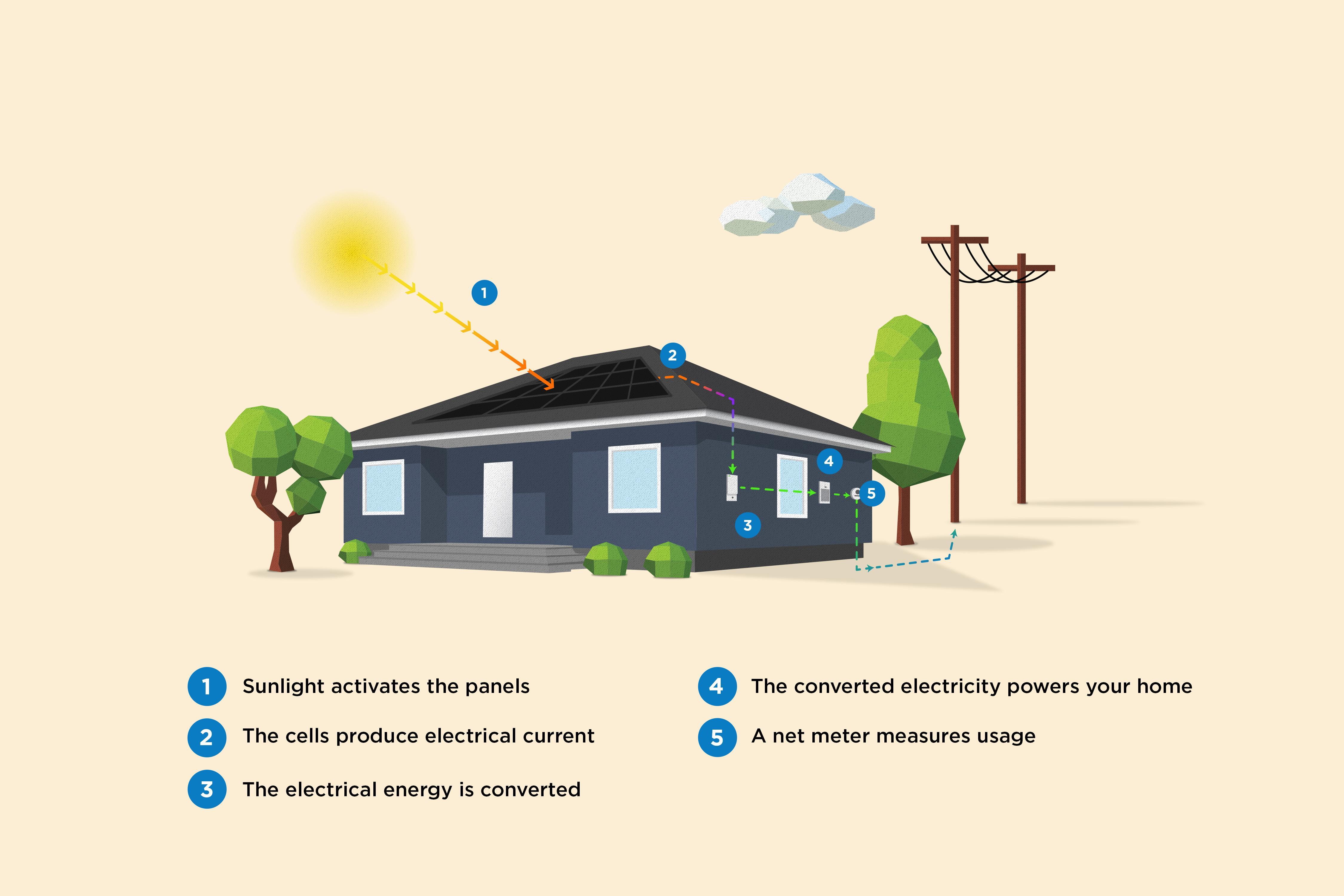
Where does the process of solar energy formation begins?
IrinaVladis [17]

Answer:

this might help

6 0
2 years ago
Which of these conditions indicate positive feedback has occurred?
aleksklad [387]

Answer;

A) Blood pressure decreases greatly; blood flow to the heart is inadequate, and blood pressure decreases.

Explanation;

-With negative feedback, the output reduces the original effect of the stimulus. While in a positive feedback system, the output enhances the original stimulus.

-Negative feedback is the most commonly used feedback loop in the body. Negative feedback is used to negate or counteract a stimulus without completely eradicating it.

-One key difference between the two feedback is that positive feedback loops are used to eradicate a stimulus. Another key difference is that responses through positive feedback become more amplified over time. So once a stimulus activates a positive feedback loop it is not turned off until the stimulus is completely removed.

8 0
2 years ago
Geralda is listing all of the conditions under which natural selection occurs. So far, she has listed: 1. The environment change
fgiga [73]

Answer:  Only some of the organisms survive and reproduce.

Natural selection is a process of differential survival and reproduction in which organisms bearing favorable phenotypic traits survive in changing environmental conditions. Therefore, only some of the organisms survive and reproduce which have suitable phenotypic trait. For example a population of beetle bearing two colors red and green. The green colored beetles mimic the color of grass will remain undetected by birds and those with red color easily observed and detected by birds. Hence, only green beetles are favored for survival over red beetles.

5 0
2 years ago
Read 2 more answers
Homo naledi, recently discovered in south africa, has a sagittal keel, large browridge, thick cranial bones, and reduced tooth s
Westkost [7]
The answer is D.
Homo naledi seems most likely to be a member of the genus Homo; however, its small brain size is regarded as a primitive hominin trait more reminiscent of australopithecus.
Homo naledi is an extinct species of hominin, which anthropologists first described in September 2015 and have assigned to the genus Homo.  

7 0
2 years ago
Read 2 more answers
Barium metal has a body-centered cubic lattice with all atoms at lattice points; its density is 3.51 g/cm3. From these data and
stiks02 [169]

Answer:

The unit cell's edge length is 5.06\times 10^{-8} m

Explanation:

Number of atom in BCC unit cell = Z = 2

Density of barium metal= 3.51g/cm^3

Edge length of cubic unit cell= a  = ?

Atomic mass of Ba(M) = 137.33 g/mol

Formula used :  

\rho=\frac{Z\times M}{N_{A}\times a^{3}}

where,

= density

Z = number of atom in unit cell

M = atomic mass

(N_{A}) = Avogadro's number  

a = edge length of unit cell

On substituting all the given values , we will get the value of 'a'.

3.51 g/cm3=\frac{2\times 137.33g/mol}{6.022\times 10^{23} mol^{-1}\times (a)^{3}}

a = 5.06\times 10^{-8} m

The unit cell's edge length is 5.06\times 10^{-8} m

7 0
2 years ago
Other questions:
  • Jay, Kip, and Tia are each measuring the concentration of a solution. They are doing experiments separately. They are all are us
    12·1 answer
  • A significant loss of hearing associated with senescence is referred to as _____.
    5·1 answer
  • People are less likely to have certain bacterial infections now than they were 100 years ago.
    9·2 answers
  • Which three statements are supported by the data in the food label?
    11·1 answer
  • Which statement best explains how enzymes speed up chemical reactions?
    6·1 answer
  • An object goes from a speed of 90 m/s to a total stop in 3 s. What is the objects acceleration? (Physical science)
    11·1 answer
  • As protons flow through the ______, a protein in the electron transport chain, energy is released and exploited to combine ADP a
    15·1 answer
  • Match these machines with their examples. 1. seesaw wedge 2. pencil sharpener third-class lever 3. bottle opener wheel and axle
    6·2 answers
  • The plasma membrane are composed of specific types of phospholipids that are asymmetrically distributed between the two monolaye
    5·2 answers
  • Why might (mostly) boneless creatures, like jellyfish, sea slugs, squid, and octopuses, fare especially well underwater? What is
    11·1 answer
Add answer
Login
Not registered? Fast signup
Signup
Login Signup
Ask question!