Answer:
1. Omar y Antonio almuerzan en un restaurante japonés
2. Usted no puede ver la película porque no encuentra el cine
3. ¿Ellas cierran las ventanas?
4. Yo volví a la residencia estudiantil a las seis de la tarde
5. Nosotras dormimos ocho horas
I hope this helps, god luck!!
tell me if it was using a specific time so I can change it if it's wrong!
This is what you wrote but in english.
Today I am very happy; (1), see a smile on my face. I found a job! (2), it is not a bad job; (3), it really is very good. Remember that two months ago I wrote a letter to the multinational Chispitas and another to the Juanjo clothing factory? They will not believe it! I had a response from the two companies! (4), I received a phone call from the multinational company and, (5), they sent me a letter from the Juanjo factory. First I thought it was a joke. (6), the two messages seemed true. This week I had the two interviews. (7) in Chispitas they offered me a minimum salary and a contract for three months, in Juanjo they would give me a permanent job and a very good salary. (8), I took the job in the factory. My job is to analyze the financial situation of competing companies. (9), I have to talk to potential investors so that the company improves its financial situation. Yesterday I started with work and it is more difficult than I thought. (10), today I already feel a little stress. (11), I am happy because I can earn a living and return the money that my friends had given me. I prefer the pressure of work to the sadness of unemployment!
It is a nice story, but it isn't a question so I can't really answer it.
Answer:
Luis (1) <u>se levanta</u> todos los días a las seis de la mañana. Luego entra en la ducha y (2) <u>se lava</u> el pelo con champú. Cuando sale de la ducha, usa la crema de afeitar para (3) <u>afeitarse</u> delante del espejo. Come algo con su familia y él y sus hermanos (4) <u>siguen</u> hablando un rato. Cuando sale tarde, Luis (5) <u>se apura</u> porque no quiere llegar tarde a la clase de español. Los estudiantes (6) <u>están</u> nerviosos porque a veces (sometimes) tienen pruebas sorpresa en la clase. Ayer por la mañana, Luis (7) <u>discutió</u> con su hermana Marina porque ella (8) <u>llegó</u> tarde y pasó mucho tiempo en el cuarto de baño con la puerta cerrada. —¿Cuándo sales, Marina?— le preguntó Luis. —¡Tengo que (9) <u>arreglarme</u> porque voy a salir con mi novio y quiero estar bonita!—, dijo Marina. —¡Tengo que (10) <u>salir</u> ya, Marina! ¿Cuándo terminas? —Ahora salgo, Luis. Tengo que (11) <u>terminar</u>. Me voy a poner mi vestido favorito. —Tienes que (12) <u>pensar</u> que viven muchas personas en esta casa, Marina.
Explanation:
True
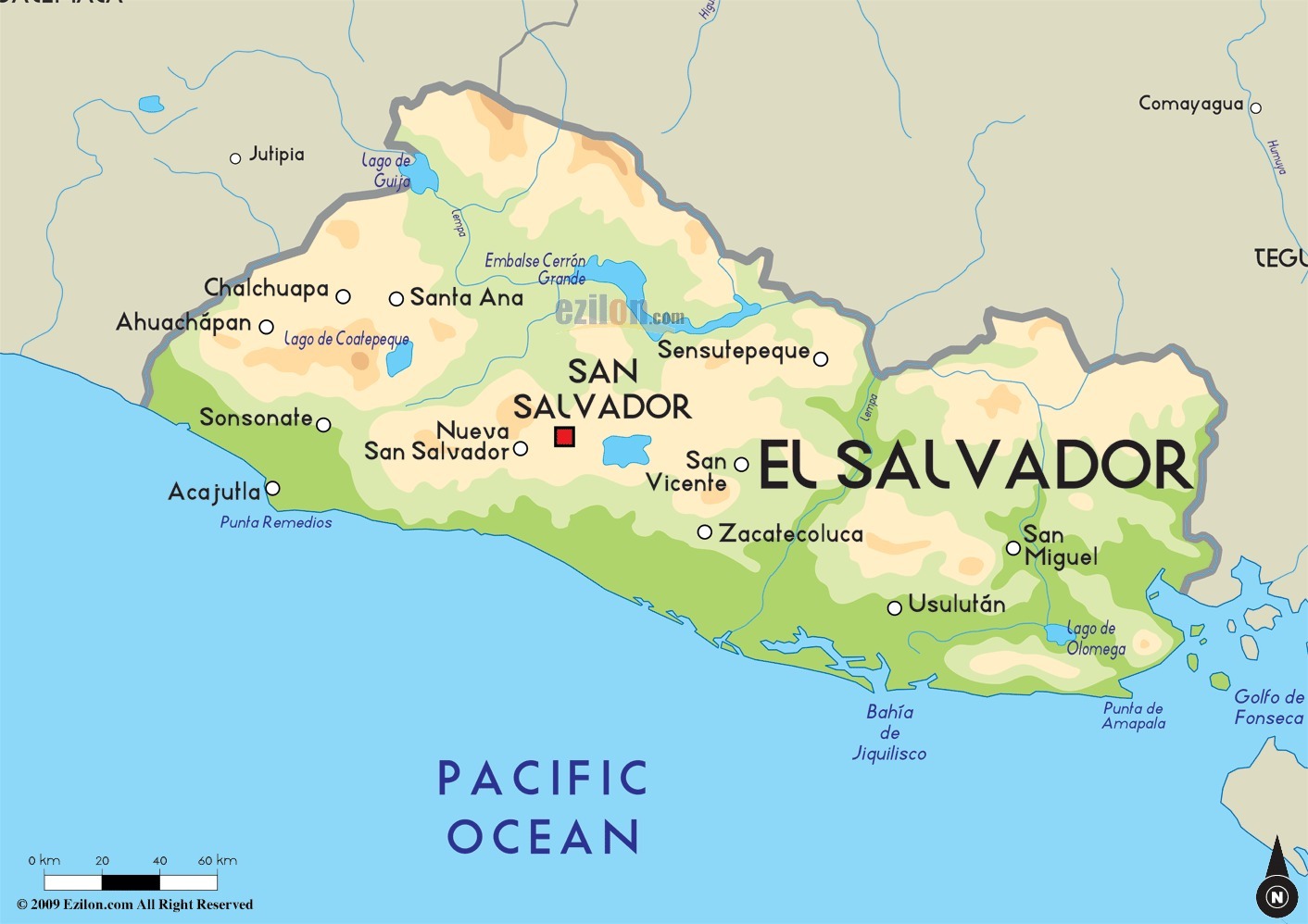
It borders the Pacific Ocean, Guatemala, and Honduras