answer.
Ask question
Login Signup
Ask question
All categories
  • English
  • Mathematics
  • Social Studies
  • Business
  • History
  • Health
  • Geography
  • Biology
  • Physics
  • Chemistry
  • Computers and Technology
  • Arts
  • World Languages
  • Spanish
  • French
  • German
  • Advanced Placement (AP)
  • SAT
  • Medicine
  • Law
  • Engineering
scoray [572]
2 years ago
14

Dan "threw out his back" after lifting heavy furniture and complained of pain radiating down the back of his right leg. Use anat

omical terminology to describe the body regions where the injury occurred and where Dan experienced pain. Which imaging technique would you prescribe to diagnose a spinal problem? Explain your choice.

Biology
1 answer:
shepuryov [24]2 years ago
3 0

Answer:

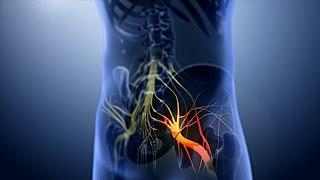
When Dan "threw out his back", the anatomical terminology regions where the injury occurred corresponds to the lumbar segment of the spine, affecting the sciatic nerve and causing pain referred to the posterior face of the lower right limb. The imaging technique that could be used for diagnostics is nuclear magnetic resonance imaging.

Explanation:

One of the consequences of physical exertion - such as lifting heavy objects - is lower back injury, which can range from painful muscle contraction, muscle tearing, or inter-vertebral disc injuries in the lumbar spine.

In Dan's case, the effort to lift the furniture may have caused:

  • Protrusion of the disc that lies between two vertebrae, called a herniated disc.
  • Lumbar disc hernias can cause compression of the sciatic nerve.
  • Sciatic nerve injuries produce a number of symptoms such as pain or neurological disorders - such as tingling, numbness, painful current, among others - in the territory of that nerve.
  • Dan experiences pain in the back of the right lower limb, where the affected sciatic nerve passes.
<h3> Which imaging technique would you prescribe to diagnose a spinal problem?</h3>

The best imaging study to show that this lesion has occurred and diagnose a spinal problem is the magnetic resonance imaging, which allows to observe both the bone structures and the soft tissue (cartilage, muscle) of the affected area.

The X-rays only allow to see the structures of the bones, useful to diagnose fractures, deformities or structural alteration, but they do not show the state of the ligaments, inter-vertebral discs or muscle.

Learn more:

brainly.com/question/1017175
You might be interested in
How would signaling be affected if a mutation caused a g protein to replace gdp with gtp on its own without needing to be activa
Elan Coil [88]

Answer:

This mutation will produce a conformational change capable of maintaining the receptor continuously in its activated mode

Explanation:

G proteins are inactive when guanosine diphosphate (GDP) is bound, while they are active when guanosine triphosphate (GTP) is bound

5 0
2 years ago
What will happen to red blood cells if they are placed in a 0.85% salt solution?
Anastaziya [24]
They will shrink , that is your answer.
3 0
2 years ago
Read 2 more answers
Cinnabar colored eyes (cn) and reduced bristles (rd) are autosomal recessive genes and lobe shaped eyes (L) is an autosomal domi
Morgarella [4.7K]

Answer:

The correct genotypic notation for a wild type with phenotypic characteristics: red eyes, long bristle and round eyes will be any of CNRDll, CnRdl, CnRDl or CNRdl if c, n, r and d are capable of independent assortment and CNRDl if they cannot.

Explanation:

The eye color and bristle size is coordinated by either recessive cn and dominant CN or Cn genes. The wild type in questions has red color eyes, which is a dominant trait coordinated by CN or Cn if c and n can undergo assortment independently or just CN if they cannot. The second characteristics of the wild type is long bristle. We were told that reduced bristle is coordinated by recessive rd Gene. Then the long bristle in our specimen wild type will have dominant genotypic notification of RD or Rd, depending if r and d can undergo assortment independently. The last trait is a round eyes, which is a recessive trait controlled by recessive allele l. Therefore, the combined characteristics of red eye color, long bristle and round eyes shape of the wild type will be CNRDl or any of CNRDll, CnRdl, CnRDl CNRdl depending on the segregation pattern of c, n, r and d.

3 0
2 years ago
Predict how the sympathetic reflexes controlling blood vessels would respond to a sudden decrease in blood pressure
Goryan [66]
<span>Baroreceptors are special receptors that detect changes in your blood pressure. Important baroreceptors are found in the aorta and the carotid sinus. If the blood pressure within the aorta or carotid sinus increases, the walls of the arteries stretch and stimulate increased activity within the baroreceptors.</span>
7 0
2 years ago
An ecosystem has experienced a flood. Which type of plants would u expect to see growing first after the flood? Shrubs, lichen,
Crank
I believe the answer is <span>small annual plants
</span>

<span>Small annual plants will easily grow after a flood since it was small and rapidly growing. They also died fast, which makes them reproduce quickly. If the condition is harsh with less soil, l</span>ichen will be the most easier to survive. Pine and oak are strong trees that will be formed last.
6 0
2 years ago
Read 2 more answers
Other questions:
  • Which of the following statements is true?
    6·2 answers
  • Based on your research what are 3 reasons plants are propagated asexually?
    15·2 answers
  • Newborn twin girls delivered in the hospital via cesarean section at 27 weeks, weighing 850 grams for twin a and 900 grams for t
    10·1 answer
  • What do most of us rely on "external brains" for these days?
    13·2 answers
  • When jacob greeted stephanie at the beach, he reached out with the _____________ surface of his hand to grasp the ___________ su
    8·2 answers
  • You have an F2 generation derived from two true-breeding parents with different characteristics for the same trait (determined b
    9·2 answers
  • A scientist grows tomatoes in greenhouses that differ only in the amount of carbon dioxide in the air. He determines the weight
    10·2 answers
  • The major regions of a hair shaft include all of the following except ________.
    9·1 answer
  • What two parts of a nucleotide do not ?change throughout the structure of DNA a. Five-Carbon Sugar and Phosphate Group b. Five-C
    8·1 answer
  • How do animals that live in the tundra survive? *
    7·1 answer
Add answer
Login
Not registered? Fast signup
Signup
Login Signup
Ask question!