answer.
Ask question
Login Signup
Ask question
All categories
  • English
  • Mathematics
  • Social Studies
  • Business
  • History
  • Health
  • Geography
  • Biology
  • Physics
  • Chemistry
  • Computers and Technology
  • Arts
  • World Languages
  • Spanish
  • French
  • German
  • Advanced Placement (AP)
  • SAT
  • Medicine
  • Law
  • Engineering
Radda [10]
2 years ago
3

In daffodil plants, yellow flowers are dominant over white flowers. You discover a yellow plant and want to know whether it is h

omozygous for the yellow allele or heterozygous. You perform a test cross with a white-flowered plant.
a. Draw two Punnett squares for this test cross, one assuming a homozygous dominant yellow plant and one assuming a heterozygous plant.
b. If the offspring of your test cross all have yellow flowers, what does this tell you about the genotype of the yellow-flowered plant you started with?

Biology
1 answer:
Pepsi [2]2 years ago
6 0

Answer:

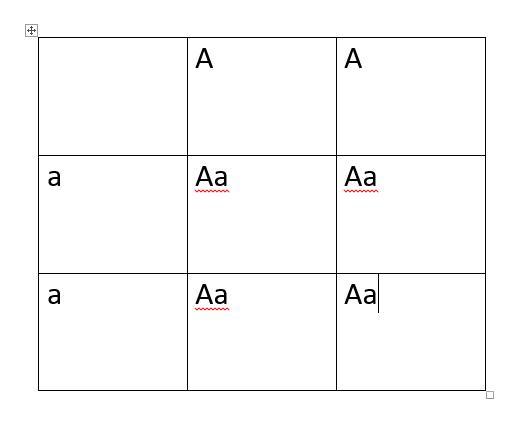
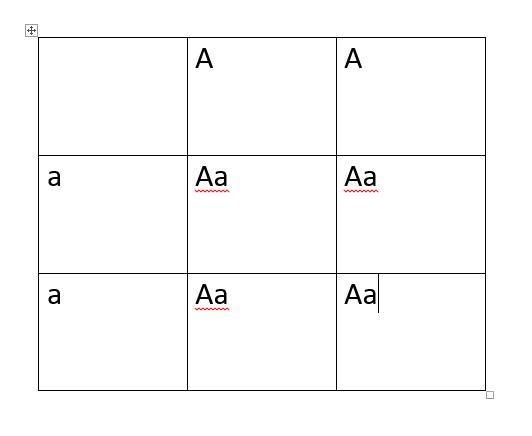
a: <em>See the attached images for the Punnet squares</em>

b: <em>If the offspring of the test cross are all yellow, it means the genotype of the starting yellow flowered plant is homozygous dominant.</em>

Explanation:

Let the allele for flower color in daffodil be represented by A.

Since A is dominant over a; the two possible genotype for the yellow colour will be:

AA = yellow

Aa = yellow

Test cross involves crossing an organism whose zygosity is unsure with an homozygous recessive version of the trait. Hence, if the yellow plant is AA, the test cross becomes

     AA x aa; all the offspring will be yellow with genotype Aa

If the yellow plant is Aa, the test cross becomes;

      Aa x aa; Aa (yellow), Aa (yellow), aa (white), aa (white) (See the attached images for the Punnet square)

If the offspring of the test cross area all yellow, it means the genotype of the yellow flowered plant I started with is homozygous dominant.

You might be interested in
Classify the events as autogenic or allogenic succession.
nydimaria [60]

In ecology, allogenic succession is mediated by the abiotic components of the ecosystem, while the autogenic succession refers to the succession, which is mediated by the biotic components of an ecosystem.  

A volcanic eruption wiping out an entire island is an example of allogenic succession.  

A soybean crop helping in nitrogen fixation, leading to the development of other species is an illustration of autogenic succession.  

A tsunami devastating all the living organism in a habitat is an example of allogenic succession.  

Oak trees preventing the growth of smaller sun-seeking shrubs is an example of autogenic succession.  


5 0
2 years ago
In this section, please include the if/then statements you developed during your lab activity. These statements reflect your pre
Rom4ik [11]
Here it is hope it helps

5 0
2 years ago
Read 2 more answers
In one row in the table, the data for the three trials is inconsistent. Which table cell contains data that are inconsistent for
salantis [7]

Answer: A

Explanation:

The cell for trial 2 with a lot of water. Trust me

6 0
2 years ago
9. Look closely at the illustration above. a. What process is occurring? b. What is being made? c. How can you tell?
mars1129 [50]
The answers are:

A. DNA replication in the nucleus of a cell
B. From one helix of DNA in a replication process, we get two: The DNA is a double helix and it consists of two strands of specifically connected amino-acids. When the time for replication comes, a set of enzymes unwind the two strands and leave them as a base for additional two strands attaching to them - the green line is an example of that. The free nucleotides - adenine, guanine, thymine and cytosine are left open and the enzyme called DNA-polymerase helps to produce a new strand on the template of the old parental one (one of the blue ones in the picture) 
C. By the location on the smaller picture - replication takes place in the nucleus. And the most important hint are the letters A - adenine, G - guanine, T- thymine, and C-cytosine. A connects with T, and G connects with C. 
4 0
2 years ago
Describe two practical uses for an artificial chemical which behaves like chlorophyll.​
natita [175]
Any substance that has enhanced reactivity, or altered properties in the presence of light is said to be photoreactive. For example, a photovoltaic cell enables sunlight to be processed into usable electricity by exciting outer shell electrons on some metals. Photoreactive substances can either be natural, such as chlorophyll, or entirely man-made in the case of a photovoltaic cell.
4 0
2 years ago
Other questions:
  • The atomic bomb resulted from a nuclear _____.
    15·2 answers
  • Why are frog egg laid in long gelatin fluid ?
    7·1 answer
  • How does light intensity affect oxygen production?
    13·1 answer
  • Which of the following is and example of liverwort?
    7·2 answers
  • If a scientist wanted to separate two similarly sized and charged proteins, which method of column chromatography would be best?
    13·1 answer
  • ___ fiber is mainly found in plant cells.
    8·1 answer
  • state one reason why a glucose molecule is more likely than a sucrose molecule to diffuse through an artificial membrane
    6·2 answers
  • Nick is researching why baking powder is a common baking ingredient. He learns that baking powder contains tartaric acid and sod
    15·1 answer
  • Pretend you’re a researcher in charge of conducting new research on the flu virus. Identify four scientific questions you’d like
    15·1 answer
  • Which of the following mutations is most likely to become fixed in a population? A neutral or nearly neutral mutation in a very
    6·1 answer
Add answer
Login
Not registered? Fast signup
Signup
Login Signup
Ask question!