answer.
Ask question
Login Signup
Ask question
All categories
  • English
  • Mathematics
  • Social Studies
  • Business
  • History
  • Health
  • Geography
  • Biology
  • Physics
  • Chemistry
  • Computers and Technology
  • Arts
  • World Languages
  • Spanish
  • French
  • German
  • Advanced Placement (AP)
  • SAT
  • Medicine
  • Law
  • Engineering
kondor19780726 [428]
2 years ago
6

On your first attempt to run a PCR, you realize you forgot to add one of the two primers. The graduate student you work with sug

gests you throw away your reaction and start over. Why
Biology
1 answer:
dem82 [27]2 years ago
8 0

Explanation:

During  PCR, we use two primers one is forward primer and the other one is reverse primer they match the  sequence of one one of the two complementary strands of the target DNA, they flank the target region (that the region which we has to be copied). if we add only one primer it copies only one strand of the DNA in multiple copies. Usually we call this as Asymmetric PCR.

Generally Primers are synthetic short stretch of oligonucleotides that are complementary to the target DNA. They act as a foundation for the amplification process of  DNA to form multiple copies

You might be interested in
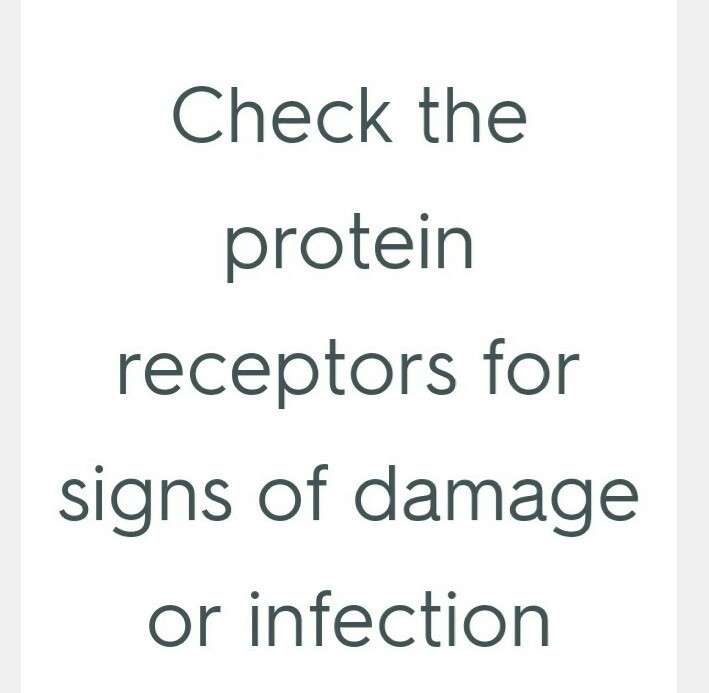
What exactly do white blood cells inspect to be sure a cell belongs and is not infected ?
Kitty [74]
Here's the answer in picture form

5 0
2 years ago
The expansion of grasses during the Oligocene and Miocene Epochs led to
tresset_1 [31]

Answer:

The answer is:

D. the radiation of herbivores such as grazing animals

Explanation:

Oligocene and Miocene Epochs:

  • The Oligocene epoch is characterized by temperate and subtropical climatic conditions which favored the expansion of grasses and reduced forest cover.
  • The Miocene epoch, which succeeded the Oligocene era, is attributed to changes in global circulation due to global warming of the climate followed by global cooling towards the end.

The Oligocence and Miocene epoch are both attributed to the expansion of grasslands and savannah. Both eras marked rapid and drastic evolutionary changes in grazing mammals and herbivores. Diverse groups of grazing mammals lived throughout these eras. For example, the largest herbivore and land mammal of all time, <em>Indricotherium</em> (a sort of giant hornless rhinoceros), was present in the Oligocene era.

Similarly, the Oligocene era in North America favored the rapid radiation of primitive horses.

8 0
2 years ago
A farmer stops cultivating a large tract of farmland and abandons it. the natural changes taking place soon afterwards, such as
erastovalidia [21]

<span>When a farmer stops cultivating farmland and abandons it, the growth of wild grasses and weeds can be considered secondary succession because of the presence of the existing soil. Secondary succession occurs in ecosystem when soil have been disturbed or disrupted by humans such in a way of farming.  Furthermore, the reason why it cannot be categorize as primary succession because primary succession only occurs in essentially lifeless areas, where soil is not capable of sustaining life. Specifically, this is called old-field succession where wild grasses and weeds represents a new plant species to colonize a bare soil after the farmer abandon the farmland.</span>

6 0
2 years ago
Primary spermatocytes are diploid (2n) cells with all of the organelles typically found in eukaryotic animal cells. Spermatogene
Aneli [31]

Answer: a. Genetic recombination (crossing over)

b. Can also be explained in terms of crossing over

c. Non disjunction of homologous chromosomes in meiosis 1

Explanation:

The process that allows for the transfer of both the paternal and maternal materials to is the crossing over process that takes at meiosis 1 changing them to secondary spermatocytes. While they are still primary spermatocytes, they are still diploid cells having both the maternal and paternal chromosomes. But since the spermatozoon is an haploid cell, it is able to retail some of both parents chromosome by the crossing over event which takes place between homologous paternal and maternal chromosomes allowing them to exchange materials. Thus the chromosomal contents of the primary spermatocyte differs from that of the spermatozoon.

C. This can occur as a result of the one of the homologous chromosome pair refusing to separate at meiosis 1 with one gamete containing 4 chromosomes/8 sister chromatids and the second having 2 chromosomes/4 sister chromatids.

3 0
2 years ago
In 3–5 sentences, explain the various factors that should be considered when implementing green roofs.
SCORPION-xisa [38]
Climate, especially temperature and rainfall patterns
Microclimates on the roof top
Strength of the supporting structure
Size, slope, height and directional orientation of the roof
Type of underlying waterproofing
Drainage elements, such as drains, scuppers and drainage conduits
Accessibility and intended use
Visibility, fit with architecture, and owner’s aesthetic preferences
Fit with other ‘green’ systems, such as solar panels
Materials and labor costs
7 0
2 years ago
Read 2 more answers
Other questions:
  • Why is it important for scientists to be able to remove DNA from an organism? List two reasons
    9·1 answer
  • The construction of wind farms has affected the migratory patterns of some bird populations. Bird populations have been noted to
    14·2 answers
  • What are some shared characters among rabbits and perch?
    6·2 answers
  • To be certain that the extract prepared from virulent cells still contained the transforming principle that was present prior to
    7·1 answer
  • Design a planned community that preserves biodiversity and accommodates the human population
    11·1 answer
  • On a backpacking trip, Kenny hikes all day at a steady pace, covering 30 kilometers and burning 4000 Calories. At the school tra
    12·1 answer
  • Q2.25. Assume that early in the summer, the only prey available are stoneflies and caddisflies. If the search time for its prefe
    14·1 answer
  • Why onions lost mass when soaked in concentrated solutions of sodium chloride?
    8·1 answer
  • (02.05 MC) Conditions under which natural selection occurs in a population of tortoises are described in the table below: Natura
    10·2 answers
  • Why chilli has a dicotyledonous root​
    5·2 answers
Add answer
Login
Not registered? Fast signup
Signup
Login Signup
Ask question!