answer.
Ask question
Login Signup
Ask question
All categories
  • English
  • Mathematics
  • Social Studies
  • Business
  • History
  • Health
  • Geography
  • Biology
  • Physics
  • Chemistry
  • Computers and Technology
  • Arts
  • World Languages
  • Spanish
  • French
  • German
  • Advanced Placement (AP)
  • SAT
  • Medicine
  • Law
  • Engineering
Trava [24]
2 years ago
3

A multi-plate clutch is to transmit 12 kW at 1500 rev/min. The inner and outer radii for the plates are to be 50 mm and 100 mm r

espectively. The maximum axial spring force is restricted to lkN. Calculate the necessary number of pairs of surfaces if ll = 0-35 assuming constant ‘vyear. What will be the necessary axial force?
Engineering
1 answer:
xenn [34]2 years ago
8 0

Answer:

The uniform pressure for the necessary axial force  is  W = 945 N

The uniform wear for the necessary axial force is  W = 970.15 N

Explanation:

Solution

Given that:

r₁ = 0.1 m

r₂ = 0.05m

μ = 0.35

p = 12 N or kW

N = 1500 rpm

W = 1000 N

The angular velocity is denoted as  ω= 2πN/60

Here,

ω = 2π *1500/60 = 157.07 rad/s

Now, the power transferred becomes

P = Tω this is the equation (1)

Thus

12kW = T * 157.07 rad/s

T = 76.4 N.m

Now, when we look at the uniform condition, we have what is called the torque that is frictional which acts at the frictional surface of the clutch dented as :

T = nμW R this is the equation (2)

The frictional surface of the mean radius is denoted by

R =2/3 [(r₁)³ - (r₂)³/(r₁)² - (r₂)²]

=[(0.1)³ - (0.05)³/[(0.1)² - (0.05)²]

R is =0.077 m

Now, we replace this values and put them into the equation (2)

It gives us this, 76. 4 N.m = n * 0.35* 1000 N * 0.077 m

n = 2.809 = 3

The number of pair surfaces is = 3

Secondly, we determine the uniform wear.

So, the mean radius is denoted as follows:

R = r₁ + r₂/ 2

=0.1 + 0.05/2

=0.075 m

Now, we replace the values and put it into the equation (2) formula

76. 4 N.m = n *0.35* 1000 N * 0.075 m

n= 2.91 = 3

Again, the number of pair surfaces = 3

However, for the uniform pressure with regards to the number of clutch plates is 3 we can derive the necessary axial force from the equation (2)

76. 4 N.m = 3 * 0.35 * W *0.077 m

W = 945 N

Also, for the uniform wear with regards to the number of clutch plates is 3 we can derive the necessary axial force from the equation (2)

76. 4 N.m = 3 * 0.35 * W *0.075 m

W = 970. 15 N

You might be interested in
A steady tensile load of 5.00kN is applied to a square bar, 12mm on a side and having a length of 1.65m. compute the stress in t
Shtirlitz [24]

Answer:

The stress in the bar is 34.72 MPa.

The design factor (DF) for each case is:

A) DF=0.17

B) DF=0.09

C) DF=0.125

D) DF=0.12

E) DF=0.039

F) DF=1.26

G) DF=5.5

Explanation:

The design factor is the relation between design stress and failure stress. In the case of ductile materials like metals, the failure stress considered is the yield stress. In the case of plastics or ceramics, the failure stress considered is the breaking stress (ultimate stress). If the design factor is less than 1, the structure or bar will endure the applied stress. By the opposite side, when the DF is higher than 1, the structure will collapse or the bar will break.

we will calculate the design stress in this case:

\displaystyle \sigma_{dis}=\frac{T_l}{Sup}=\frac{5.00KN}{(12\cdot10^{-3}m)^2}=34.72MPa

The design factor for metals is:

DF=\displaystyle \frac{\sigma_{dis}}{\sigma_{f}}=\frac{\sigma_{dis}}{\sigma_{y}}

The design factor for plastic and ceramics is:

DF=\displaystyle \frac{\sigma_{dis}}{\sigma_{f}}=\frac{\sigma_{dis}}{\sigma_{u}}

We now need to know the yield stress or the ultimate stress for each material. We use the AISI and ASTM charts for steels, materials charts for non-ferrous materials and plastics safety charts for the plastic materials.

For these cases:

A) The yield stress of AISI 120 hot-rolled steel (actually is AISI 1020) is 205 MPa, therefore:

DF=\displaystyle\frac{34.72MPa}{205MPa}=0.17

B) The yield stress of AISI 8650 OQT 1000 steel is 385 MPa, therefore:

DF=\displaystyle\frac{34.72MPa}{385MPa}=0.09

C) The yield stress of ductile iron A536-84 (60-40-18) is 40Kpsi, this is 275.8 MPa, therefore:

DF=\displaystyle\frac{34.72MPa}{275.8MPa}=0.125

D) The yield stress of aluminum allot 6061-T6 is 290 MPa, therefore:

DF=\displaystyle\frac{34.72MPa}{290MPa}=0.12

E) The yield stress of titanium alloy Ti-6Al-4V annealed (certified by manufacturers) is 880 MPa, therefore:

DF=\displaystyle\frac{34.72MPa}{880MPa}=0.039

F) The ultimate stress of rigid PVC plastic (certified by PVC Pipe Association) is 4Kpsi or 27.58 MPa, therefore:

DF=\displaystyle\frac{34.72MPa}{27.58 MPa}=1.26

In this case, the bar will break.

F) You have to consider that phenolic plastics are used as matrix in composite materials and seldom are used alone with no reinforcement. In this question is not explained if this material is reinforced or not, therefore I will use the ultimate stress of most pure phenolic plastics, in this case, 6.31 MPa:

DF=\displaystyle\frac{34.72MPa}{6.31 MPa}=5.5

This material will break.

3 0
2 years ago
Which of the following is NOT true about hydraulic valves? A. Directional control valves determine the path of a fluid in a give
Lelechka [254]

Answer: Option D is not true of hydraulic valves. A hydraulic valve is a device that can change the opening degree of liquid flow path

Explanation:

The pilot check valve allows flow of liquid in one direction and blocks flow in the opposite direction

5 0
2 years ago
An excited electron in an Na atom emits radiation at a wavelength 589 nm and returns to the ground state. If the mean time for t
11Alexandr11 [23.1K]

Answer:   Inherent width in the emission line: 9.20 × 10⁻¹⁵ m or 9.20 fm

                length of the photon emitted: 6.0 m

Explanation:

The emitted wavelength is 589 nm and the transition time is ∆t = 20 ns.

Recall the Heisenberg's uncertainty principle:-

                                 ∆t∆E ≈ h ( Planck's Constant)

The transition time ∆t corresponds to the energy that is ∆E

E=h/t = \frac{(1/2\pi)*6.626*10x^{-34} J.s}{20*10x^{-9} } = 5.273*10x^{-27} J =  3.29* 10^{-8} eV.

The corresponding uncertainty in the emitted frequency ∆v is:

∆v= ∆E/h = (5.273*10^-27 J)/(6.626*10^ J.s)=  7.958 × 10^6 s^-1

To find the corresponding spread in wavelength and hence the line width ∆λ, we can differentiate

                                                    λ = c/v

                                                    dλ/dv = -c/v² = -λ²/c

Therefore,

      ∆λ = (λ²/c)*(∆v) = {(589*10⁻⁹ m)²/(3.0*10⁸ m/s)} * (7.958*10⁶ s⁻¹)

                                 =  9.20 × 10⁻¹⁵ m or 9.20 fm

     The length of the photon (<em>l)</em> is

l = (light velocity) × (emission duration)

  = (3.0 × 10⁸  m/s)(20 × 10⁻⁹ s) = 6.0 m          


6 0
2 years ago
Fix the code so the program will run correctly for MAXCHEESE values of 0 to 20 (inclusive). Note that the value of MAXCHEESE is
GarryVolchara [31]

Answer:

Code fixed below using Java

Explanation:

<u>Error.java </u>

import java.util.Random;

public class Error {

   public static void main(String[] args) {

       final int MAXCHEESE = 10;

       String[] names = new String[MAXCHEESE];

       double[] prices = new double[MAXCHEESE];

       double[] amounts = new double[MAXCHEESE];

       // Three Special Cheeses

       names[0] = "Humboldt Fog";

       prices[0] = 25.00;

       names[1] = "Red Hawk";

       prices[1] = 40.50;

       names[2] = "Teleme";

       prices[2] = 17.25;

       System.out.println("We sell " + MAXCHEESE + " kind of Cheese:");

       System.out.println(names[0] + ": $" + prices[0] + " per pound");

       System.out.println(names[1] + ": $" + prices[1] + " per pound");

       System.out.println(names[2] + ": $" + prices[2] + " per pound");

       Random ranGen = new Random(100);

       // error at initialising i

       // i should be from 0 to MAXCHEESE value

       for (int i = 0; i < MAXCHEESE; i++) {

           names[i] = "Cheese Type " + (char) ('A' + i);

           prices[i] = ranGen.nextInt(1000) / 100.0;

           amounts[i] = 0;

           System.out.println(names[i] + ": $" + prices[i] + " per pound");

       }        

   }

}

7 0
2 years ago
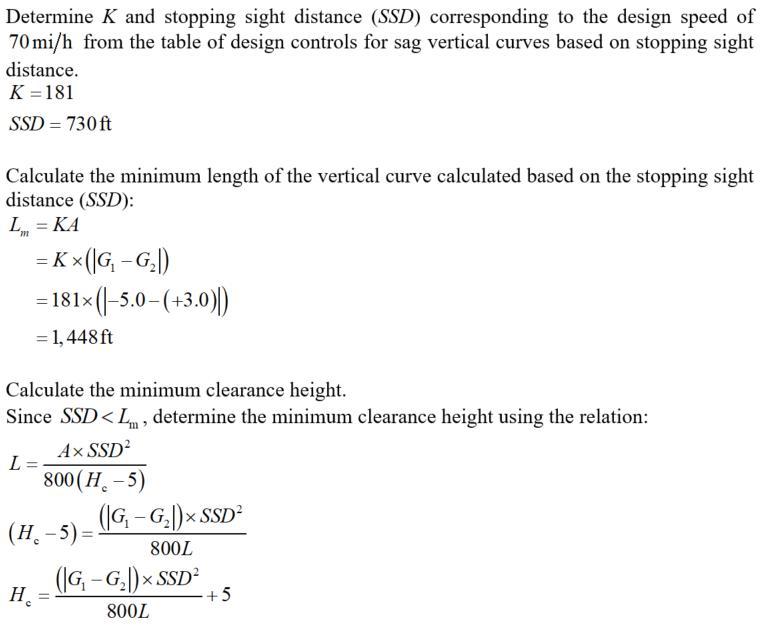
An overpass is being built over the PVI of an existing equal-tangent sag curve. The sag curve has a 70 mi/h design speed and G1=
vivado [14]

Answer: Resultant elevation will be 30.98 ft

8 0
2 years ago
Other questions:
  • PDAs with two stacks are strictly more powerful than PDAs with one stack. Prove that 2-stack PDAs are not a valid model for CFLs
    12·1 answer
  • The four-wheel-drive all-terrain vehicle has a mass of 320 kg with center of mass G2. The driver has a mass of 82 kg with center
    15·1 answer
  • The rigid bar CDE is attached to a pin support at E and rests on the 30 mm diameter brass cylinder BD. A 22 mm diameter steel ro
    8·1 answer
  • A 0.9% solution of NaCl is considered isotonic to mammalian cells. what molar concentration is this?
    10·1 answer
  • ) A shaft encoder is to be used with a 50 mm radius tracking wheel to monitor linear displacement. If the encoder produces 256 p
    15·1 answer
  • A negative pressure respirator brings fresh air to you through a hose<br>A) True<br>B)False​
    15·2 answers
  • Why is it that dislocations play an important role in controlling the mechanical properties of metallic materials, however, they
    10·1 answer
  • Write cout statements with stream manipulators that perform the following:
    8·1 answer
  • A thin-walled tube with a diameter of 6 mm and length of 20 m is used to carry exhaust gas from a smoke stack to the laboratory
    7·1 answer
  • 1. A spur gear made of bronze drives a mid steel pinion with angular velocity ratio of 13 /2 : 1. Thepressure angle is 14 1/2° .
    12·1 answer
Add answer
Login
Not registered? Fast signup
Signup
Login Signup
Ask question!