7}.
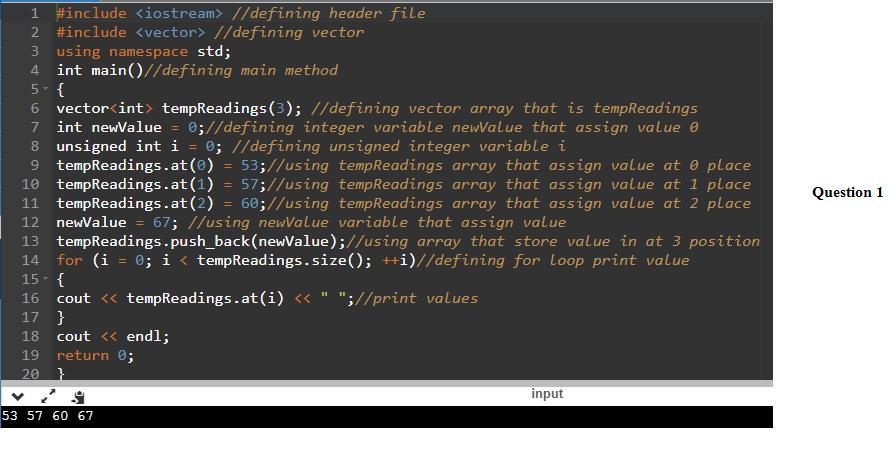
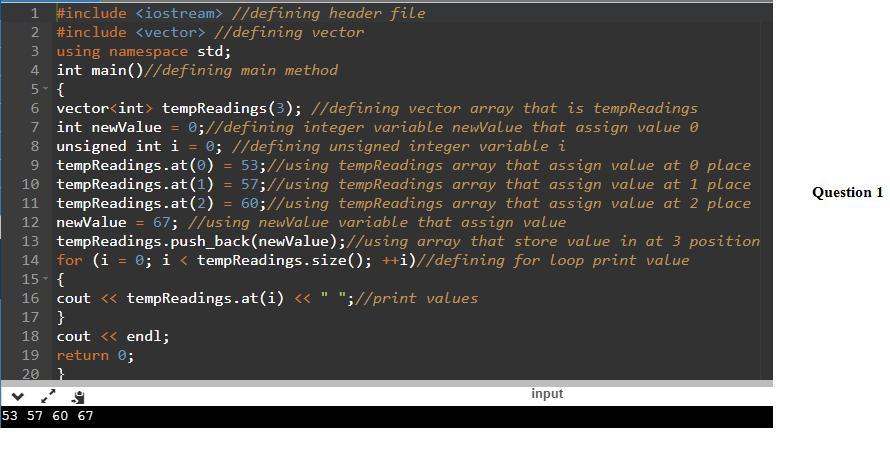
#include
#include
using namespace std;
int main() {
vector tempReadings(3);
int newValue = 0;
unsigned int i = 0;
tempReadings.at(0) = 53;
tempReadings.at(1) = 57;
tempReadings.at(2) = 60;
newValue = 67;
/* Your solution goes here */
for (i = 0; i < tempReadings.size(); ++i) {
cout << tempReadings.at(i) << " ";
}
cout << endl;
return 0;
}
2.Remove the last element from vector ticketList.
#include
#include
using namespace std;
int main() {
vector ticketList(3);
unsigned int i = 0;
ticketList.at(0) = 5;
ticketList.at(1) = 100;
ticketList.at(2) = 12;
/* Your solution goes here */
for (i = 0; i < ticketList.size(); ++i) {
cout << ticketList.at(i) << " ";
}
cout << endl;
return 0;
}
3. Assign the size of vector sensorReadings to currentSize.
#include
#include
using namespace std;
int main() {
vector sensorReadings(4);
int currentSize = 0;
sensorReadings.resize(10);
/* Your solution goes here */
cout << "Number of elements: " << currentSize << endl;
return 0;
}
4. Write a statement to print "Last mpg reading: " followed by the value of mpgTracker's last element. End with newline. Ex: If mpgTracker = {17, 19, 20}, print:
Last mpg reading: 20
#include
#include
using namespace std;
int main() {
vector mpgTracker(3);
mpgTracker.at(0) = 17;
mpgTracker.at(1) = 19;
mpgTracker.at(2) = 20;
/* Your solution goes here */
return 0;}