answer.
Ask question
Login Signup
Ask question
All categories
  • English
  • Mathematics
  • Social Studies
  • Business
  • History
  • Health
  • Geography
  • Biology
  • Physics
  • Chemistry
  • Computers and Technology
  • Arts
  • World Languages
  • Spanish
  • French
  • German
  • Advanced Placement (AP)
  • SAT
  • Medicine
  • Law
  • Engineering
KIM [24]
2 years ago
9

Describe the properties of the monomers and the type of bonds that connect the monomers in biological macromolecules. Structure

and function of polymers are derived from the way their monomers are assembled.
Biology
1 answer:
o-na [289]2 years ago
6 0

Answer:

Peptidic bond (proteins), glycosidic bond (carbohydrates) and lipid bond (lipids)

Explanation:

1. Peptidic bond: this type of bond is exclusive for the aminoacids. These monomers create bonds between the carboxylic acid of first and the amino grupo of second (like a acid-base reaction). We have notice, some aminoacids monomers have groups acid or amino into the primary ramification, it groups cannot react to form peptidic bons.

2. Glycosidic bond: principally, this bond is form between the carbon alpha of one monomer (monosaccharide) and one hidroxyle group (-OH) of other monomer. The number of the cabron that has the -OH grupo will bring the name to the bond, for example, "glucose 1-4 fructose". Also, we have a direction of the bond before the firs number, alpha or beta, it depends on the geometry of the monomer.

3. Lipidic bond: usually, it bond type is a coballent and create an anphipathic zone, this is why some lipis are not soluble in water

You might be interested in
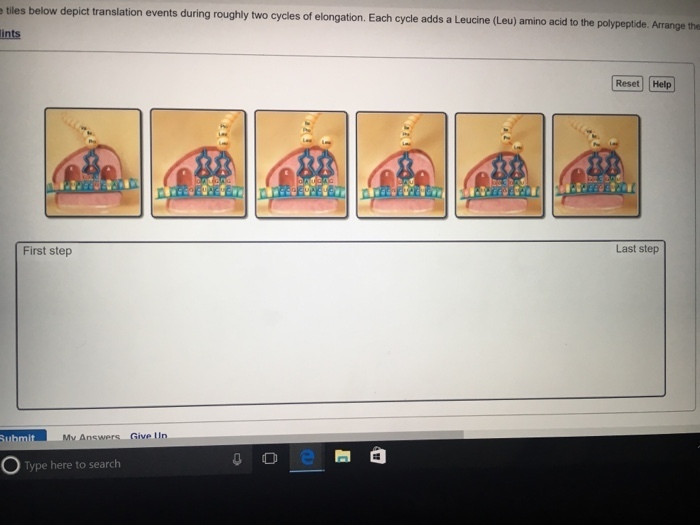
The tiles below depict translation events during roughly two cycles of elongation. each cycle adds a leucine (leu) amino acid to
sergij07 [2.7K]
I found the attached image on the internet and I believe it has the tiles referred to on the question.
As we can see on the image, the A-site, P-site, and E-site are represented. The A-site is occupied by the tRNA linked to the growing peptide chain. The P-site is the one occupied by the tRNA that works accepting the growing protein for peptide bond formation.
Firstly, the protein is formed, it is the first tile from the left.
Then, the first tile from the right is where the Leu is formed.
On the second tile from the right the Leu is then added to the protein.
The process is then repeated again as there are two cycles of elongation adding a Leu in each of them: third tile from the right, third tile from the left, second tile from the left.

7 0
2 years ago
Which is the correct sequence of events in the humoral immune response?
Blizzard [7]
B cells engulfs bacteria or toxin and then digests it. Then , it represents the antigen on its surface. The b proliferates into memory cells and plasma cells(they act of the foreign substance). Eventually a helper t cell comes on it's way and triggers more cells. 
6 0
2 years ago
Most plastics tend to persist in the environment because natural processes do not degrade them effectively. A scientist thinks t
Ne4ueva [31]

Answer:

I would say B, but I'm not completely sure sorry :(

8 0
2 years ago
Which of the following is directly involved in driving protein import into the mitochondrial matrix space? A. GTP hydrolysis out
kumpel [21]

Answer:

The correct answer is D; ATP hydrolysis inside mitochondria

Explanation:

Proteins imports brought into the matrix of mitochondria are normally taken up from the cytosol in practically less time after their discharge from ribosomes. Transportation of protein imports into the matrix is driven by energy which is supplied by:

  • <u>ATP hydrolysis outside the mitochondra: </u>this occurs in the first step of translocation process. ATP hydrolysis drives the release of newly synthesized polypeptides from the hsp70 group of chaperone proteins.
  • <u>an electrochemical proton gradient</u> across the inner mitochondrial membrane maintained by electron transport process in the inner membrane.
  • <u>ATP hydrolysis in the matrix</u>: Hsp70 chaperone proteins in the matrix space likewise have a job in the translocation procedure, and they are the third point in the import procedure at which ATP is expended.

7 0
2 years ago
MARKING BRAINLIEST 50 PTS!
Pavel [41]

I did this one a while back.

I answered that precipitation has a high effect due to greatly effecting the fish and plants that lived there, and that the pollution would change the water quality and poison many things.

Hope this helps.

Good luck!

-RxL

6 0
2 years ago
Read 2 more answers
Other questions:
  • Coach Taylor is trying to explain the negative side effects smoking has to athletic performance. Which of these options include
    8·1 answer
  • Hypothesize one way that a diploid organism could have offspring that are 3n or 4n
    6·2 answers
  • What do you think makes skin so susceptible to uncontrolled cellular growth?
    7·2 answers
  • Imagine that we mate two black labrador dogs with normal vision and find that three of the puppies are like the parents, but one
    9·1 answer
  • What is th advantage of this type of reproduction in paramecium?
    10·1 answer
  • The evolution of eukaryotic cells most likely involved: endosymbiosis of an oxygen-using bacterium in a larger host cell−the end
    10·1 answer
  • Which situation describes parasitism?
    15·2 answers
  • All proteins are synthesized by ribosomes in the cell. Some ribosomes float freely in the cytosol, while others are bound to the
    8·1 answer
  • Cells of the pancreas will incorporate radioactively labeled amino acids in to proteins. This "tagging" of newly synthesized pro
    15·2 answers
  • A student observed a palisade cell using a microscope. The microscope had four objective lenses, each with a different magnifica
    10·1 answer
Add answer
Login
Not registered? Fast signup
Signup
Login Signup
Ask question!