answer.
Ask question
Login Signup
Ask question
All categories
  • English
  • Mathematics
  • Social Studies
  • Business
  • History
  • Health
  • Geography
  • Biology
  • Physics
  • Chemistry
  • Computers and Technology
  • Arts
  • World Languages
  • Spanish
  • French
  • German
  • Advanced Placement (AP)
  • SAT
  • Medicine
  • Law
  • Engineering
prisoha [69]
2 years ago
7

A 10-year U.S. Treasury bond with a face value of $1,000 pays a coupon of 5.5% (2.75% of face value every six months). The repor

ted yield to maturity is 5.2% (a six-month discount rate of 5.2/2 = 2.6%). What is the present value of the bond? If the yield to maturity changes to 1%, what will be the present value? If the yield to maturity changes to 8%, what will be the present value? If the yield to maturity changes to 15%, what will be the present value?
Business
1 answer:
Sveta_85 [38]2 years ago
3 0

Answer:

YTM 5.2%  present value: $1,023.1644

YTM 1% present value:      $1,427.2169

YTM 8% present value:       $830.1209

YTM 8% present value:        $515.7617

Explanation:

YTM we will calculate the present value of the coupon payment

andthe maturity at each YTM rate given:

The coupon payment present value will be the present value of an ordinary annuity

C \times \frac{1-(1+r)^{-time} }{rate} = PV\\

Coupon payment 28 (1,000 x 2.75%)

time 20 (10 years x 2 payment per year)

rate          0.026 (YTM over 2 as the payment are semiannually)

27.5 \times \frac{1-(1+0.026)^{-20} }{0.026} = PV\\

PV $424.6800

The present value of the maturity will be the present value of a lump sum:

\frac{Maturity}{(1 + rate)^{time} } = PV  

Maturity   1,000.00

time   20.00

rate  0.026

\frac{1000}{(1 + 0.026)^{20} } = PV  

PV   598.48

PV c $424.6800

PV m  $598.4843

Total $1,023.1644

Now, we will calculate changin the YTM the concept and formulas are the same, just the rate is diffrent:

<u>If YTM = 1% </u>

27.5 \times \frac{1-(1+0.005)^{-20} }{0.005} = PV\\

\frac{1000}{(1 + 0.005)^{20} } = PV  

PV c $522.1540

PV m  $905.0629

Total $1,427.2169

<u>If YTM = 8%</u>

27.5 \times \frac{1-(1+0.04)^{-20} }{0.04} = PV\\

\frac{1000}{(1 + 0.04)^{20} } = PV

PV c    $373.7340

PV m   $456.3869

Total    $830.1209

<u>If YTM = 15%</u>

27.5 \times \frac{1-(1+0.075)^{-20} }{0.075} = PV\\

\frac{1000}{(1 + 0.075)^{20} } = PV

PV c $280.3485

PV m  $235.4131

Total $515.7617

You might be interested in
Select the correct answers. Which strategy would be most suitable for a company at the maturity stage of its product life cycle?
Dvinal [7]

Answer:

B

Explanation:

when creating awareness via advertising about certain product it help the public to keep anticipating about one's product

6 0
2 years ago
The holder of a promotional permit may:
MissTica
The holder of a promotional permit may MAY ENGAGE IN ACTIVITIES TO PROMOTE AND ENHANCE THE SALE OF ALCOHOLIC BEVERAGES ON BEHALF OF THE ALCOHOL MANUFACTURERS. The permit licensed the holder to market alcohol drinks without any consequence attached but he must be qualified to get the licence and he is also expected to pay annual fees.
4 0
2 years ago
Read 2 more answers
Vaughn Manufacturing reported operating data for its Sandtrap division for the year. Vaughn requires its return to be 9%. Sales
grin007 [14]

Answer:

ROI for the year will be equal to 10 %

Explanation:

We have given to total sales = $1500000

Controllable margin = $220000

Total average assets = $2200000

And fixed cost = $60000

We have to find the ROI of the year

ROI is given by

ROI=\frac{controllable\ margin}{average\ assets}=\frac{220000}{2200000}=0.1 = 10 %

So ROI will be equal to 10 %

5 0
2 years ago
What is an example of a situation in which the cost of capacity is substantially more than the cost of waiting? What would the w
labwork [276]

Answer:

<em>Cost of Capacity, Cost of Waiting</em> and <em>Waiting Lines</em> which are concepts indicated in the question speaks to Queuing Theory under Operations Management.

The goal of studying this theory simply relates to Optimizing Efficiency.

Let's define the concepts highlighted in the question.

Capacity cost is defined as the total amount of expenses incurred by an organization to provide for or increase its ability to conduct business operations. It can also be referred to as the <em>cost of service</em>.

Cost of Waiting on the hand within the context indicated above is how much it costs a business to keep customers waiting.

The more customers leave without making a purchase or do not return because of frustrating wait times, the higher the waiting cost.

Waiting Line -  This is simply a line of people waiting to be attended to, or access a product or service. It could also refer to Assembly Line. Or simply, <em>a queue.</em>

Explanation:

Cost of Waiting plus Cost of Service equals Total Cost.

<u><em>An optimized situation</em></u><u> is where the total cost is at it's lowest</u>. Reducing capacity may reduce costs of service, but cause an upward spike loss of sales due to lost customers.

Excessive capacity, on the other hand, will reduce the loss of sales due to the loss of customers but lead to an increase in operating costs.

To answer the questions, an example of a situation in which the cost of capacity is substantially more than the cost of waiting is given below:

a) If One ATM can serve 3 customer in 2 Minutes, and ATM users arrive the ATM Gallery at the rate of 3 customers every 4 minutes, then haveing 5 ATM Machines installed at such a location would translate to higher cost of capacity in relation to cost of waiting (Assuming that the cost of purchasing the machines and profit accruable from the ATM use charges are not factors under consideration)

b) the waiting line in such a condition would be substantially smaller than an optimised gallery or close to zero

Cheers!

3 0
2 years ago
A jeweler can potentially use two inputs in her handcrafted jewelry: copper or bronze. She finds that when she minimizes her cos
True [87]

Answer:

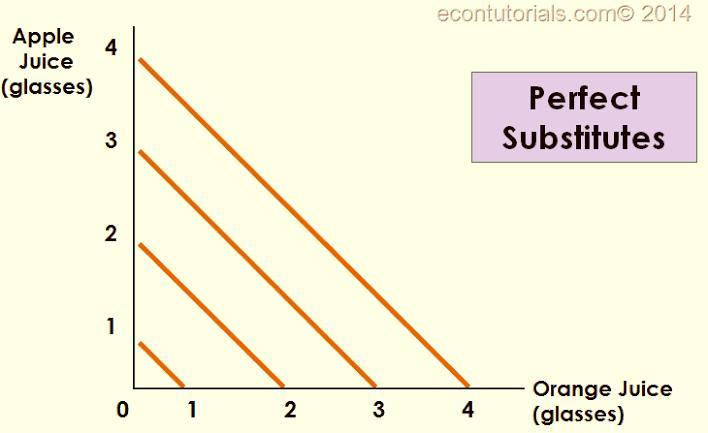
The isoquants will be straight parallel lines.

Explanation:

In the given secanrio copper or bronze may be used to produce jewellery. The utility derived from use of either one is the same. They are perfectly interchangeable. Therefore copper and bronze are perfect substitutes.

The isoquant curve shows all combinations of input that can be used to produce units of output.

For goods that have perfect substitution the isoquants are straight lines that are parallel to each other. The marginal rate of technical substitution is 1, and isoquant have slope angle of 45° with each axis.

Find attached an illustration of this. So copper is a perfect substitute for bronze.

6 0
2 years ago
Other questions:
  • Which of the following is true of entrepreneurial organizational structures? Choose all that apply.
    8·1 answer
  • Ranada Company manufactures and sells sportswear products. Ranada uses activity-based costing to determine the cost of the custo
    10·1 answer
  • One of your duties as the capacity manager for XYZ Company is to determine the best operating level. One way to help determine c
    15·1 answer
  • Marco owns the following portfolio of stocks. What is the expected return on his portfolio?
    11·1 answer
  • A company purchases a machine for $12,000. The estimated residual value is $4,000. The machine has a useful life of 5 years, and
    9·1 answer
  • During 2019, its second year in operation, Sanborn Company delivered goods to customers equal to $6,250,000. The amount of cash
    10·1 answer
  • Suppose three companies, Optimax, Megachug, and Thirstoid, dominate the sports drink market. Optimax enjoys the largest market s
    10·1 answer
  • Brush Industries reports the following information for May: Sales $ 915,000​ Fixed cost of goods sold 103,000​ Variable cost of
    11·1 answer
  • Seth owns a local business that provides email updates on surf conditions. He is the only supplier of these email updates in San
    9·1 answer
  • Mr. David decision to increase inventory holdings resulted from the consistent pressure of Golden Cup’s Board of Directors to in
    13·1 answer
Add answer
Login
Not registered? Fast signup
Signup
Login Signup
Ask question!