answer.
Ask question
Login Signup
Ask question
All categories
  • English
  • Mathematics
  • Social Studies
  • Business
  • History
  • Health
  • Geography
  • Biology
  • Physics
  • Chemistry
  • Computers and Technology
  • Arts
  • World Languages
  • Spanish
  • French
  • German
  • Advanced Placement (AP)
  • SAT
  • Medicine
  • Law
  • Engineering
Stolb23 [73]
2 years ago
6

Mammals like caribou that live in the arctic often use different lipid types in their legs. Legs are more susceptible to heat lo

ss than internal organs, which are closer to the body core and stay warmer. Which adaptations would you expect for lipids in caribou legs?
1. The lipids would be more saturated. True / False
2. The lipids on the fatty acid tails would be shorter. True / False
3. The membranes would contain more cholesterol. True / False
Biology
1 answer:
motikmotik2 years ago
8 0

1. The lipid would be more saturated. FALSE

2. The lipids on the fatty acid tails would be much shorter. TRUE

3. The membranes would contain more cholesterol. TRUE

<u>Explanation:</u>

The mammal caribou lives I the extremely cold environment of the Arctic and thus has several physiological adaptations to survive the cold. They have short ears to reduce heat loss and have two layers of fur. The lipids in caribou legs have several adaptations

When compared with saturated fatty acids unsaturated fatty acids are more fluid at low temperatures. Thus the lipids in the legs of caribou are unsaturated to maintain fluid nature at low temperatures of the Arctic. Shorter lipids on fatty acid tails remain more fluid at low temperatures when compared with the longer ones.  

Thus the lipid in the fatty acid tails will be shorter. Similarly the presence of more cholesterol in the membranes would make it more fluid in the cold conditions of the external environment. Thus the membranes would have more cholesterol.

You might be interested in
For what purpose(s) might a karyotype be prepared?
Lynna [10]

Answer:

The correct answer will be option-C.

Explanation:

A karyotype is the visual representation of the chromosome numbers present in a cell of an organism.

The karyotyping is a technique performed to prepare the karyotype of the organism which plays an important role in analyzing the chromosomal abnormalities of the organism.

The analysis of the chromosomal abnormalities helps us study the genetic disorder and diagnose genetic disease. The karyotyping is performed during pregnancy which helps visualize the disease in a family with a history of genetic disorders.

Thus, Option-C is the correct answer.

4 0
2 years ago
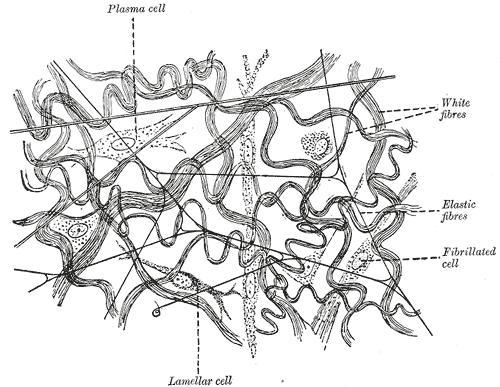
In connective tissue, the role of elastic fibers is to __________. provide tensile strength retain fluid provide flexibility for
Svetllana [295]

Answer:

provide flexibility

Explanation:

According to my research on studies conducted by various medical professionals, I can say that based on the information provided within the question the role of elastic fibers is to provide flexibility. Elastic fibers contain elastin, a protein that acts like rubber and allows them to stretch and recoil like rubber bands, making them very flexible.

I hope this answered your question. If you have any more questions feel free to ask away at Brainly.

6 0
2 years ago
Water evaporates from a lake. Arrange the next steps of the water cycle in the correct order.
Sedaia [141]

Answer:

1. Water vapor condenses to form clouds.

2. Water falls as rain, snow, and sleet.

3. Water flows down mountains and hills.

4. Water joins streams or forms groundwater.

7 0
2 years ago
Read 2 more answers
Which is visible evidence of energy passing through water?
AlexFokin [52]
ANSWER
A wave
EXPLANATION
Due to the earths moon, tidal waves increase in energy.
#mark me brainliest please
6 0
2 years ago
Read 2 more answers
Which of the following sets of materials is required by both eukaryotes and prokaryotes for replication? Group of answer choices
erastova [34]

Answer:

Double-stranded DNA.

Explanation:

Replication may be defined as the process of formation of the daughter DNA from the parent DNA with the help of enzymes and proteins. The three main process of replication are inititation , elongation and termination.

The double stranded DNA molecule undergoes the process of replication. Four different dNTPs - adenine, guanine, thymine and cytosine are required for the process of replication.  Primers are required for initiation of the process of replication and ori region is the inititaion point of replication.

Thus, the correct answer is option (a).

6 0
2 years ago
Other questions:
  • A species of snapping turtles has a tongue that resembles a worm. The tongue is used to attract small fish. Which best describes
    7·1 answer
  • What element is the most abundant in the earth's crust?
    5·1 answer
  • The lithosphere is carried on a softer, but still firm layer of rock called the ?
    12·1 answer
  • Describe how you could simulates one of the cases from the computer simulation (Case 2, Case 3, or Case 4) using the basic labor
    15·1 answer
  • Complete the following analogy regarding cell division.
    13·1 answer
  • Monarch butterflies have brightly colored orange wings with black patterns on them, making them easily visible to birds that eat
    5·1 answer
  • Anthony has been refusing to go to school. Anthony's culture places great emphasis on academic achievement and expects that youn
    15·1 answer
  • Mitosis and meiosis always differ in regard to the presence of a. chromatids. b. homologs. c. bivalents. d. centromeres. e. spin
    7·2 answers
  • Which best describes a role of animals in the water cycle?
    6·2 answers
  • Why are the cells of the alveoli so flattened?
    11·1 answer
Add answer
Login
Not registered? Fast signup
Signup
Login Signup
Ask question!