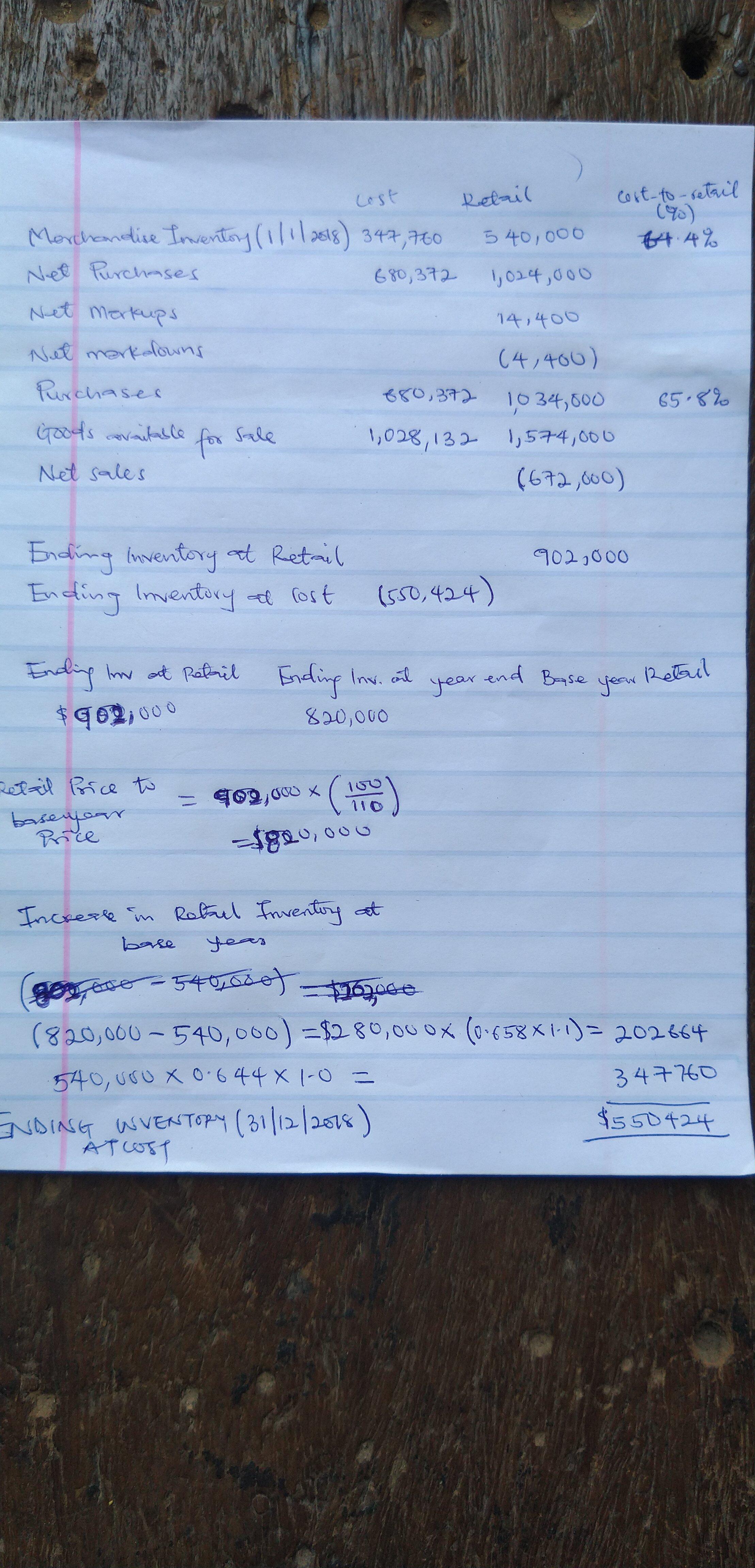
answer.
Ask question
Login Signup
Ask question
All categories
  • English
  • Mathematics
  • Social Studies
  • Business
  • History
  • Health
  • Geography
  • Biology
  • Physics
  • Chemistry
  • Computers and Technology
  • Arts
  • World Languages
  • Spanish
  • French
  • German
  • Advanced Placement (AP)
  • SAT
  • Medicine
  • Law
  • Engineering
Tasya [4]
2 years ago
8

g The round-trip business class airfare from Boston to Amsterdam (from August 18 through August 21) is $6,000. The round-trip bu

siness class airfare from Boston to Amsterdam to Athens and then returning to Boston (from August 18 through August 31) is $4,000. What is the most likely explanation for this price difference?
Business
2 answers:
den301095 [7]2 years ago
7 0

Answer:

The Boston-Amsterdam round-trip travelers are more likely to be on business, whereas the multi-city travelers going to Greece are likely to be on vacation, and therefore more price-sensitive.

Explanation:

The customers with more price- sensitivity are charge less than the customers with less price-sensitivity. multi-city travelers are more likely to be on a tour of cities and the Boston-Amsterdam travelers are likely to be on business.

Anestetic [448]2 years ago
5 0

Answer:

The reason for this is that aire company's have a roken demand

When the flights are for business people they have a lwoer price elasticity than tourist. In this case the Bston to Amsterdam, for reasons of times it is considered a business flight in the company's price policy thus, hiigher price.

While the other, as it has more days in the foreing country is considered tourist thus, a different price policy applied.

Explanation:

You might be interested in
During March, Patt, Inc. purchases and uses 8,800 pounds of materials costing $35,640 to make 4,000 tiles. Patt's standard mater
omeli [17]

Answer and Explanation:

The computation is shown below:

Total material cost variance

= (Standard quantity × standard price) - (actual quantity × actual price)

= (4,000 tiles × 2 pounds of material × $4) - (8,800 pounds × $35,640 ÷ 8,800 pounds)

= (8,000 pounds × $4) - ($8,800 pounds × $4.05)

= $3,640 unfavorable

For material price variance

= Actual Quantity × (Standard Price - Actual Price)

= 8,800 × ($4 - $4.05)

= $440 unfavorable

For material quantity variance

= Standard Price × (Standard Quantity - Actual Quantity)

= $4 × (8,000 pounds - 8,800 pounds)

= $3,200 unfavorable

The favorable variance is that in which the standard cost is more than the actual cost and the inverse goes to unfavorable variance

4 0
2 years ago
We have the following CAPM E(Ri) = .06 + .08 Beta; a) If Stock X has a beta of 2, what is the required rate of return? b) If we
sergiy2304 [10]

Answer:

Please kindly go through explanation for the answers.

Explanation:

A)The required return if Beta is 2 = 0.06+0.08*2 =0.22

B)Here Rf = 0.06

Expected return of the portfolio = 0.4*22% + 0.6*6% =12.4%

since beta of Rf = 0,the expected beta = 0.4*2 = 0.8

C)Beta is nothing but systematic risk of a security in comparing to the market. In this case stock z having beta of 1.5 which is less than beta of stockX i.e 2. and expected return is 15%.so stockz is offering lower return at lower risk. If the investor is a risk averse its a good buy.

D) let W be portion of stock X.

Then w*2 + (1-w)*0 = 1.5

W = 1.5/2 =0.75

to construct a portfolio which has a beta of 1.5 we have to invest 75% of our money in stock X and remaining in risk free asset

E) expected return = 0.22*.75 +0.25*0.06 = 16.5% + 1.5% = 18%

4 0
2 years ago
Shelby is considering whether to drop a product line from her business. Some administrative costs are being allocated to the pro
schepotkina [342]

Answer:

D. Administrative costs are always relevant.

Explanation:

As Shelby is considering whether to drop a product line from her business. Some administrative costs are always being allocated to the product line but will not change in total if Shelby decides to drop the product line. Administrative costs are always relevant.  Administrative costs can be defined as the costs and expenses which are not directly related to any specific department like sales, manufacturing or marketing etc. These are the costs which are related to the company as a whole like, salaries of employees, expenses linked withe the general services like IT and accounting etc. These costs have no linkage with the gross margin. On the other hand, we can define a relevant cost that gives us a differences between two options and alternatives and it can be avoided by choosing one option over another. Therefore, Shelly should take this fact into account because administrative costs are very much relevant and important as well in order to make this particular decision about the product line.

3 0
2 years ago
Based on the following data, estimate the cost of the ending merchandise inventory:
Fittoniya [83]

Answer:

$205,000

Explanation:

Given that,

Sales = $9,250,000

Estimated gross profit rate = 36%

Beginning merchandise inventory = $180,000

Purchases (net) = $5,945,000

Merchandise available for sale = $6,125,000

Estimated cost of merchandise sold:

= Sales(net) - Gross profit

= $9,250,000 - (36% × $9,250,000)

= $9,250,000 - $3,330,000

= $5,920,000

Cost of Ending Merchandise Inventory:

= Merchandise available for sale - Estimated cost of merchandise sold

= $6,125,000 - $5,920,000

= $205,000

5 0
2 years ago
Shamas famous restaurants expects to pay a common stock dividend of $1.50 per share next year (d1). dividends are expected to gr
Tpy6a [65]

The company's external equity comes from those funds raised from public issuance of shares or rights. The cost of external equity is the minimum rate of return which the shareholders supply new funds <span>by </span>purchasing<span> new shares to prevent the decline of the market value of the shares. To compute the cost of external equity, we should use this formula:</span> 

Ke<span> = (DIV 1 / Po) + g</span> 

Ke<span> = cost of external equity</span> 

DIV 1 = dividend to be paid next year 

Po = market price of share 

g = growth rate 

In the problem, the estimated dividend to be paid next year is $1.50. The market price is $18.50 and the growth rate is 4%. 

<span>Substituting the given to the formulas, we need to divide $1.50 by $18.50 giving us the result of 8.11% plus the growth rate; this would yield to the result of 12.11% cost of external equity.</span>

8 0
2 years ago
Other questions:
  • At Milton farms, where a large part of the management comes from the same sociocultural background, many employees of diverse et
    5·1 answer
  • Oliver owns Wifit, an unincorporated sports store. In 2019, Wifit earned $100,000 before Oliver drew out a salary of $60,000.
    9·1 answer
  • In early January 2020, Southland Growers began construction of a new, fully automated citrus processing plant. The plant was fin
    10·1 answer
  • The table contains information on the price per month and the monthly demand and supply of online music streaming subscriptions.
    10·1 answer
  • Peachtree Doors, Inc. is in the process of setting a target price on its newly designed patio door. Cost data relating to the do
    10·2 answers
  • Cahalane Corporation has provided the following data for its two most recent years of operation: Selling price per unit $ 91 Man
    14·1 answer
  • Per Chevron’s 3Q 2013 filing, what was the percentage change in diluted EPS when comparing nine months ended September 30, 2013
    5·1 answer
  • _____ tend to outperform during an economic slowdown. a. Consumer durable goods b. Consumer staples c. Cyclical companies
    5·1 answer
  • mith Manufacturing Company allows employees to purchase materials, such as metal and limber, for personal use at a price equal t
    13·1 answer
  • During the past year, Arther Anderson Services paid $360,800 in interest along with $48,000 in dividends. The company issued $23
    13·1 answer
Add answer
Login
Not registered? Fast signup
Signup
Login Signup
Ask question!