answer.
Ask question
Login Signup
Ask question
All categories
  • English
  • Mathematics
  • Social Studies
  • Business
  • History
  • Health
  • Geography
  • Biology
  • Physics
  • Chemistry
  • Computers and Technology
  • Arts
  • World Languages
  • Spanish
  • French
  • German
  • Advanced Placement (AP)
  • SAT
  • Medicine
  • Law
  • Engineering
Softa [21]
2 years ago
6

A spectator ion is (Select all that apply.) a. an ionic component of a reactant that is unchanged by the reaction your eye, b. c

arefully watching the progress of the reaction in this experiment, c. nitrate ion a piece of french fry contaminating the reaction mixture
Chemistry
1 answer:
DENIUS [597]2 years ago
5 0

Correct Question:

A spectator ion is (Select all that apply.)

- a piece of french fry contaminating the reaction mixture

- an ionic component of a reactant that is unchanged by the reaction

-in this experiment, nitrate ion

- your eye, carefully watching the progress of the reaction

Answer:

- an ionic component of a reactant that is unchanged by the reaction

Explanation:

A spectator ion is an ion that exists as a reactant and a product in a chemical equation. A spectator ion is one that exists in the same form on both the reactant and product sides of a chemical reaction.

Spectator ions are ions that are present in a solution but don't take part in the reaction. When reactants dissociate into ions, some of the ions may combine to form a new compound. The other ions don't take part in this chemical reaction and are therefore called spectator ions.

The correct option is therefore the option;

- an ionic component of a reactant that is unchanged by the reaction

You might be interested in
Circle the molecule(s) in the atmosphere that come from animals. (circle all that apply)
bagirrra123 [75]

Answer:

A and C

Explanation:

A; Animals inhale and exhale, breath oxygen, leave carbon dioxide.

C; We fart, so do they! (farts are a release of methane gas from our bodies) Just ask my dog...

Hope this helped!

6 0
2 years ago
How many moles are there in 3.612 X 10^24 molecules of phosgene (COCL2)
Ugo [173]

Answer:

Explanation:

No of molecules = 3.612*10(24)

Avogadro's number = 6.022*10(23)

no of moles = No of molecules/Avogadro's number

No of moles =3.612*10(24)/6.022*10(23)

No of moles = 6mol

3 0
2 years ago
Read 2 more answers
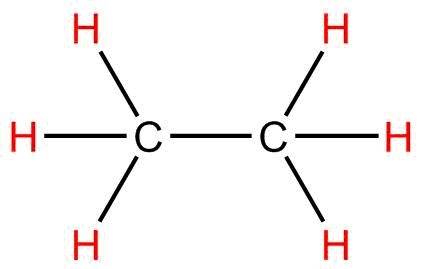
What is the maximum number of hydrogen atoms that can be covalently bonded in a molecule containing two carbon atoms?a) 2b) 3c)
aksik [14]

Answer:

           The correct answer is Option-D (6 Hydrogen atoms).

Explanation:

                  Carbon atom has a unique property of linking to it self and making a chain of carbon called as Catenation. In a molecule having two carbon atoms there must be a bond between the two carbon atoms. The bond can be saturated (single bond) or unsaturated (double or triple bond). But as the statement states maximum number of hydrogen atoms so, we will asume the bond between two carbon atoms to be single.

                  As carbon has four valence electrons so, it has the ability to make four single bonds. In given molecule each carbon has already made a single bond with another carbon therefore, each carbon is left with three more unpaired electrons which will make covalent bond with three hydrogen atoms each as shown in attached structure.

8 0
2 years ago
You are given three bottles labeled a, b, and
ElenaW [278]

Answer :Solid in bottle a is ionic, solid in bottle b is molecular and solid in bottle c is ionic.

Explanation :

Ionic compound is formed when a metal atom donates one or more electrons to a non metal. This results in the formation of a cation ( a positive ion) and an anion ( a negative ion). These ions are bonded to each other by electrostatic attraction.

The intermolecular forces in case of a an ionic compound are very strong.

The melting point of a substance depends on how strongly the molecules are attracted to each other. Stronger the forces, higher is the melting point.

Therefore ionic compounds always have very high melting points.

On the other hand, covalent compounds have weak intermolecular forces. Therefore they have low melting points.

Based on above discussion, we can classify the given compounds as follows.

a) Solid in bottle a is Ionic as it has high melting point.

b) Solid in bottle b is molecular as it has low melting point.

c) Solid in bottle c is Ionic as it has high melting point.

6 0
2 years ago
Stephanie has been doing research on how petroleum is formed. She says that oxygen must be present while the tiny plants and ani
madreJ [45]

Answer:

No, Stephanie is incorrect. Formation of petroleum cannot take place under the presence of oxygen.

Explanation:

Since, the petroleum is fossil product. Fossil fuel are formed under high pressure and temperature with absence of oxygen for longer period. so the way she is performing is completely incorrect. With the presence of oxygen in no way petroleum will be formed. The temperature and pressure should be in different combination for the formation of the petroleum. Along with the layers of sediments to maintain the pressure is required.


5 0
2 years ago
Read 2 more answers
Other questions:
  • What is science?
    7·1 answer
  • Select the reagent(s) that would efficiently convert the starting material to the product for the following transformations (if
    11·1 answer
  • The half-cell is a chamber in the voltaic cell where one half-cell is the site of the oxidation reaction and the other half-cell
    10·1 answer
  • In any engineering design problem, the first step is to understand the problem and identify one or more possible solutions. In t
    12·1 answer
  • The sun shines with equal intensity on a farm field, an asphalt road, and the ocean. Which material will heat up most during the
    5·1 answer
  • A magnesium ion, Mg2+, with a charge of 3.2×10⁻¹⁹C and an oxide ion, O2−, with a charge of −3.2×10⁻¹⁹C, are separated by a dista
    6·1 answer
  • How many moles are equal to 47.2 g of K2O
    15·2 answers
  • Nickel-63 has a half life of 92 hours. If a
    14·1 answer
  • The density of honey is 1.42 g/mL. If you poured honey into a glass of water, would it sink to the bottom or float on top? Expla
    11·1 answer
  • A student in a chemistry laboratory has access to two acid solutions. The first one is 20% acid and the second solution is 45% a
    12·1 answer
Add answer
Login
Not registered? Fast signup
Signup
Login Signup
Ask question!