answer.
Ask question
Login Signup
Ask question
All categories
  • English
  • Mathematics
  • Social Studies
  • Business
  • History
  • Health
  • Geography
  • Biology
  • Physics
  • Chemistry
  • Computers and Technology
  • Arts
  • World Languages
  • Spanish
  • French
  • German
  • Advanced Placement (AP)
  • SAT
  • Medicine
  • Law
  • Engineering
Cerrena [4.2K]
2 years ago
6

Kim wants a candy bar and tries to convince her father to purchase one for her by threatening to throw a fit in the crowded groc

ery store if he does not. This is an example of which of the following tactics used by children to influence their parents?
pressure tactic
ingratiating tactic
exchange tactic
coalition tactic
consultation tactic
Engineering
1 answer:
Mrac [35]2 years ago
5 0

pressure tactic Answer:

Explanation:

because the kid will embarrass the parents and the parents will give the kid there way.

You might be interested in
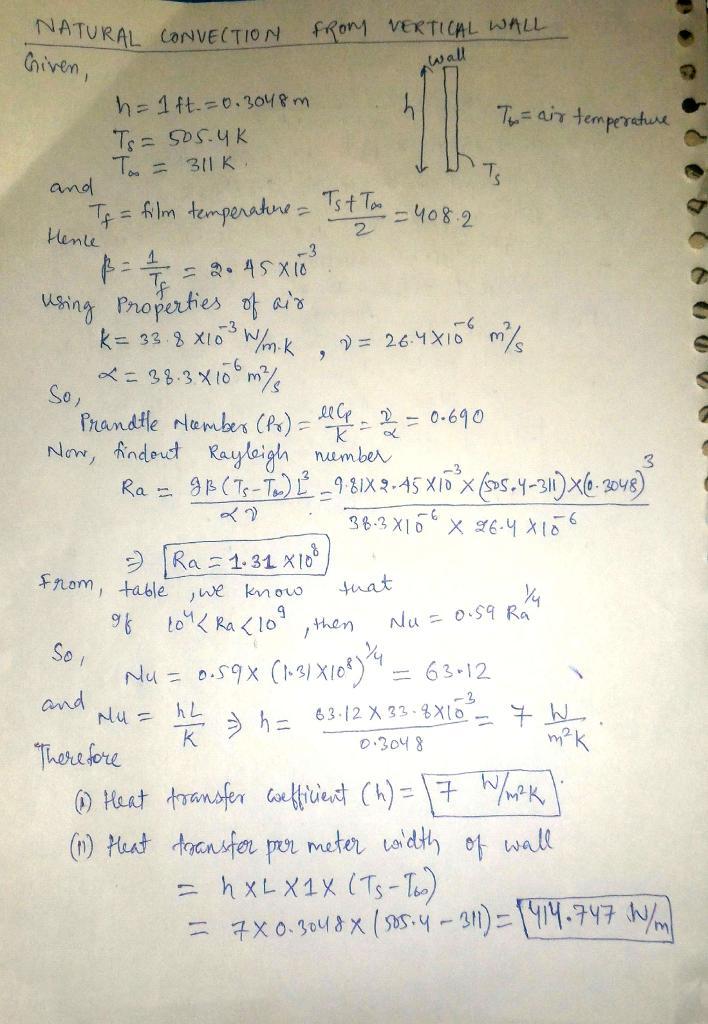
Natural Convection from an Oven Wall. The oven wall in Example 4.7-1 is insulated so that the surface temperature is 366.5 K ins
lukranit [14]

Answer:

i) Heat transfer coefficient (h) = 7 w/m²k

ii) Heat transfer per meter width of wall

      = h x L x 1 x (Ts - T₆₀)

        = 7 x 0.3048 x (505.4 - 322) = 414.747 w/m

Explanation:

see attached image

8 0
2 years ago
Finally you will implement the full Pegasos algorithm. You will be given the same feature matrix and labels array as you were gi
Diano4ka-milaya [45]

Answer:

In[7] def pegasos(feature_matrix, labels, T, L):

   """

   .

   let learning rate = 1/sqrt(t),

   where t is a counter for the number of updates performed so far       (between 1   and nT inclusive).

Args:

       feature_matrix - A numpy matrix describing the given data. Each row

           represents a single data point.

       labels - A numpy array where the kth element of the array is the

           correct classification of the kth row of the feature matrix.

       T -  the maximum number of times that you should iterate through the feature matrix before terminating the algorithm.

       L - The lamba valueto update the pegasos

   Returns: Is defined as a  tuple in which the first element is the final value of θ and the second element is the value of θ0

   """

   (nsamples, nfeatures) = feature_matrix.shape

   theta = np.zeros(nfeatures)

   theta_0 = 0

   count = 0

   for t in range(T):

       for i in get_order(nsamples):

           count += 1

           eta = 1.0 / np.sqrt(count)

           (theta, theta_0) = pegasos_single_step_update(

               feature_matrix[i], labels[i], L, eta, theta, theta_0)

   return (theta, theta_0)

In[7] (np.array([1-1/np.sqrt(2), 1-1/np.sqrt(2)]), 1)

Out[7] (array([0.29289322, 0.29289322]), 1)

In[8] feature_matrix = np.array([[1, 1], [1, 1]])

   labels = np.array([1, 1])

   T = 1

   L = 1

   exp_res = (np.array([1-1/np.sqrt(2), 1-1/np.sqrt(2)]), 1)


   pegasos(feature_matrix, labels, T, L)

Out[8] (array([0.29289322, 0.29289322]), 1.0)

Explanation:

In[7] def pegasos(feature_matrix, labels, T, L):

   """

   .

   let learning rate = 1/sqrt(t),

   where t is a counter for the number of updates performed so far       (between 1   and nT inclusive).

Args:

       feature_matrix - A numpy matrix describing the given data. Each row

           represents a single data point.

       labels - A numpy array where the kth element of the array is the

           correct classification of the kth row of the feature matrix.

       T -  the maximum number of times that you should iterate through the feature matrix before terminating the algorithm.

       L - The lamba valueto update the pegasos

   Returns: Is defined as a  tuple in which the first element is the final value of θ and the second element is the value of θ0

   """

   (nsamples, nfeatures) = feature_matrix.shape

   theta = np.zeros(nfeatures)

   theta_0 = 0

   count = 0

   for t in range(T):

       for i in get_order(nsamples):

           count += 1

           eta = 1.0 / np.sqrt(count)

           (theta, theta_0) = pegasos_single_step_update(

               feature_matrix[i], labels[i], L, eta, theta, theta_0)

   return (theta, theta_0)

In[7] (np.array([1-1/np.sqrt(2), 1-1/np.sqrt(2)]), 1)

Out[7] (array([0.29289322, 0.29289322]), 1)

In[8] feature_matrix = np.array([[1, 1], [1, 1]])

   labels = np.array([1, 1])

   T = 1

   L = 1

   exp_res = (np.array([1-1/np.sqrt(2), 1-1/np.sqrt(2)]), 1)


   pegasos(feature_matrix, labels, T, L)

Out[8] (array([0.29289322, 0.29289322]), 1.0)

6 0
2 years ago
What does the following program segment do? Declare Count As Integer Declare Sum As Integer Set Sum = 0 For (Count = 1; Count &l
Troyanec [42]

1225

<u>Explanation:</u>

This segment helps initialize sum as 0. The for loop is used to increment with every execution and it is added to the sum. The loop runs 49 times and every time the count is added to the sum. In short it is the sum of first 49 natural numbers i.e 1+2+3+......+49.

6 0
2 years ago
. A belt drive is desired to couple the motor with a mixer for processing corn syrup. The 25-hp electric motor is rated at 950 r
forsale [732]

Answer:

Hello the table which is part of the question is missing and below are the table values

For a 5V belt the available diameters are : 5.5, 5.8, 5.9, 6.2, 6.3, 6.6, 12.5, 13.9, 15.5, 16.1, 18.5, 20.1

Answers:

belt size = 140 in with diameter of 20.1n

actual speed of belt = 288.49 in/s

actual center distance = 49.345 in

Explanation:

Given data :

Electric motor (driver sheave) speed (w1) = 950 rpm

Driven sheave speed (w2) = 250 rpm

pick D1 ( diameter of driver sheave)  = 5.8 in  ( from table )

To select an appropriate belt size we apply the equation for the velocity ratio to get the diameter first

VR = \frac{w1}{w2} = 950 / 250

also since the speed of  belt would be constant then ;

Vb = w1r1 = w2r2 ------- equation 1

r = d/2

substituting the value of r into equation 1

equation 2 becomes : \frac{w1}{w2} = \frac{d2}{d1}    = VR

Appropriate belt size ( d2) can be calculated as

d2 = \frac{w1d1}{w2} = \frac{950 * 5.8}{250} = 22.04

From the given table the appropriate belt size would be : 20.1 because it is the closest to the calculated value

next we have to determine the belt length /size

L = 2C + \frac{\pi }{2} ( d1+d2) + \frac{(d2-d1)^2}{4C}

inputting  all the values into the above equation including the value of C as calculated below

L ≈ 140 in

Calculating the center distance

we use this equation to get the ideal center distance

d2< C_{ideal} < 3( d1 +d2)

22.04 < c < 3 ( 5.8 + 20.1 )

22.04 < c < 77.7

the center distance is between 22.04 and 77.7  but taking an average value

ideal center distance would be ≈ 48 in

To calculate the actual center distance we use

C = \frac{B+\sqrt{B^2 - 32(d2-d1)^2} }{16} -------- equation 3

B = 4L -2\pi (d2 + d1 )

inputting all the values into (B)

B = 140(4) - 2\pi( 20.01 + 5.8 )

B ≈ 399.15 in

inputting all the values gotten Back to equation 3 to get the actual center distance

C = 49.345 in ( actual center distance )

Calculating the actual belt speed

w1 = 950 rpm = 99.48 rad/s

belt speed ( Vb) = w1r1 = w1 * \frac{d1}{2}

                           = 99.48 * 5.8 / 2 = 288.49 in/s

3 0
2 years ago
During an experiment conducted in a room at 25°C, a laboratory assistant measures that a refrigerator that draws 2 kW of power h
zvonat [6]

Answer:

Not reasonable.

Explanation:

To solve this problem it is necessary to take into account the concepts related to the performance of a reversible refrigerator. The coefficient of performance is basically defined as the ratio between the heating or cooling provided and the electricity consumed. The higher coefficients are equivalent to lower operating costs. The coefficient can be greater than 1, because it is a percentage of the output: losses, other than the thermal efficiency ratio: input energy. For a reversible refrigerator the coefficient is given by

COP_{R,rev} = \frac{1}{\frac{T_1}{T_2}-1}

Where,

T_1 =High temperature

T_2 =Low Temperature

With our values previous given we can find it:

T_2 = -30\°C = (-30+273)

T_2 = 243K

T_1 = 25\°C = (25+273)

T_1 = 298K

With these values we can now calculate the coefficient of performance:

COP_{R,rev} = \frac{1}{\frac{298}{243}-1}

COP_{R,rev} = 4.42

At the same time we can calculate the work consumption of the refrigerator, this is

W = \dot{W}\Delta t

Where,

\dot{W} = Required power input

t = time to remove heat from a cool to water medium

W = 2kJ/s * 20 min

W = 2kJ/s * 1200s

W = 2400kJ

In this way we can calculate the coefficient of the refrigerator directly:

COP_R = \frac{Q_L}{W}

Where,

Q = Amoun of heat rejected

COP_R = \frac{30000}{2400}

COP_R = 12.5

Comparing the values of both coefficients we have that the experiments are NOT reasonable, because the coefficient of a refrigerator is high compared to  coefficient of reversible refrigerator.

5 0
2 years ago
Other questions:
  • What are the three most common metals used in die casting?
    6·1 answer
  • Which of the following is correct regarding the principal stresses and maximum in-plane shear stresses? a. Principal stresses ca
    14·1 answer
  • An art collector is bidding on a statue that would complete a collection he is trying to assemble. The statue is being sold in a
    9·1 answer
  • Water is to be withdrawn from an 8-m-high water reservoir by drilling a 2.2-cm-diameter hole at the bottom surface. Disregarding
    12·2 answers
  • A single crystal of a metal that has the FCC crystal structure is oriented such that a tensile stress is applied parallel to the
    7·1 answer
  • A cylinder with a 0.25 m inner diameter and a 0.43 m outer diameter is internally pressurized to 175 MPa. a) Determine the maxim
    15·1 answer
  • Milton has been tracking the migrating patterns of whales in the northwest Atlantic Ocean for five years. He knows where and whe
    5·2 answers
  • Draw an ERD for each of the following situations. (If you believe that you need to make additional assumptions, clearly state th
    15·1 answer
  • Mr. Ray deposited $200,000 in the Old and Third National Bank. If the bank pays 8% interest, how much will he have in the accoun
    10·2 answers
  • It has been stated that crime rates are impacted by ecological conditions. Which of the following
    13·1 answer
Add answer
Login
Not registered? Fast signup
Signup
Login Signup
Ask question!