answer.
Ask question
Login Signup
Ask question
All categories
  • English
  • Mathematics
  • Social Studies
  • Business
  • History
  • Health
  • Geography
  • Biology
  • Physics
  • Chemistry
  • Computers and Technology
  • Arts
  • World Languages
  • Spanish
  • French
  • German
  • Advanced Placement (AP)
  • SAT
  • Medicine
  • Law
  • Engineering
DedPeter [7]
2 years ago
12

In a first-order reaction, the half-life is 139 minutes. What is the rate constant?

Chemistry
1 answer:
Valentin [98]2 years ago
3 0

Answer:

a. 8.31 x 10⁻⁵ s-1

Explanation:

The general first-order reaction is:

ln[A] = ln[A]₀ -kt

<em>Where [A] is acutal concentration of reactant, initial concentration is [A]₀, k is rate constant and t is time pass</em>

And the equation of the half-life, t 1/2, is:

t_{1/2} = \frac{ln 2}{K}

Has half-life is 139min:

139min * (60s / 1min) = 8340s

t_{1/2} = \frac{ln 2}{8340s}

Half-life is 8.31x10⁻⁵ s⁻¹

<h3>a. 8.31 x 10⁻⁵ s-1 </h3>

You might be interested in
A 108 49in source emits a 633-kev gamma photon and a 606-kev internal-conversion electron from the k shell. what is the binding
____ [38]
Binding energy is the energy needed to emit the electron from the shell. Using the formula below to compute for BE. Binding Energy BE = Energy of photon - Kinetic energy electron
where 
Energy proton= 633 keV
KE electron = 606 keV
Binding energy BE = 27 keVThe binding energy of the k subshell is equal to 27 keV.

6 0
2 years ago
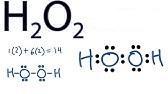
Many free radicals combine to form molecules that do not contain any unpaired electrons. The driving force for the radical–radic
Alexxandr [17]

Answer:

In the attached image the Lewis equation is shown where it is shown how two oxygens react with two hydrogens to meet the octet of the electrons.

Explanation:

Hydrogen peroxide is one of the most named chemicals since it is not only sold as "hydrogen peroxide" in pharmacies but it is also one of the great weapons of immune defense cells to defend ourselves against anaerobic bacteria.

The disadvantage of this compound is that when dividing it forms free oxygen radicals that are considered toxic or aging for our body.

4 0
2 years ago
A line in the Brackett series of hydrogen has a wavelength of 1945 nm. From what state did the electron originate?
fiasKO [112]
Rydberg Eqn is given as:
 1/λ = R [1/n1^2 - 1/n2^2] 
<span>Where λ is the wavelength of the light; 2626 nm = 2.626×10^-6 m </span>
<span>R is the Rydberg constant: R = 1.09737×10^7 m-1 </span>
<span>From Brackett series n1 = 4 </span>
<span>Hence 1/(2.626×10^-6 ) = 1.09737× 10^7 [1/4^2 – 1/n2^2] </span>
<span>Some rearranging and collecting up terms: </span>
<span>1 = (2.626×10^-6)×(1.09737× 10^7)[1/16 -1/n2^2] </span>
<span>1= 28.82[1/16 – 1/n2^2] </span>
<span>28.82/n^2 = 1.8011 – 1 = 0.8011 </span>
<span>n^2 = 28.82/0.8011 = 35.98 </span>
<span>n = √(35.98) = 6</span>
4 0
2 years ago
Read 2 more answers
Describe how you would prepare exactly 100 mL of 0.109 M picolinate buffer, pH 5.61. Possible starting materials are pure picoli
Pepsi [2]

Answer:

1.342g of picolinic acid and 6.743mL of 1.0M NaOH diluting the mixture to 100.0mL

Explanation:

<em>The pKa of the picolinic acid is 5.4.</em>

Using Henderson-Hasselbalch formula for picolinic-picolinate buffer:

pH = pKa + log [Picolinate] / [Picolinic]

<em>Where [] could be taken as moles of each species</em>

<em />

5.61 = 5.4 + log [Picolinate] / [Picolinic]

0.21 = log [Picolinate] / [Picolinic]

1.62181 = [Picolinate] / [Picolinic] <em>(1)</em>

<em></em>

Now, both picolinate and picolinic acid will be:

0.100L * (0.109mol / L) =

0.0109 moles = [Picolinate] + [Picolinic] <em>(2)</em>

<em></em>

First, as we will start with picolinic acid, we need add:

0.0109 moles picolinic acid * (123.10g/mol) = 1.342g of picolinic acid

Now, replacing (2) in (1):

1.62181 = 0.0109 moles - [Picolinic] / [Picolinic]

1.62181 [Picolinic] = 0.0109 moles - [Picolinic]

2.62181 [Picolinic] = 0.0109 moles

[Picolinic] = 4.157x10⁻³ moles

And:

[Picolinate] = 0.0109 - 4.157x10⁻³ moles =

<h3>6.743x10⁻³ moles</h3><h3 />

To obtain these moles of picolinate ion we need to make the reaction of the picolinic acid with NaOH:

Picolinic acid + NaOH → Picolinate + Water

<em>That means to obtain 6.743x10⁻³ moles of picolinate ion we need to add 6.743x10⁻³ moles of NaOH</em>

<em />

6.743x10⁻³ moles of NaOH that is 1.0M are, in mL:

6.743x10⁻³ moles * (1L / 1mol) = 6.743x10⁻³L * 1000 =

<h3>6.743mL of the 1.0M NaOH must be added</h3><h3 />

Thus, we obtain the desire moles of picolinate and picolinic acid to obtain the buffer we want, the last step is:

<h3>Dilute the mixture to 100mL, the volume we need to prepare</h3>
3 0
2 years ago
An amount of solid barium chloride, 20.8 g, is dissolved in 100 g water in a coffee-cup calorimeter by the reaction: BaCl2 (s) 
mamaluj [8]

Answer : The enthalpy change during the reaction is -6.48 kJ/mole

Explanation :

First we have to calculate the heat gained by the reaction.

q=m\times c\times (T_{final}-T_{initial})

where,

q = heat gained = ?

m = mass of water = 100 g

c = specific heat = 4.04J/g^oC

T_{final} = final temperature = 26.6^oC

T_{initial} = initial temperature = 25.0^oC

Now put all the given values in the above formula, we get:

q=100g\times 4.04J/g^oC\times (26.6-25.0)^oC

q=646.4J

Now we have to calculate the enthalpy change during the reaction.

\Delta H=-\frac{q}{n}

where,

\Delta H = enthalpy change = ?

q = heat gained = 23.4 kJ

n = number of moles barium chloride = \frac{\text{Mass of barium chloride}}{\text{Molar mass of barium chloride}}=\frac{20.8g}{208.23g/mol}=0.0998mole

\Delta H=-\frac{646.4J}{0.0998mole}=-6476.95J/mole=-6.48kJ/mole

Therefore, the enthalpy change during the reaction is -6.48 kJ/mole

8 0
2 years ago
Other questions:
  • The forces between water molecules are stronger than the forces between ethanol molecules. Which liquid would probably be most d
    12·2 answers
  • A certain element forms an ion with 10 electrons and a charge of +2. identify the element.
    15·1 answer
  • Why would it be better to be an r-selected species if the water resources in an area were to become more limited over a short pe
    8·2 answers
  • Five darts strike near the center of the target. Who ever threw the darks is?
    9·1 answer
  • What mass of sodium chloride (NaCl) forms when 7.5 g of sodium carbonate (Na2CO3) reacts with a dilute solution of hydrochloric
    11·2 answers
  • A scientist stores a very large number of particles in a container in order to determine the number of particles the scientist m
    5·2 answers
  • This formula equation is unbalanced. P4(s) + Cl2(g) Right arrow. PCl3(l) Which coefficient should be placed in front of PCl3 to
    15·2 answers
  • Chose the statements that are TRUE from the list below Group of answer choices Ions exist alone in nature We add calcium carbona
    5·1 answer
  • How much energy is required to vaporize 1.5 KG of aluminum
    8·1 answer
  • Each student in a class placed a 2.00 g sample of a mixture of Cu and Al in a beaker and placed the beaker in a fume hood. The s
    7·1 answer
Add answer
Login
Not registered? Fast signup
Signup
Login Signup
Ask question!