answer.
Ask question
Login Signup
Ask question
All categories
  • English
  • Mathematics
  • Social Studies
  • Business
  • History
  • Health
  • Geography
  • Biology
  • Physics
  • Chemistry
  • Computers and Technology
  • Arts
  • World Languages
  • Spanish
  • French
  • German
  • Advanced Placement (AP)
  • SAT
  • Medicine
  • Law
  • Engineering
ella [17]
2 years ago
13

A line in the Brackett series of hydrogen has a wavelength of 1945 nm. From what state did the electron originate?

Chemistry
2 answers:
Elanso [62]2 years ago
7 0

The electron originated from the 8th shell.

Further Explanation:

An electronic transition is a process that occurs when an electron undergoes emission or absorption from one energy level to another energy level.

When an electron undergoes a transition from a lower energy level to a higher energy level then it requires energy to complete the process. This transition is an absorption process.

When an electron undergoes a transition from higher energy level to lower energy level then it emits energy to complete the process. This transition is an emission process.

The hydrogen atoms are dissociated when an electric discharge is passed through its molecules. As a result, electromagnetic radiations are emitted by the excitation of hydrogen atoms. The hydrogen spectrum contains radiations of different frequencies.

The formula to calculate the wavelength of transition in the hydrogen atom is,

\dfrac{1}{\lambda }={R_{\text{H}}}\left({\dfrac{1}{{{{\left( {{{\text{n}}_{\text{1}}}}\right)}^2}}} - \dfrac{1}{{{{\left( {{{\text{n}}_2}} \right)}^2}}}}\right)                ......(1)

Here,

\lambda is the wavelength of transition.

{R_{\text{H}}} is Rydberg constant.

{{\text{n}}_{\text{1}}} is the initial energy level of transition.

{{\text{n}}_{\text{2}}} is the final energy level of transition.

When the transition occurs from first energy level to any other level, it is termed as Lyman series.

When the transition occurs from second energy level to any other level, it is termed as Balmer series.

When the transition occurs from third energy level to any other level, it is termed as Paschen series.

When the transition occurs from fourth energy level to any other level, it is termed as Brackett series.

When the transition occurs from fifth energy level to any other level, it is termed as Pfund series

Rearrange equation (1) to calculate {{\text{n}}_{\text{2}}}.

\dfrac{1}{{\left( {{{\text{n}}_2}}\right)}}=\sqrt {\left( {\dfrac{1}{{{{\left( {{{\text{n}}_{\text{1}}}} \right)}^2}}}-\dfrac{1}{{\lambda {R_{\text{H}}}}}} \right)}

                                             .......(2)

The wavelength is to be converted to m. The conversion factor for this is,

{\text{1 nm}} = {10^{ - 9}}\;{\text{m}}

So the wavelength can be calculated as follows:

\begin{aligned}\lambda&= \left({{\text{1945 nm}}} \right)\left( {\frac{{{{10}^{ - 9}}\;{\text{m}}}}{{{\text{1 nm}}}}}\right)\\&= 1945\times {10^{ - 9}}\;{\text{m}}\\\end{aligned}

The wavelength of Brackett series is 1.945\times {10^{ - 9}}\;{\text{m}} .

The initial energy level is 4.

The Rydberg constant is 1.0974\times {10^7}{\text{ }}{{\text{m}}^{ - 1}} .

Substitute 1.945\times {10^{ - 9}}\;{\text{m}} for \lambda , 1.0974\times {10^7}{\text{ }}{{\text{m}}^{ - 1}} for {R_{\text{H}}} and 4 for {{\text{n}}_{\text{1}}} in equation (2).

\dfrac{1}{{\left( {{{\text{n}}_2}}\right)}}=\sqrt{\left({\dfrac{1}{{{{\left( {\text{4}} \right)}^2}}}-\dfrac{1}{{\left( {1.945 \times {{10}^{ - 9}}\;{\text{m}}}\right)\left( {1.0974 \times {{10}^7}{\text{ }}{{\text{m}}^{ - 1}}} \right)}}}\right)}

Solve for {{\text{n}}_{\text{2}}},

\begin{aligned}{{\text{n}}_{\text{2}}}&= 7.99377\\&\approx 8\\\end{aligned}

Therefore the electron originated from the 8th energy level.

Learn more:

1. Which transition is associated with the greatest energy change? brainly.com/question/1594022

2. Describe the spectrum of elemental hydrogen gas: brainly.com/question/6255073

Answer details:

Grade: Senior School

Subject: Chemistry

Chapter: Atomic structure

Keywords: hydrogen spectrum, Lyman, Balmer, Paschen, Brackett, Pfund, 8, 1945 nm, 4, RH, n1, n2, first, second, third, fourth, fifth.

fiasKO [112]2 years ago
4 0
Rydberg Eqn is given as:
 1/λ = R [1/n1^2 - 1/n2^2] 
<span>Where λ is the wavelength of the light; 2626 nm = 2.626×10^-6 m </span>
<span>R is the Rydberg constant: R = 1.09737×10^7 m-1 </span>
<span>From Brackett series n1 = 4 </span>
<span>Hence 1/(2.626×10^-6 ) = 1.09737× 10^7 [1/4^2 – 1/n2^2] </span>
<span>Some rearranging and collecting up terms: </span>
<span>1 = (2.626×10^-6)×(1.09737× 10^7)[1/16 -1/n2^2] </span>
<span>1= 28.82[1/16 – 1/n2^2] </span>
<span>28.82/n^2 = 1.8011 – 1 = 0.8011 </span>
<span>n^2 = 28.82/0.8011 = 35.98 </span>
<span>n = √(35.98) = 6</span>
You might be interested in
What role do the coefficients serve in a chemical reaction?
dem82 [27]
First one. Coefficients are numbers that balance the equation, just like if there is an equation in math where 1=2, you need to multiply 1 by 2 to make that equation true. That's a nice jingle you can remember.
7 0
2 years ago
Read 2 more answers
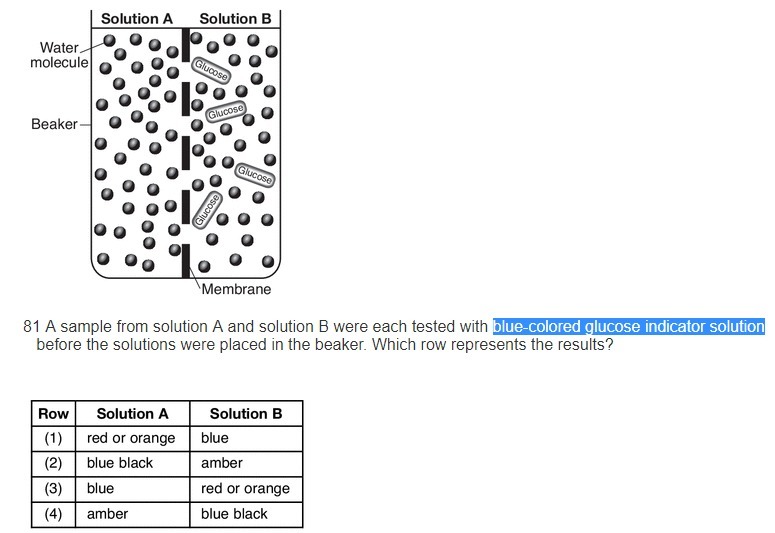
A sample from solution a and solution b were each tested with blue colored glucose indicator solution before the solutions were
vova2212 [387]
With the given problem you gave here, I can't answer the question because I need more details. Luckily, I found a similar problem that's provided with a diagram and a table shown in the attached picture.

This test is called the Benedict's test which is used as test for presence of sugars. If the solution contains sugar, like glucose, the solution would turn from blue to red. If not, it would stay blue. <em>Therefore, the correct results would be that in row 3.</em>

3 0
2 years ago
Convert 338 L at 63.0 atm to its new volume at standard pressure.
taurus [48]

The new volume at standard pressure of 1 atm is 21294 liters.

Explanation:

Data given:

Initial volume of the gas V1 = 338 liters

initial pressure on the gas P1 = 63 atm

standard pressure as P2 = 1 atm

Final volume at standard pressure V2 =?

The data given shows that Boyle's law equation is to used:

P1V1 = P2V2

rearranging the equation to calculate V2,

V2 = \frac{P1V1}{P2}

Putting the values in the equation:

V2 = \frac{338X63}{1}

     = 21294 L

as the pressure on the gas is reduced to 1 atm the volume of the gas increased incredibly to 21294 litres.

7 0
2 years ago
Write down the dissolution equation for rubidium chromate dissolving in water. (Chromate is a polyatomic ion with the formula Cr
ycow [4]

Answer:

Four moles of the cation

Explanation:

2Rb2CrO4(s)<--------> 4Rb^+(aq) + 2CrO4^2-(aq)

Now looking at the reaction equation, it can be seen that one mole of rubidium chromate contains two moles of rubidium ions and one mole of chromate ions.

The dissolution of two moles of rubidium chromate should then yield four moles of rubidium ions and two moles of chromate ions since the ratio of ions present is 2:1.

This explains the reaction equation written above for the dissolution of two moles of rubidium chromate as shown.

5 0
2 years ago
Gordon wrote this passage about mechanical waves for his physics class. But he got most of his facts mixed up. Only one sentence
Zinaida [17]

Answer: The correct answer is "Mechanical waves can apply pressure to and push on objects in their path".

Explanation:

Mechanical wave is wave in which there is an oscillation of the wave. The energy is transferred through a medium. Mechanical waves can apply pressure to and push on their path. Only the energy is transferred not the matter.

Mechanical waves are of three types: Transverse wave, Longitudinal wave and Surface wave. The examples of the mechanical wave are sound wave and water wave.

Sound is a pressure disturbance which travels through a medium. It consists of compression and rarefaction.

The mechanical waves need a medium for their propagation. They travel faster in denser medium.

Therefore, the correct option is (B).

4 0
2 years ago
Read 2 more answers
Other questions:
  • How many ml of a 0.155 m kcl solution contain 2.55 g kcl?
    6·2 answers
  • Convert 3.8 Km/sec to miles/year
    12·1 answer
  • When atoms lose or gain electrons in chemical reactions they form?
    14·1 answer
  • The molar mass of c3h8o2 (four significant figures) is ________.
    6·1 answer
  • When one atom loses an electron and another atom accepts that electron a(n) bond between the two atoms results?
    14·1 answer
  • A reaction A(aq)+B(aq)↽−−⇀C(aq) has a standard free‑energy change of −4.20 kJ/mol at 25 °C. What are the concentrations of A, B,
    8·1 answer
  • Which of the following statements concerning a metal crystallized in a face-centered cubic cell is/are CORRECT? 1. One metal ato
    9·1 answer
  • What are the empirical formulas of a) ethylene glycol, a radiator antifreeze, molecular formula C2H6O2 b) peroxodisulfuric acid,
    12·1 answer
  • Hydrogen peroxide, H2O2, is common in many households and is used as a bleaching agent. It usually comes in a dark, opaque bottl
    5·1 answer
  • A higher temperature of fresh concrete results in a __________ hydration of cement.
    11·1 answer
Add answer
Login
Not registered? Fast signup
Signup
Login Signup
Ask question!