answer.
Ask question
Login Signup
Ask question
All categories
  • English
  • Mathematics
  • Social Studies
  • Business
  • History
  • Health
  • Geography
  • Biology
  • Physics
  • Chemistry
  • Computers and Technology
  • Arts
  • World Languages
  • Spanish
  • French
  • German
  • Advanced Placement (AP)
  • SAT
  • Medicine
  • Law
  • Engineering
saw5 [17]
2 years ago
6

Susan conducts an experiment five times and gets a solution concentration of 1.9M, 2.1M, 1.8M, 1.9M, and 2.2M. The known concent

ration of the solution is 2.0M. Which of the following are true about Susan's results?
Chemistry
1 answer:
vlada-n [284]2 years ago
8 0

Answer:

This question is incomplete; the complete part/options is:

A) They are precise, but not accurate.

B) They are accurate, but not precise.

C) They are both accurate and precise.

D) They are neither accurate nor precise

The answer is C.

Explanation:

Accuracy refers to how close a series of measurements is to a known or true value while precision is the closeness of the measurements to one another.

The known concentration of a solution is 2.0M. In an experiment which Susan conducts five times and gets a solution concentration of 1.9M, 2.1M, 1.8M, 1.9M, and 2.2M respectively.

Based on these measured solute concentrations, one would observe that the measured values of: 1.9M, 2.1M, 1.8M, 1.9M, 2.2M are close to one another. This means that the measurements are PRECISE.

Also, the measured values are not too distant from the known value of 2.0M, hence, it can be said that the measurements are ACCURATE.

Therefore, Susan's measurements of the solute concentration are both accurate and precise.

You might be interested in
4. How does the kinetic theory of gases explain the weather changes happening in the troposphere? You can also research on the I
uranmaximum [27]
According to the kmt pressure is directly proportional to the number of collision between particles
4 0
2 years ago
Read 2 more answers
6.
RUDIKE [14]

Answer:

THE CURRENT REQUIRED TO PRODUCE 193000 C OF ELECTRICITY IS 35.74 A.

Explanation:

Equation:

Al3+ + 3e- -------> Al

3 F of electricity is required to produce 1 mole of Al

3 F of electricity = 27 g of Al

If 18 g of aluminium was used, the quantity of electricity to be used up will be:

27 g of AL = 3 * 96500 C

18 G of Al = x C

x C = ( 3 * 96500 * 18 / 27)

x C = 193 000 C

For 18 g of Al to be produced, 193000 C of electricity is required.

To calculate the current required to produce 193 000 C quantity of electricity, we use:

Q = I t

Quantity of electricity = Current * time

193 00 = I * 1.50 * 60 * 60 seconds

I = 193 000 / 1.50 * 60 *60

I = 193 000 / 5400

I = 35.74 A

The cuurent required to produce 193,000 C of electricity by 18 g of aluminium is 35.74 A

3 0
2 years ago
Find the ions in the periodic table that have an electron configuration of nd8 (n = 3, 4, 5...).
Alla [95]
 <span>Cu⁺ is the only one of the ions in the list that will show 8 electrons in a d sublevel....its configuration will be Ar| 4s² 3d⁸
hope this helps</span>
4 0
2 years ago
Read 2 more answers
What is the molarity of a naoh solution if 11.9 ml of a 0.220 m h2so4 solution is required to neutralize a 25.0-ml sample of the
bulgar [2K]
0.355M x 0.0282L= 0.01 moles of H2SO4. Remember sulphuric acid is diprotic so it will release 2 from each molecule. 
<span>So moles of protons = 0.01 x 2 = 0.02 moles of H+ </span>
<span>For neutralization: moles H+ = moles OH- </span>
<span>Therefore moles of NaOH = 0.02 </span>
<span>conc = moles / volume </span>
<span>Conc NaOH = 0.02 / 0.025L = 0.8M </span>

4 0
2 years ago
Read 2 more answers
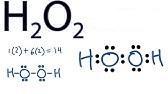
Many free radicals combine to form molecules that do not contain any unpaired electrons. The driving force for the radical–radic
Alexxandr [17]

Answer:

In the attached image the Lewis equation is shown where it is shown how two oxygens react with two hydrogens to meet the octet of the electrons.

Explanation:

Hydrogen peroxide is one of the most named chemicals since it is not only sold as "hydrogen peroxide" in pharmacies but it is also one of the great weapons of immune defense cells to defend ourselves against anaerobic bacteria.

The disadvantage of this compound is that when dividing it forms free oxygen radicals that are considered toxic or aging for our body.

4 0
2 years ago
Other questions:
  • When a substance dissolves, it undergoes a _____.
    14·2 answers
  • when a calcium atom loses its valence electrona the ion formed has an electron configuration that is the same as an atom of. (1)
    10·2 answers
  • What is effective nuclear charge of S2- and S? Does the Zeff differs from ions and atoms of the same element.
    14·2 answers
  • Compare and contrast the outer core and the inner core.
    8·2 answers
  • What is the number of moles in 15.0 g AsH3?
    12·1 answer
  • Tritium 3 1H decays to 3 2He by beta emission. Find the energy released in the process. Answer in units of keV.
    13·1 answer
  • Freon-12, CF2Cl2, which has been widely used in air conditioning systems, is considered a threat to the ozone layer in the strat
    8·2 answers
  • Weak noncovalent interactions:__________ a. do not include ionic interactions b. always involve water. c. can have a large cumul
    13·1 answer
  • Joyce poured 200 milliliters (mL) of water into a beaker, placed a thermometer in it, and heated it until it started to boil. Sh
    13·1 answer
  • The molecules that make up soap have a region that contains polar covalent bonds and a region that contains nonpolar covalent bo
    11·1 answer
Add answer
Login
Not registered? Fast signup
Signup
Login Signup
Ask question!