Answer:
a. see attachment
b.
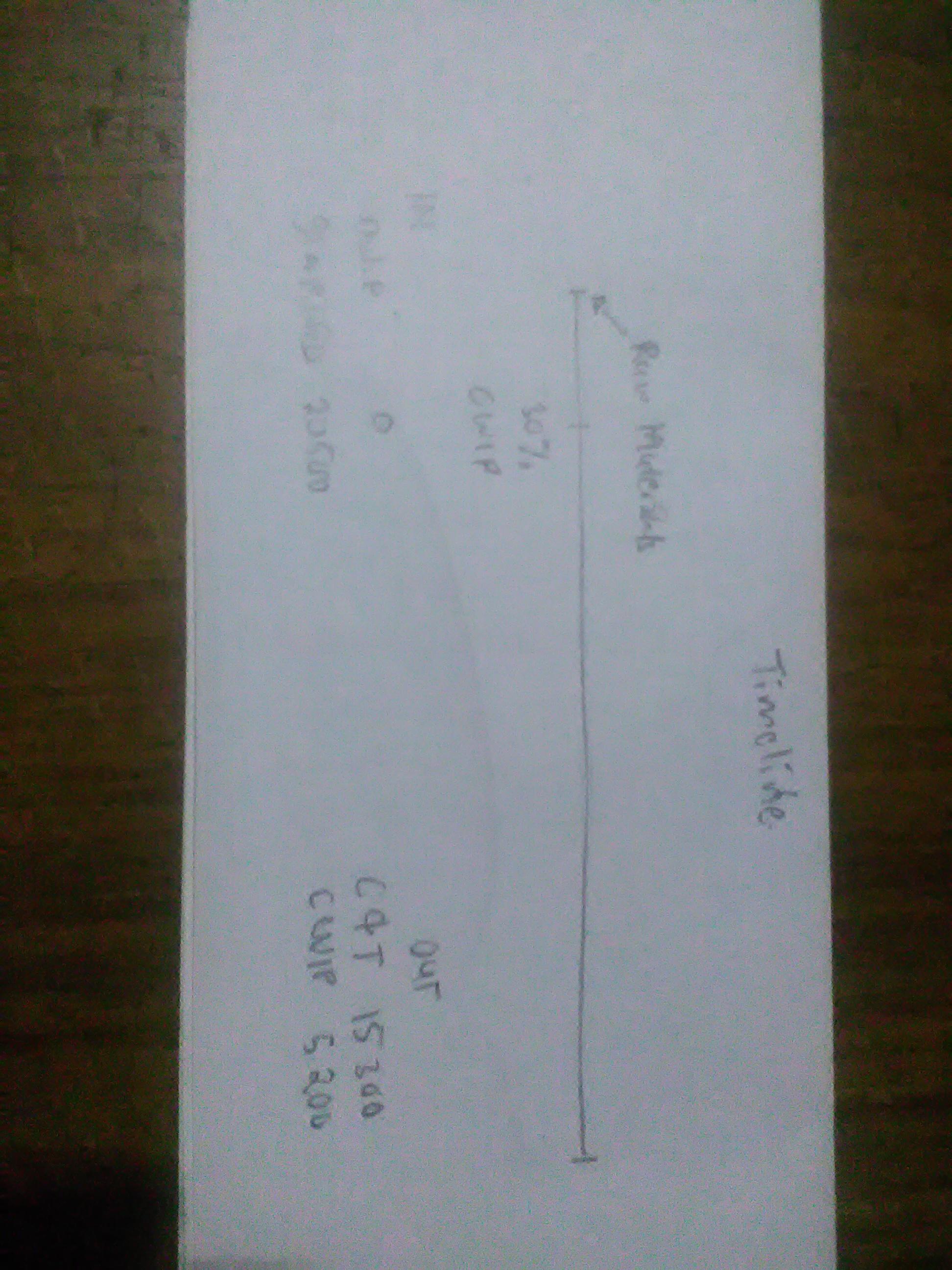
total equivalent units : Materials = 30,500 units and Conversion Costs = 16,860
cost per equivalent unit : Materials = $0.14 and Conversion Costs = $0.30
c.
(a) units completed and transferred to Finished Goods = $6,732
(b) units still in process at June 30 = $1,196
d.
<u>Journals</u>
Work In Process :Direct Materials $4,305 (debit)
Raw Materials $4,305 (credit)
<em>Being Raw Materials used in Production</em>
Work In Process :Direct Labor $3,320 (debit)
Salaries Payable $3,320 (credit)
<em>Being Labor used in Production</em>
Work In Process ; Overheads $1,738 (debit)
Overheads $1,738 (credit)
<em>Being Overheads Assigned to Production</em>
Finished Goods $6,732 (debit)
Work In Process $6,732 (credit)
<em>Being Units transferred to Finished Goods</em>
Explanation:
<u>Calculation of Equivalent units of Production in respect with Raw Materials and Conversion Costs</u>
1. Materials
Ending Work In Process (5,200 × 100%) 5,200
Completed and Transferred Out (15,300 × 100%) 15,300
Equivalent units of Production in respect with Raw Materials 30,500
2. Conversion Costs
Ending Work In Process (5,200 × 30%) 1,560
Completed and Transferred Out (15,300 × 100%) 15,300
Equivalent units of Production in respect with Conversion Cost 16,860
<u>Calculation of Cost per Equivalent unit of production in respect with Raw Materials and Conversion Costs</u>
Unit Cost = Total Cost ÷ Total Equivalent units
1. Materials
Unit Cost = $4,305 ÷ 30,500
= $0.14
2. Conversion Costs
Unit Cost = ($3,320 + $1,738) ÷ 16,860
= $0.30
3. Total unit cost
Total unit cost = Material Cost + Conversion Cost
= $0.14 + $0.30
= $0.44
<u>Calculation of costs assigned to (a) units completed and transferred to Finished Goods and (b) units still in process at June 30.</u>
(a) units completed and transferred to Finished Goods
Total Cost = units completed and transferred out × total unit cost
= 15,300 × $0.44
= $6,732
(b) units still in process at June 30.
Total Cost = Materials Cost + Conversion Cost
= $0.14 × 5,200 + $0.30 × 1,560
= $1,196