answer.
Ask question
Login Signup
Ask question
All categories
  • English
  • Mathematics
  • Social Studies
  • Business
  • History
  • Health
  • Geography
  • Biology
  • Physics
  • Chemistry
  • Computers and Technology
  • Arts
  • World Languages
  • Spanish
  • French
  • German
  • Advanced Placement (AP)
  • SAT
  • Medicine
  • Law
  • Engineering
zzz [600]
2 years ago
10

Are metallic bonds are found in compounds

Chemistry
2 answers:
Snowcat [4.5K]2 years ago
8 0
Yes metallic bonds are found in compounds
Ratling [72]2 years ago
5 0

Answer:

Explanation:

Yes :)

Mark brainliest please

You might be interested in
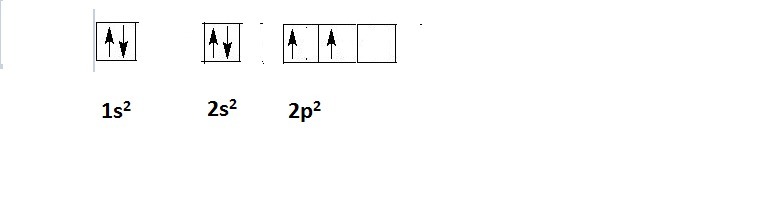
In which orbitals would the valence electrons for carbon <br> c. be placed?
katrin2010 [14]

Answer: 2s and 2p

Explanation: Carbon is an element with atomic number of 6 and thus contains 6 electrons. The electrons are filled in order of increasing energies and follows Afbau's rule.The electrons are singly filled first in each orbital having same spin, then only pairing occurs. This rule was known as Hund's Rule.

The valence electrons are the electrons which are present in last shell. Thus valence electrons are 4, two in s and 2 in p orbitals.

C: 6:1s^22s^22p_x^12p_y^1


8 0
2 years ago
Read 2 more answers
A gas occupies 22.4 l at stp and 14.5 l at 100c and 2.00 atm pressure. how many moles of gas did the system gain or lose?
azamat
<span>At standard temperature and pressure 22.4 l of an ideal gas would contain 1 mole. in order to find the change in moles we must look at the ideal gas law PV=nRT where P=Pressure V=volume n=Moles R= Gas constant T= Temperature. To simplify this equation we will be using the gas constant at .08206 L-atm/mol-K. We must first convert 100c to k which is 373.15. Then we can plug the values into our equation which gives us (2atm)(14.5 l)=(n)(.08206 L-atm/mol-K)(373.15). After some basic algebra we get the moles to equal roughly .95 which is .05 moles less than our original system.</span>
6 0
2 years ago
A particular first-order reaction has a rate constant of 1.35 × 10² s-1 at 25.0°c. what is the magnitude of k at 75.0°c if ea =
IgorC [24]
According to this formula:
K= A*(e^(-Ea/RT) when we have K =1.35X10^2 & T= 25+273= 298K &R=0.0821
Ea= 85.6 KJ/mol So by subsitution we can get A:
1.35x10^2 = A*(e^(-85.6/0.0821*298))
1.35x10^2 = A * 0.03
A= 4333
by substitution with the new value of T(75+273) = 348K & A to get the new K
∴K= 4333*(e^(-85.6/0.0821*348)
  = 2.16 x10^2
8 0
2 years ago
Website
vredina [299]

Answer:

volume in L = 0.25 L

Explanation:

Given data:

Mass of Cu(NO₃)₂ = 2.43 g

Volume of KI = ?

Solution:

Balanced chemical equation:

2Cu(NO₃)₂  + 4KI    →    2CuI + I₂ + 4KNO₃

Moles of Cu(NO₃)₂:

Number of moles = mass/ molar mass

Number of moles = 2.43 g/ 187.56 g/mol

Number of moles = 0.013 mol

Now we will compare the moles of Cu(NO₃)₂ with KI.

                        Cu(NO₃)₂       :              KI    

                              2              :               4

                            0.013          :            4 × 0.013=0.052 mol

Volume of KI:

<em>Molarity = moles of solute / volume in L</em>

volume in L = moles of solute /Molarity

volume in L =  0.052 mol / 0.209 mol/L

volume in L = 0.25 L

6 0
2 years ago
If a 0.4856 gram sample of khp is dissolved in sufficient water to prepare 250 ml of solution, and 25 ml of the solution require
dangina [55]

Mass of potassium hydrogen pthalate KHP is 0.4856 g, its molar mass is 204.22 g/mol, number of moles of KHP can be calculated as follows:

n=\frac{m}{M}

Here, m is mass and M is molar mass, putting the values,

n=\frac{0.4856 g}{204.22 g/mol}=0.00237 mol

This will be number of moles of NaOH at equivalent point.

Detailed calculations:

Molarity is defined as number of moles in 1 L of solution, for 250 mL of solution, molarity will be:

M=\frac{0.00237 mol}{250 \times 10^{-3}L}=0.009511 M

For 25 mL, apply dilution law as follows:

M_{1}V_{1}=M_{2}V_{2}

Putting the values,

0.009511\times 250=M_{2}\times 25 mL

On rearranging,

M_{2}=\frac{0.009511\times 250}{25}=0.09511 M

Convert molarity into number of moles,

n=M\times V=0.09511 mol/L\times 25\times 10^{-3}L=0.00237 mol

At equivalent point, number of moles of KHP will be equal to NaOH, thus, number of moles of NaOH will be 0.00237 mol.

Calculation for molarity:

Volume of NaOH is 18.75 mL, thus, molarity can be calculated as follows:

M=\frac{n}{V}

Putting the values,

M=\frac{0.00237 mol}{18.75\times 10^{-3}L}=0.1264 M

Therefore, molarity of NaOH is 0.1264 M

7 0
2 years ago
Other questions:
  • Which statement describes a chemical reaction?
    9·2 answers
  • Which statement describes the transfer of heat energy that occurs when an ice cube is added to an insulated container with 100 m
    9·1 answer
  • 50 POINTSSSSS PLZ HELPPPPPP NEED TO SHOW WORK!!!!
    5·1 answer
  • For each reaction, identify the precipitate, or lack thereof. 2nacl(aq)+ba(oh)2(aq)⟶bacl2+2naoh naoh bacl2 no precipitate agclo3
    14·2 answers
  • The half-life of C-14 is 5470 years. If a particular archaeological sample has one-quarter of its original radioactivity remaini
    15·2 answers
  • For heat transfer purposes, a standing man can be modeled as a 30-cm-diameter, 175-cm-long vertical cylinder with both the top a
    13·1 answer
  • What is the theoretical yield of aluminum that can be produced by the reaction of 60.0 g of aluminum oxide with 30.0 g of carbon
    12·1 answer
  • If 250 g of calcium chlorate decomposes into calcium chloride and oxygen what mass of oxygen would be produced
    6·1 answer
  • The value of resistance r was determined by measuring current I flowing through the resistance with an error E1=±1.5% and power
    13·1 answer
  • What is the compound name for PCl8
    5·2 answers
Add answer
Login
Not registered? Fast signup
Signup
Login Signup
Ask question!