answer.
Ask question
Login Signup
Ask question
All categories
  • English
  • Mathematics
  • Social Studies
  • Business
  • History
  • Health
  • Geography
  • Biology
  • Physics
  • Chemistry
  • Computers and Technology
  • Arts
  • World Languages
  • Spanish
  • French
  • German
  • Advanced Placement (AP)
  • SAT
  • Medicine
  • Law
  • Engineering
Klio2033 [76]
2 years ago
8

By the mid-1980s, the prices of economy cars had risen substantially, with the smaller Japanese and American sedans costing five

figures or more.
2. Because of import quotas, the Japanese could export only a limited number of vehicles, and they preferred to ship their more profitable luxury lines to America.
3. American car companies claimed that the profit margins on cheap cars were too small to justify producing vehicles under $6,000.
4. As a consequence, a gap opened at the lower end of the automobile market, leaving room for manufacturers from Third World countries to compete.
5. They introduced to America some of the lowest-priced cars consumers had seen in years.

What is the correct organization pattern?


Classification and Partition
Cause and Effect
Comparisons
Spatial Organization
Chronological
Example
Problem-Methods-Solution
General to Specific
Specific to General
Order of Importance
Order the paragraph correctly.
Engineering
1 answer:
mash [69]2 years ago
7 0

Answer:

Cause and effect

Explanation:

In this text, the most suitable structure is a cause and effect structure. The text explains why the prices of economy cars rose substantially in the United States during the mid-1980s. The initial cause was import quotas, which led to the effect of the Japanese sending mostly luxury cars to America. This pattern is reproduced through the passage, allowing us to understand the connection between different sentences within a paragraph.

You might be interested in
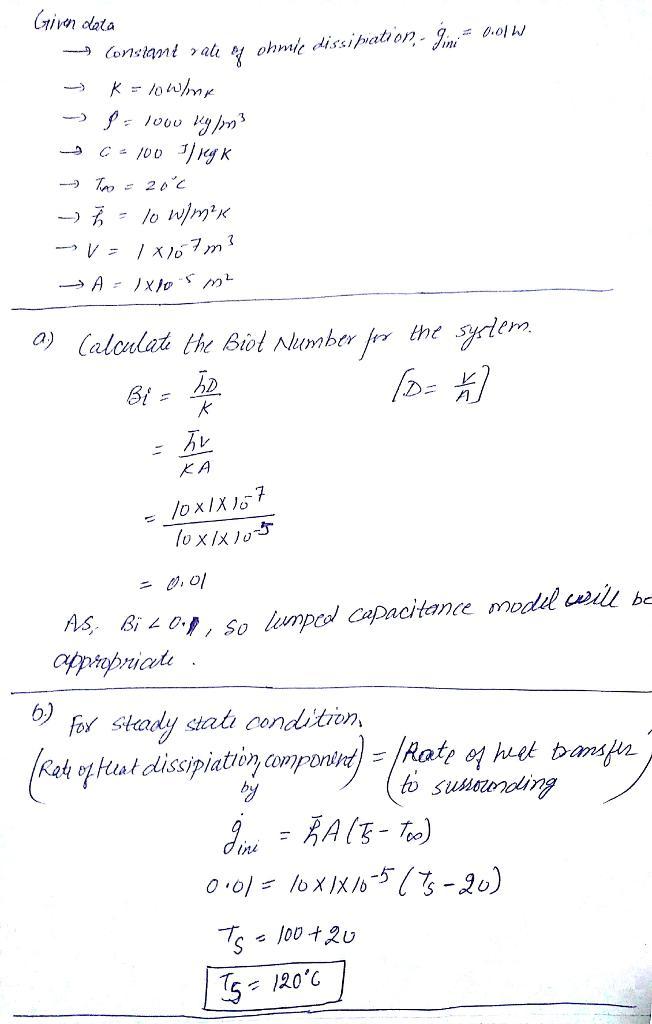
During normal operation, an electrical component experiences a constant rate of ohmic dissipation ini g = 0.01 W that causes the
Llana [10]

Answer:

Check the explanation

Explanation:

Kindly check the attached image below for the step by step explanation to your answer.

4 0
2 years ago
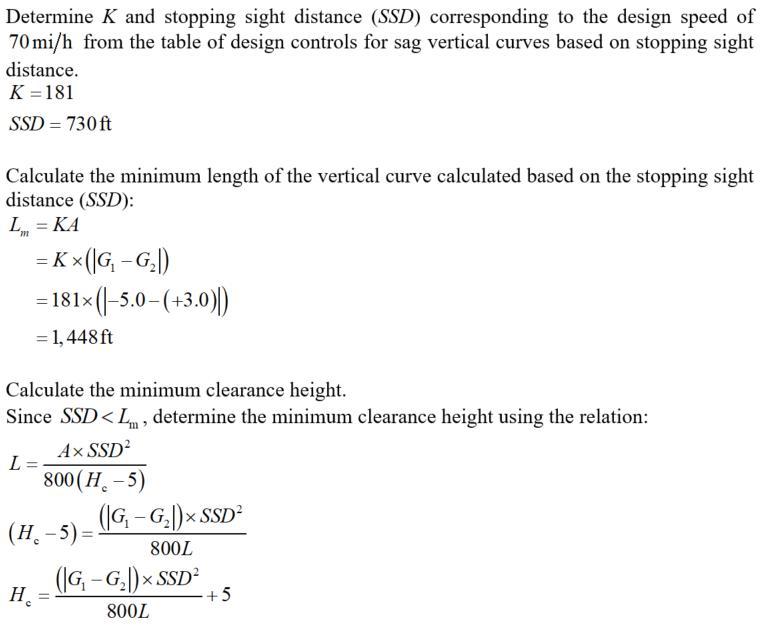
An overpass is being built over the PVI of an existing equal-tangent sag curve. The sag curve has a 70 mi/h design speed and G1=
vivado [14]

Answer: Resultant elevation will be 30.98 ft

8 0
2 years ago
A conical enlargement in a vertical pipeline is 5 ft long and enlarges the pipe diameter from 12 in. to 24 in. diameter. Calcula
makkiz [27]

Answer:

F_y = 151319.01N = 15.132 KN

Explanation:

From the linear momentum equation theory, since flow is steady, the y components would be;

-V1•ρ1•V1•A1 + V2•ρ2•V2•A2 = P1•A1 - P2•A2 - F_y

We are given;

Length; L = 5ft = 1.52.

Initial diameter;d1 = 12in = 0.3m

Exit diameter; d2 = 24 in = 0.6m

Volume flow rate of water; Q2 = 10 ft³/s = 0.28 m³/s

Initial pressure;p1 = 30 psi = 206843 pa

Thus,

initial Area;A1 = π•d1²/4 = π•0.3²/4 = 0.07 m²

Exit area;A2 = π•d2²/4 = π•0.6²/4 = 0.28m²

Now, we know that volume flow rate of water is given by; Q = A•V

Thus,

At exit, Q2 = A2•V2

So, 0.28 = 0.28•V2

So,V2 = 1 m/s

When flow is incompressible, we often say that ;

Initial mass flow rate = exit mass flow rate.

Thus,

ρ1 = ρ2 = 1000 kg/m³

Density of water is 1000 kg/m³

And A1•V1 = A2•V2

So, V1 = A2•V2/A1

So, V1 = 0.28 x 1/0.07

V1 = 4 m/s

So, from initial equation of y components;

-V1•ρ1•V1•A1 + V2•ρ2•V2•A2 = P1•A1 - P2•A2 - F_y

Where F_y is vertical force of enlargement pressure and P2 = 0

Thus, making F_y the subject;

F_y = P1•A1 + V1•ρ1•V1•A1 - V2•ρ2•V2•A2

Plugging in the relevant values to get;

F_y = (206843 x 0.07) + (1² x 1000 x 0.07) - (4² x 1000 x 0.28)

F_y = 151319.01N = 15.132 KN

6 0
2 years ago
A solid cylinder is concentric with a straight pipe. The cylinder is 0.5 m long and has an outside diameter of 8 cm. The pipe ha
poizon [28]

Answer :  

The force needed to move the cylinder is 25.6 N

<h2>Further explanation  </h2>

Given that,  

Length of the cylinder, l = 0.5 m  

Outer diameter of the cylinder, d = 8 cm = 0.08 m  

Outer radius of the cylinder, r=0.04\ m  

Inside diameter of the pipe, d = 8.5 cm = 0.085 m  

Inside radius of the pipe, r=0.0425\ m  

Specific gravity of the oil, \rho=0.92  

Density of oil, d=\rho\times \rho_w

Kinematic viscosity of the oil, v=5.57\times 10^{-4}\ m^2/s  

Velocity of the cylinder, u = 1 m/s  

We need to find the force needed to move the cylinder. Let the force is F.  

Specific gravity is defined as the ratio of the density of the substance to the density of water.  

Kinematic viscosity is the acquired resistance of a fluid when there is no external force is acting except gravity. It is denoted by v.

Absolute viscosity is given by :

v=\dfrac{\mu}{d}

Where, d = density of oil

And d=\rho\times \rho_w (density of oil = specific gravity × density of water )

d=0.92\times 10^3\ kg/m^3

So,  

\mu=v\times d..............(1)

\mu=5.57\times 10^{-4}\ m^2/s\times 0.92\times 10^3\ kg/m^3

\mu=0.512\ Pa-s

The separation between the cylinder and pipe is given by :

dy=\dfrac{d_p-d_c}{2}=\dfrac{8.5-8}{2}=0.25\ cm=0.0025\ m

d_p\ and\ d_c are diameter of pipe and cylinder respectively.  

The mathematical expression for the Newton's law of viscosity can be written as:  

\tau\propto\dfrac{du}{dy}  

\tau=\mu\times \dfrac{du}{dy}..........(2)  

Where  

\tau = Shear stress, \tau=\dfrac{F}{A}............(3)  

\mu = viscosity  

\dfrac{du}{dy} = rate of shear deformation

On rearranging equation (1), (2) and (3) we get :  

\dfrac{F}{A}=v\times \rho\times \dfrac{du}{dy}...............(4)  

A is the area of the cylinder, A=2\pi rl  

Equation (4) becomes :  

F=v\times \rho\times \dfrac{du}{dy}\times 2\pi rl..............(5)

A=\pi d\times l

A=\pi \times 0.08\ m\times 0.5\ m

A=0.125\ m^2

Now, equation (5) becomes :

F=(v\times \rho)\times \dfrac{du}{dy}\times 2\pi rl

F=(0.512\ Pa-s)\times (\dfrac{1}{0.0025\ m})\times \times 0.125\ m^2

F = 25.6 N

<h2>Learn more  </h2>

Kinematic viscosity : brainly.com/question/12947932

<h2>Keyword :  </h2>

Specific gravity, Kinematic viscosity, Area of cylinder, fluid mass density.  

7 0
2 years ago
1. Mark ‘N’ if a wrong type of units is used. Mark ‘Y’ otherwise. (1 point each)
maxonik [38]

Answer:

bsbsdbsd

Explanation:

7 0
2 years ago
Other questions:
  • A closed system consisting of 4 lb of a gas undergoes a process during which the relation between pressure and volume is pVn 5 c
    7·1 answer
  • Which of the two materials (brittle vs. ductile) usually obtains the highest ultimate strength and why?
    5·1 answer
  • Determine the amount of gamma and alpha phases in a 10-kg, 1060 steel casting as it is being cooled to the following temperature
    6·1 answer
  • Evan notices a small fire in his workplace. Since the fire is small and the atmosphere is not smoky he decides to fight the fire
    10·1 answer
  • Refrigerant-134a at 400 psia has a specific volume of 0.1384 ft3/lbm. Determine the temperature of the refrigerant based on (a)
    6·1 answer
  • A sample of normally consolidated clay was subjected to a CU triaxial compression test that was carried out until the specimen f
    6·1 answer
  • the ____ method is the safest turning technique to use as it does not expose your hands to the airbags deployment area
    15·1 answer
  • Technician A says that weld-through primer can be removed from the immediate weld area to improve weld quality. Technician B say
    7·1 answer
  • A shipment of rebar that weighs 745 kg would weigh roughly how much in pounds​
    12·1 answer
  • Test if a number grade is an A (greater than or equal to 90). If so, print "Great!". Hint: Grades may be decimals. Sample Run En
    15·1 answer
Add answer
Login
Not registered? Fast signup
Signup
Login Signup
Ask question!