answer.
Ask question
Login Signup
Ask question
All categories
  • English
  • Mathematics
  • Social Studies
  • Business
  • History
  • Health
  • Geography
  • Biology
  • Physics
  • Chemistry
  • Computers and Technology
  • Arts
  • World Languages
  • Spanish
  • French
  • German
  • Advanced Placement (AP)
  • SAT
  • Medicine
  • Law
  • Engineering
Archy [21]
2 years ago
3

In a laboratory experiment, 27.5 g of Cu were reacted with 125 g of HNO3 (63.01 g/mol):

Chemistry
2 answers:
HACTEHA [7]2 years ago
8 0

Answer:

a) The theoretical yield of Cu(NO3)2 is 81.2 grams

b) There remains 52.2 grams HNO3

c) The actual yield is 70.9 grams Cu(NO3)2

Explanation:

Step 1: Data given

Mass of Cu = 27.5 grams

Mass of HNO3 = 125 grams

Atomic mass Cu = 63.546 g/mol

Molar mass of HNO3 = 63.01 g/mol

Step 2: The balanced equation

3 Cu + 8 HNO3 → 3Cu(NO3)2 + 4H2O + 2NO

Step 3: Calculate moles

Moles = mass / molar mass

Moles Cu = 27.5 grams / 63.546 g/mol

Moles Cu = 0.433 moles

Moles HNO3 = 125 grams / 63.01 g/mol

Moles HNO3 = 1.984 moles

Step 4: Calculate the limiting reactant

For 3 moles Cu we need 8 moles HNO3 to produce 3 moles Cu(NO3)2 , 4 moles H2O and 2 moles NO

Cu is the limiting reactant. It will completely be consumed. (0.433 moles). HNO3 is in excess. There will react 8/3 * 0.433 = 1.155 moles

There will remain 1.1984 - 1.155 = 0.829 moles

Step 5: Calculate mass HNO3 remaining

Mass HNO3 = moles HNO3 * molar mass HNO3

Mass HNO3 = 0.829 moles * 63.01 g/mol

Mass HNO3 = 52.2 grams

Step 6: Calculate moles Cu(NO3)2

For 3 moles Cu we need 8 moles HNO3 to produce 3 moles Cu(NO3)2 , 4 moles H2O and 2 moles NO

For 0.433 moles Cu, we'll have 0.433 moles Cu(NO3)2

Step 7: Calculate mass Cu(NO3)2

Mass Cu(NO3)2 = moles * molar mass

Mass Cu(NO3)2 = 0.433 moles * 187.56 g/mol

Mass Cu(NO3)2 = 81.2 grams

Step 8: Calculate actual yield

% yield = (actual yield / theoretical yield) * 100 %

87.3 % = (actual yield / 81.2 grams) * 100 %

0.873 = actual yield / 81.2 grams

Actual yield = 0.873 * 81.2 grams

Actual yield = 70.9 grams

ivolga24 [154]2 years ago
5 0

Answer:

a. 81.23g

b.52.23g

c. 70.91g

Explanation:

<h2>3Cu_{(g)} + 8HNO_{3} ⇒ 3Cu(NO_{3}) _{2}  + 4H_{2} O + 2NO</h2>

Cu= 63.5g/mol, H=1g/mol, N=14g/mol, O=16g/mol

3 moles of Cu=190.5g/mol

8 moles of HNO_{3}=504.08g/mol

3 moles of 3Cu(NO_{3}) _{2}=562.71g/mol

a. Cu is the limiting reagent. A limiting reagent is the reactant that determines how much of the products are made, usually the reactant in smaller quantity. Using the limiting reagent for calculations;

190.5g of Cu will yield 562.71g of Cu(NO3)2

27.5g of Cu will need

\frac{27.5 * 562.71}{190.5}=81.23g

b. 190.5 g of Cu will react with 504.08g of HNO3

27.5g of CU will react with

\frac{27.5 * 504.08}{190.5}= 72.77g

grams of excess reactant=125g-72.77g=52.23g

c. let x be the actual yield of CU(NO3)2, from answer a, the theoretical produce

\frac{x}{81.23} * 100=87.3

\frac{100x}{81.23} = 87.3

x=\frac{87.3 * 81.23}{100}

x=70.91g

You might be interested in
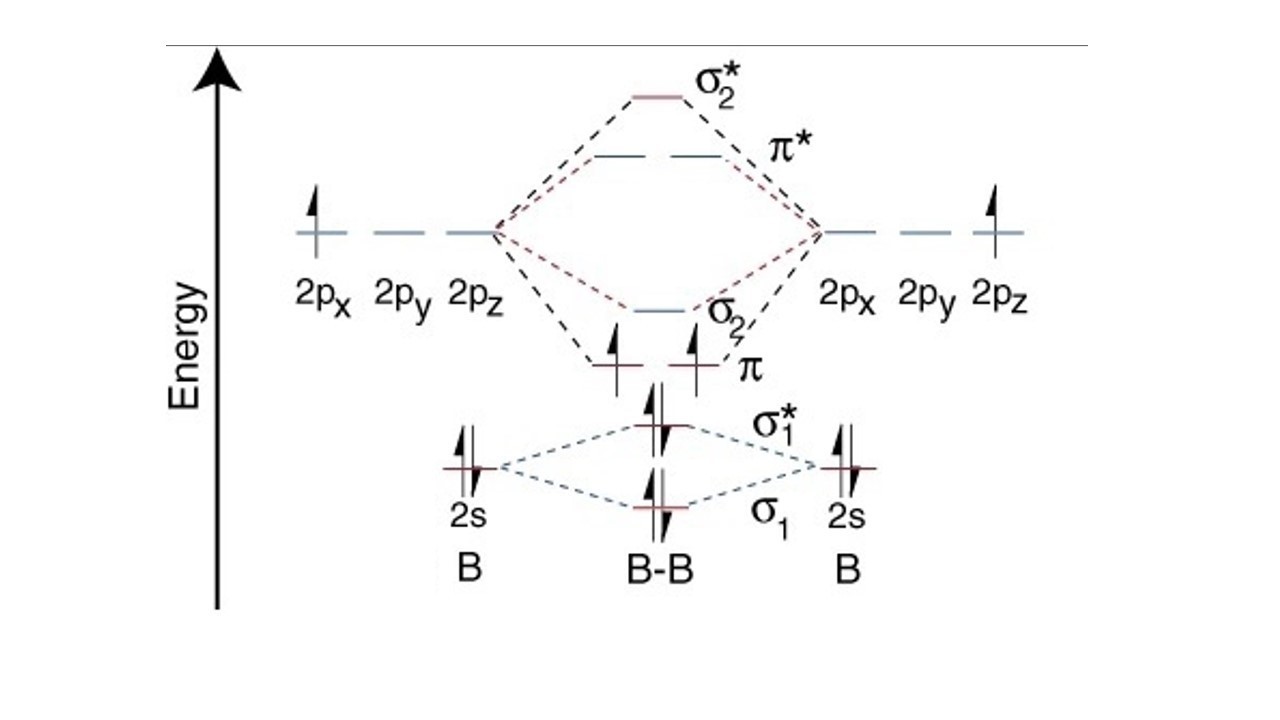
The highest energy occupied molecular orbital in the b−b bond of the b2 molecule is _____
statuscvo [17]
According to molecular orbital theory, atomic orbitals combine to form molecular orbital. Number of molecular orbitals are equal to number of atomic orbitals. Further, of the total number of molecular orbitals, half are called as bonding molecular orbital while remaining are anti-bonding molecular orbital. In case, if system contains lone pair of electrons, they occupy non-bonding molecular orbital. Highest occupied molecular energy levels are referred as HOMO, while lowest unoccupied molecular energy levels are referred as LUMO.

In case of B2 molecule, two B atoms combines to generate molecular orbitals. Attached is  the MOT diagram of B2 molecule

From the attached figure, it is clearly evitable that high occupied energy level in B2 is π. Also, it must be noted both <span>pi molecular orbitals i.e. Pi 2Px and Pi 2Py at highest energy level (occupied).</span>

6 0
2 years ago
Read 2 more answers
Calculate the number of carbon atoms in 25.0 grams of isopropyl alcohol (c3h8o)
allochka39001 [22]
First, let's determine the number of moles of carbon atoms by using molar mass. Then, using Avogadro's number, we can find the number of C atoms:
*1 mole of C3H8O= (12.0x3)+(1.0x8)+(16.0x1) = 60.0g/mol

25.0 grams C3H8O x (1 mole C3H8O/60.0 grams) = 0.417 mol

0.417mol C3H8O has (3 x 0.417 moles) C atoms = 1.251 moles C atoms

1.251 moles C atoms x(6.022x10^23 atoms/mol) = 9.42x10^23 C atoms.

The answer is in 3 significant figures, as that's what we have in the given, and we matched it with our rounding of the atomic masses from the periodic table.
You can do this all in one equation written left to right, just exclude the intermediate answers. Just easier to show it this way on the computer screen.


7 0
2 years ago
Read 2 more answers
The Lewis structure for a chlorate ion, ClO3-, should show ____ single bond(s), ____ double bond(s), and ____ lone pair(s).
eduard
1 single bond, 2 double bond 2 lone pairs
3 0
2 years ago
Read 2 more answers
A fictional element has two isotopes and an atomic mass of 87.08 amu. if the first isotope is 86 amu and the second isotope has
Lorico [155]
The atomic mass of a certain element is summation of the product of the decimal equivalent of the percentage abundance and the given atomic mass of each of the isotope. If we let x be the percentage abundance of the 86 amu-isotope then, the second one is 1-x such that,
                      x(86) + (1 - x)(90) = 87.08
The value of x from the equation is 0.73. This value is already greater than 0.5. Thus, the isotope with greatest abundance is that which is 86 amu. 


4 0
2 years ago
A. The measured pH of a 0.100 M HCl solution at 25 degrees Celsius is 1.092. From this information, calculate the activity coeff
ra1l [238]

Answer:

activity coefficient \mathbf{\gamma =0.809}

activity coefficient \mathbf{\gamma = 0.791}

The change in pH in part A = 0.092

The change in pH in part B =  0.102

Explanation:

From the given information:

pH of HCl solution = 1.092

Activity of the pH solution [a] = 10^{-1.092}

[a] = 0.0809 M

Recall that [a] = \gamma × C

where;

\gamma  = activity coefficient

C = concentration

Making the activity coefficient the subject of the formula, we have:

\gamma = \dfrac{[a]}{C}

\gamma = \dfrac{0.0809 \ M}{0.100  \ M}

\mathbf{\gamma =0.809}

B.

The pH of a solution of HCl and KCl = 2.102

[a] = 10^{-2.102}

[a] = 0.00791 M

activity coefficient \gamma = \dfrac{0.00791 \ M}{0.01 \ M}

\mathbf{\gamma = 0.791}

C. The change in pH in part A = 1.091 - 1.0 = 0.092

The change in pH in part B = 2.102 -2.00 = 0.102

3 0
2 years ago
Other questions:
  • A solid is 5 cm tall 3 cm wide and 2 cm thick it has a mass of 129 g what is the density
    7·2 answers
  • Which of the following, when added to an equilibrium mixture represented by the equlibrium below, will not alter the composition
    10·1 answer
  • You are performing a simple distillation of roughly 50:50 liquid solution containing two components, hexane and nonane You place
    14·1 answer
  • Sulfur and oxygen react to produce sulfur trioxide. In a particular experiment, 7.9 grams of SO3 are produced by the reaction of
    12·1 answer
  • Classify each property as associated with a liquid that has strong or weak intermolecular forces Drag the appropriate items to t
    9·1 answer
  • What is the mole fraction of O2O2 in a mixture of 15.1 gg of O2O2, 8.19 gg of N2N2, and 2.46 gg of H2H2
    12·1 answer
  • The refractive index, n of a polymer was determined as a function of temperature. The results are given in the table. Determine
    7·1 answer
  • Consider the following voltaic cell. Identify the anode and cathode, and indicate the direction of Na ion and NO3- ion flow from
    6·1 answer
  • How many molecules of sulfur trioxide would react with 68.9 L of water at STP to produce sulfuric acid?
    9·1 answer
  • It is often necessary to prepare a dilute solution from a more concentrated solution rather than starting from a solid and just
    13·1 answer
Add answer
Login
Not registered? Fast signup
Signup
Login Signup
Ask question!