answer.
Ask question
Login Signup
Ask question
All categories
  • English
  • Mathematics
  • Social Studies
  • Business
  • History
  • Health
  • Geography
  • Biology
  • Physics
  • Chemistry
  • Computers and Technology
  • Arts
  • World Languages
  • Spanish
  • French
  • German
  • Advanced Placement (AP)
  • SAT
  • Medicine
  • Law
  • Engineering
djyliett [7]
2 years ago
9

2.The image below shows two nitrogen atoms. For these two atoms to form a stable molecule, N2, how many electrons would have to

be part of covalent bonds?
Chemistry
2 answers:
postnew [5]2 years ago
6 0
Since N2 is a covalent bond, the lewis dot structure of  N2 would have a triple bond. Each bond contains 2 electrons, so if it has a triple bond it contains 6 electrons. 
Calculate the number of valence electrons of N2
N= 2x 5 = 10 
N2 has a total of 10 valence electrons, to become stable each N atom needs 8 electrons. 
So, therefore, 6 electrons would have to be a part of covalent bonds because they share 6 electrons in a triple bond. 
DaniilM [7]2 years ago
6 0

D. 6 electrons

A single nitrogen atom has five electrons in its outer energy level to start, and will be most stable with an octet, or 8 electrons in its outer level.

You might be interested in
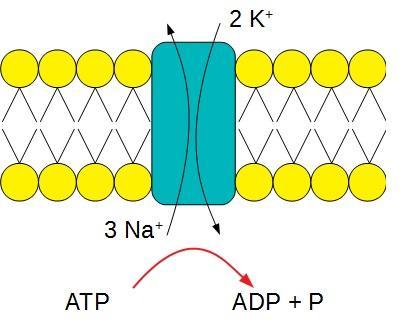
One ATP molecule's hydrolysis releases 7.3 kcal/mol of energy (∆G = −7.3 kcal/mol of energy). If it takes 2.1 kcal/mol of energy
Oxana [17]

Answer:

One ATP molecule's hydrolysis can move 3 ions of Sodium (Na+) across the menbrane.

Explanation:

As you can see, the energy provided by ATP is enough for moving 3 ions of Na+. Each ion needs +2.1 kcal/mol of energy.

If we multiply by 3 the energy for moving across the membrane= +6.3 kcal/mol

By adding the energy from ATP:

ΔGTotal=6.3-7.3= -1 kcal/mol

7 0
2 years ago
A 3.50 g sample of rice is burned in a bomb calorimeter containing 1680 g of water. The temperature of the water increases from
alex41 [277]

Answer:

3.58 x 10^4 J

Explanation:

5 0
2 years ago
NH4NO3, whose heat of solution is 25.7 kJ/mol, is one substance that can be used in cold pack. If the goal is to decrease the te
makvit [3.9K]

Answer:

There are necessaries 35,2g of NH₄NO₃ per 100,0g of water to decrease the temperature of the solution from 25,0°C to 5,0°C

Explanation:

To decrease the temperature of the solution there are necessaries:

4,184J/g°C×(5,0°C-25,0°C)×(100,0g+X) = -Y

8368J + 83,68J/gX = Y <em>(1)</em>

Where x are grams of NH₄NO₃ you need to add and Y is the energy that you need to decrease the heat.

Also, the energy Y will be:

Y = 25700J/mol×\frac{1mol}{80,043g}X

Y = 321J/g X <em>(2)</em>

Replacing (2) in (1)

8368J + 83,68J/g X = 321J/g X

8363J = 237,32J/gX

<em>X = 35,2g</em>

<em />

Thus, there are necessaries 35,2g of NH₄NO₃ per 100,0g of water to decrease the temperature of the solution from 25,0°C to 5,0°C

I hope it helps!

6 0
2 years ago
A 8.6 g sample of methane and 15.6 g sample of oxygen react according to the reaction in the video. identify the limiting reacta
GalinKa [24]
Answer:

<span>23.6 g carbon dioxide comes from 8.6 g of CH4 or 10.7 g carbon dioxide comes from 15.6 g O that means the 15.6 g of oxygen is still the limiting reactant because it gets used up and only makes 10.7 g of CO2. </span>

Explanation:

1) Balanced chemical equation:

CH₄ + 2O₂ → CO₂ + 2H₂O

2) mole ratios:
1 mol CH₄ : 2mol O₂ : 1 mol CO₂ : 2 mol H₂O

3) molar masses
CH₄: 16.04 g/mol
O₂: 32.0 g/mol
CO₂: 44.01 g/mol

4) Convert the reactant masses to number of moles, using the formula 

number of moles = mass in grams / molar mass


CH₄: 8.6g / 16.04 g/mol = 0.5362 moles
<span />

O₂: 15.6 g / 32.0 g/mol = 0.4875 moles

5) If the whole 0.5632 moles of CH₄ reacted that yields to the same number of moles of CO₂ and that is a mass of:
mass of CO₂ = number of moles x molar mass = 23.60 g of CO₂

Which is what the first part of the answer says.

6) If the whole 0.4875 moles of O₂ reacted that would yield 0.4875 / 2 = 0.24375 moles of CO₂, and that is a mass of:
mass of CO₂ = 0.4875 grams x 44.01 g/mol = 10.7 grams of CO₂.

Which is what the second part of the answer says.

7) From the mole ratio you know infere that 0.5362 moles of CH₄ needs more twice number of moles of O₂, that is 1.0724 moles of O₂, and since there are only 0.4875 moles of O₂, this is the limiting reactant.

Which is what the chosen answer says.

8) From the mole ratios 0.4875 moles of O₂ produce 0.4875 / 2 moles of CO₂, and that is:
0.4875 / 2 mols x 44.01 g/mol = 10.7 g of CO₂, which is the last part of the answer.

3 0
2 years ago
Which of the following is the best piece of laboratory glassware for preparing 500.0 mL of an aqueous solution of a solid?
Leni [432]

Answer:

The correct answer is option A.

Explanation:

Volumetric flask  : A glass ware with round lower body with flat bottom and with thin cylindrical neck along with mark which indicates the specific volume filled to that mark.It is used in preparation of standard solution of compound with desired concentration with fixed volume.

Erlenmeyer flask : is a flask with conical shape with flat bottom used in titration  experiments to carry out reaction with fixed volume of solution.

Test tube : Small cylindrical tube with rounded bottom used to observe reaction in between reactant taken in small amount.

Graduated beaker : Laboratory glassware used measure larger volumes of solution or to mix or stir solutions and liquids.

Graduated cylinder : Laboratory thin cylindrical glassware with accurate marking of volume used to measure an accurate volume of solutions or liquids required in an experiment.

<em><u>Volumetric flask</u></em> is the best piece of laboratory glassware for preparing 500.0 mL of an aqueous solution of a solid

8 0
2 years ago
Read 2 more answers
Other questions:
  • Which of the following systems has the highest entropy?
    10·2 answers
  • Tanks of compressed gas must be kept away from heat sources. If a compressed–gas tank is heated too much, it may explode and cau
    7·2 answers
  • A flexible container is put in a deep freeze. Its original volume is 3.00 m3 at 25.0°C. After the container cools, it has shrunk
    12·1 answer
  • Al(s)+hcl(aq) → alcl3(aq)+h2(g). assume you have plenty of hcl and 6.0 mol of al. how many moles of h2 are formed?
    7·1 answer
  • Given the equation: ch4 + br2 → ch3br + hbr which type of reaction does this equation represent
    11·2 answers
  • Elements whose names end with âium are usually metals; sodium is one example. Identify a nonmetal whose name also ends with âium
    14·1 answer
  • If 0.15 mol of I2 vapor can effuses through an opening in a heated vessel in 36 sec, how long will it take 0.15 mol of Cl2 to ef
    5·1 answer
  • A student places 1.38g of unknown metal at 99.6C into 60.50g of water at 22.1C. The entire system reaches a uniform temperature
    14·1 answer
  • Suppose you are riding a bicycle. Describe a situation in which the bicycle has balanced forces acting on it. Describe a situati
    7·1 answer
  • You have 3.00 L of a 3.12 M solution of NaCl(aq) called solution A. You also have 2.00 L of a 2.00 M solution of AgNO3(aq) calle
    9·1 answer
Add answer
Login
Not registered? Fast signup
Signup
Login Signup
Ask question!