answer.
Ask question
Login Signup
Ask question
All categories
  • English
  • Mathematics
  • Social Studies
  • Business
  • History
  • Health
  • Geography
  • Biology
  • Physics
  • Chemistry
  • Computers and Technology
  • Arts
  • World Languages
  • Spanish
  • French
  • German
  • Advanced Placement (AP)
  • SAT
  • Medicine
  • Law
  • Engineering
BabaBlast [244]
2 years ago
4

A tree limb hangs 5 1/4 feet from a telephone wire the city trans back the branch before it grows with in 2 1/2 feet of the wire

will the city of la the tree to grow 2 3/4 more feet? the city trans back the branch before it grows with in 2 1/2 feet of the wire will the city of la the tree to grow 2 3/4 ?

Mathematics
2 answers:
jolli1 [7]2 years ago
8 0
If the limb grows 2 3/4 more feet, then its distance from the wire will be:
distance = 5 1/4 - 2 3/4
Distance = 21/4 - 11/4
Distance = 10/4 = 2 1/2

Therefore, the city will let it grow 2 3/4 more feet but it will be cut if it grows any further.
kherson [118]2 years ago
3 0

The city will allow the tree to grow \displaystyle 2\frac{3}{4} more feet

<h3> Further explanation </h3>

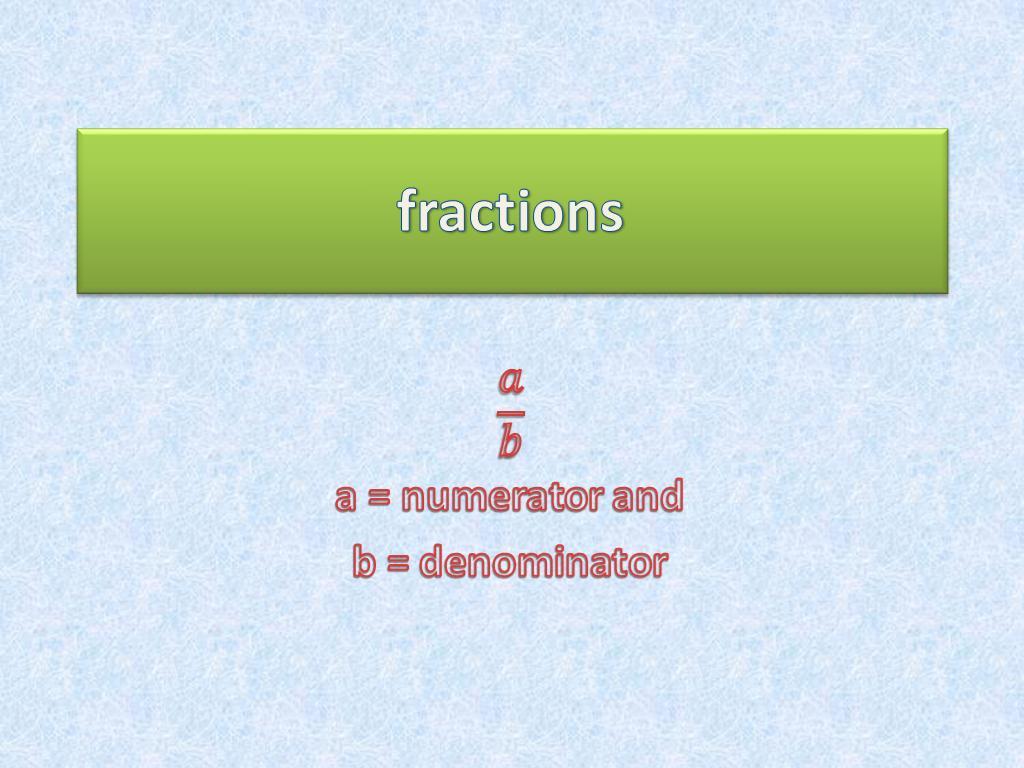
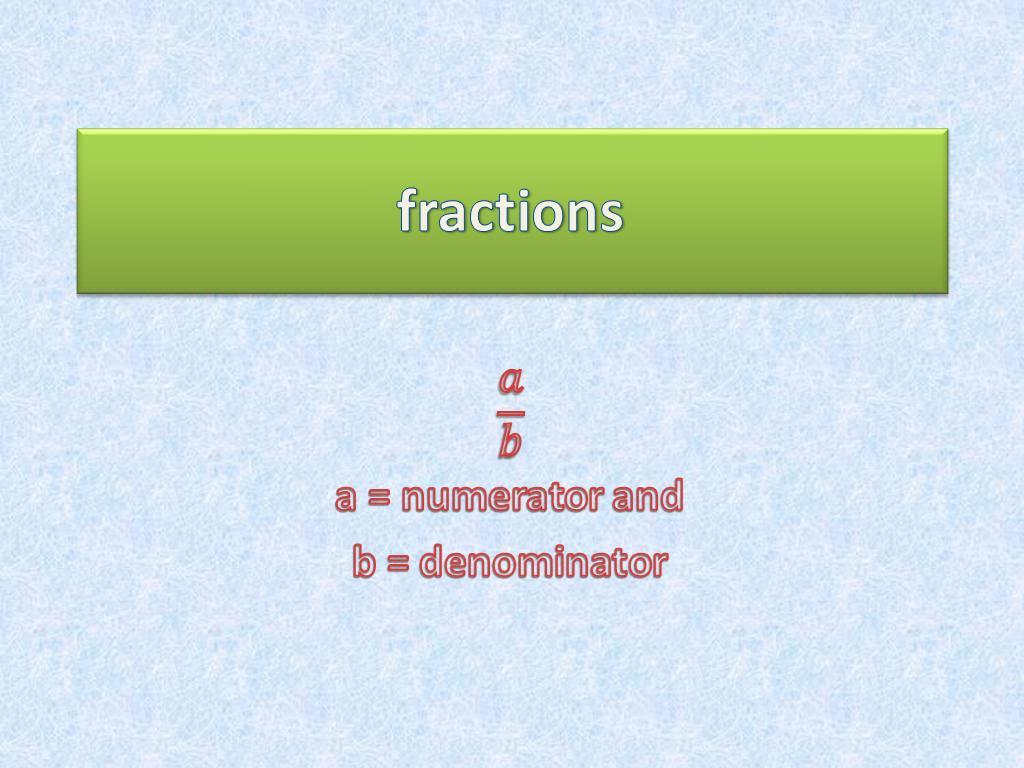
Fraction numbers are known as numerators and denominators

On a number line, fractions are expressed in points that lie between two integers

The general form of fractions is

\large {\boxed {\bold {\frac {a} {b}}}

a = numerator

b = denominator

Mixed fractions consist of whole numbers and proper fractions

There are a number of steps in adding fraction operations

  • 1. the denominators must be the same, if not then

a. Multiply top and bottom of each fraction by the denominator of the other. or

b. we can use Least Common Denominator which is  the smallest of all the common denominators.

  • 2: Add the numerators
  • 3: Simplify the fraction

And to add / subtract mixed fractions:

1. Change to improper fractions first

2. addition (make same denominators)

3. Change the result again to mixed fractions

The question:

A tree limb hangs 5 ​​1/4 feet from a telephone wire. The city trims back the branch before it grows within 2 1/2 feet of the wire. Will the city allow the tree to grow 2 3/4 more feet?

The tree branches that were cut by the city were \displaystyle 2\frac{1}{2}, so the remaining tree branches:

\displaystyle 5\frac{1}{4}-2\frac{1}{2}=2\frac{3}{4}

we change to proper fractions :

\displaystyle 5\frac{1}{4}=\frac{21}{4}

\displaystyle 2\frac{1}{2}=\frac{5}{2}

make same denominators (=4)

\displaystyle \frac{5}{2}=\frac{10}{4}

\displaystyle \frac{21}{4}-\frac{10}{4}=\frac{11}{4}

Change the result again to mixed fractions

\displaystyle \frac{11}{4}=2\frac{3}{4}

So the city only allows tree branches along \displaystyle 2\frac{3}{4}, above that will be cut

Learn more

5 - 1 1/4 will be more than 4

brainly.com/question/2605171

spend practicing instruments

brainly.com/question/11902737

spend on the comic books

brainly.com/question/3460688

Keywords : A tree limb, wire, city, branch

You might be interested in
I need to u substitution method to solve -5x-8y=17 , 2x-7y=-17
harina [27]

Answer:

Alright well solve for the variable in one of the equation's. then substitute the result of the other equation

Point form: - 175/51, 1/51

Equation form:

x = - 175/51          y = 1/51 Hope this help's :)


Step-by-step explanation:


8 0
2 years ago
The length of a rectangle is 20 units more than its width. The area of the rectangle is x4−100.
Mice21 [21]

Answer:

1. x^2-10 because the area expression can be rewritten as (x^2-10)(x^2+10)which equals (x^2-10)((x^2-10)+20).

Step-by-step explanation:

Area of the rectangle =(x^4-100)

x^4-100=(x^2)^2-10^2\\$Applying difference of two squares: a^2-b^2=(a-b)(a+b)\\(x^2)^2-10^2=(x^2-10)(x^2+10)

Since the length of a rectangle is 20 units more than its width.

Width: x^2-10\\Length=x^2+10=x^2-10+20

The correct option is therefore 1.

4 0
2 years ago
Read 2 more answers
Suppose on a certain planet that a rare substance known as Raritanium can be found in some of the rocks. A raritanium-detector i
Andrews [41]

Answer:

the probability the rock has raritanium is 0.9670

Step-by-step explanation:

These events have been defined as

Z: sample has raritanium

Y: the reading from detector is positive

Z': sample has no raritanium

Y': Reading from detector is negative

P(z) = 0.13

P(y'/z) = 0.02

P(y/z')= 0.005

We need to find p(z/y)

= p(z/y) = p(z ∩ y)/p(y)

= P(z) - p(z∩y)/0.13 = 0.02

Remember the value of p(z) = 0.13

So when we cross multiply we get

0.13 - p(z ∩ y) = 0.02 x 0.13

0.13 - p(z ∩ y) = 0.0026

-p(z ∩ y) = 0.0026 - 0.13

Such that

p(z ∩ y) = 0.1274

P(y/z')= 0.005

P(z∩y') = 0.005

Since p(z) = 0.13

P(z') = 1-0.13

P(y) - p(z∩y)/0.87 = 0.005

We cross multiply

P(y) - 0.1274 = 0.005x0.87

P(y) = 0.1274+0.00435

P(y) = 0.13175

We have 0.1274/0.13175

= 0.9670

So we conclude that probability rock has raritanium is 0.9670

6 0
2 years ago
Use the drop-down menus to complete these statements.
OverLord2011 [107]

Answer: 1/20 mile per minute 1:20

Step-by-step explanation:

Just dived 2 by 40

8 0
2 years ago
Read 2 more answers
A standard number cube has 6 sides labeled 1 to 6. apu rolls a standard number cube 30 times. How many times can
Leviafan [203]

Answer:

The expected value of rolling a 5 or 6 is 10.

Step-by-step explanation:

The sample space of rolling a standard number cube is:

S = {1, 2, 3, 4, 5 and 6}

The cube is standard, this implies that each side has an equal probability of landing face-up.

So, the probability of all the six outcomes is same, i.e. \frac{1}{6}.

Now it is provided that Apu rolls the cube <em>n</em> = 30 times.

Let the random variable <em>X</em> represent the value on the face of cube.

The event of rolling a 5 and rolling a 6 are mutually exclusive, i.e. they cannot occur together.

So, P (X = 5 and X = 6) = 0.

Compute the probability of getting a 5 or 6 as follows:

P (X = 5 or X = 6) = P (X = 5) + P (X = 6) - P (X = 5 and X = 6)

                            = P (X = 5) + P (X = 6)

                            =\frac{1}{6}+\frac{1}{6}\\\\=\frac{2}{6}\\\\=\frac{1}{3}

Compute the expected value of rolling a 5 or 6 as follows:

E(X = 5\ \text{or}\ X = 6)=n\times P(X = 5\ \text{or}\ X = 6)

                               =30\times \frac{1}{3}\\\\=10

Thus, the expected value of rolling a 5 or 6 is 10.

8 0
2 years ago
Other questions:
  • Analyzing a Function The population of bobcats in northern Arizona since 2008 can be modeled using the function b(t) = –0.32t2 +
    7·2 answers
  • The density of an object can be found by taking its mass and dividing by its volume. Write an equation to represent the relation
    8·1 answer
  • Rachel can finish the job in 5 hours, while Carl can finish the same job in 8 hours. How long will it take them to finish the jo
    5·2 answers
  • Which equation represents a proportional relationship that has a constant of proportionality equal to StartFraction 4 over 5 End
    10·2 answers
  • The pre image STU has undergone a type of transformation called a rigid transformation to produce the imagine VWX . Compare the
    10·2 answers
  • Find the rational form of 71.625​
    10·1 answer
  • Indicate the data relationship for each table. A 2-column table with 4 rows. Column 1 is labeled x with entries 3, 4, 5, 6. Colu
    6·1 answer
  • Which rule represents the translation from the pre-image, ΔABC, to the image, ΔA'B'C'?
    15·1 answer
  • Which table has a constant of proportionality between yyy and xxx of 0.60.60, point, 6?
    9·1 answer
  • A restaurant owner plans to use x tables seating 4, y tables seating 6, and z tables seating 8, for a total of 20 tables. When f
    15·1 answer
Add answer
Login
Not registered? Fast signup
Signup
Login Signup
Ask question!