answer.
Ask question
Login Signup
Ask question
All categories
  • English
  • Mathematics
  • Social Studies
  • Business
  • History
  • Health
  • Geography
  • Biology
  • Physics
  • Chemistry
  • Computers and Technology
  • Arts
  • World Languages
  • Spanish
  • French
  • German
  • Advanced Placement (AP)
  • SAT
  • Medicine
  • Law
  • Engineering
salantis [7]
2 years ago
5

A cylindrical metal specimen 12.7 mm (0.5 in.)

Engineering
1 answer:
Liula [17]2 years ago
5 0

Answer:

Steel, Titanium and Tungsten

Explanation:

Given:-

- The diameter of the cylindrical specimen, d = 12.7 mm

- The length of the cylindrical specimen, L = 250 mm

- The tensile stress in the specimen, σ = 28 MPa

- Assume elastic deformation of the material up-to the specified tensile stress

Solution:-

- To determine or select suitable materials that are subjected to the given stress ( σ ) and an elongation constraint ( Δl ) or contraction of diameter ( Δd ). We need material intrinsic properties and relate them to our analysis.

- We studied two material intrinsic properties that is the Elastic Modulus ( E ) and Poisson ratio ( v ).

- Since, the question poses a constraint on the diameter. Note that the axis of stress applied ( axial ) and the contraction dimension are orthogonal to each other. In such case, we will determine the poisson ratio ( v ) of the suitable material as follows:

- We will first determine the permissible strain in the diametrical direction ( εx ). It is the ratio of allowable contraction of diameter ( Δd ) to the initial diameter ( d ):

                              εx = Δd / d

                              εx = ( -1.2*10^-3 )  / ( 12.7 )

                              εx = -0.00009

- The poisson ratio ( v ) of a material is defined as the negative ratio of the transversal strain ( εx ) to the axial strain ( εz ). The axial strain ( εz ) is determined as the ratio of elongation in length ( Δl ) to the initial length ( L ) of the specimen as follows:

                              εz = Δl / L

                              εz = ( 0.08 )  / ( 250 )

                              εz = 0.00032

- The poisson ratio ( v ) is expressed as:

                             v = - [ εx / εz ]

                              v = [ 0.00009 / 0.00032]

                              v = 0.2812

- Hooke's law gives us a linear relation between the applied stress ( σ ) and the engineering strain in the direction of applied stress. Since, the specimen is subjected to tensile stress and abides by the Hooke's law ( Elastic deformation ). The modulus of elasticity ( E ) is given as :

                              E = σ / εz

                              E = (28*10^6 ) / 0.00032

                              E = 87.5 GPa

- As per maximum elongation allowed the modulus of elasticity calculated above is the minimum value that must be satisfied by the selected material. We will use a list of materials ( ASTM ) standard and list a few that meet the elongation criteria as follows:

                  Copper, Nickel , Steel, Titanium , Tungsten

- From the above selected metals the most closely associated poisson ratio ( v ) calculated above would be:

                   Metals                         poisson ratio ( v ) range

                   Copper                                     0.33

                   Nickel                                       0.31

                   Steel                                    0.27–0.30

                   Titanium                              0.265–0.34

                   Tungsten                                  0.27

- The suitable materials would be:

                         Steel, Titanium and Tungsten

You might be interested in
You are working in a lab where RC circuits are used to delay the initiation of a process. One particular experiment involves an
Ymorist [56]

Answer:

t'_{1\2} = 6.6 sec

Explanation:

the half life of the given circuit is given by

t_{1\2} =\tau ln2

where [/tex]\tau = RC[/tex]

t_{1\2} = RCln2

Given t_{1\2} = 3 sec

resistance in the circuit is 40 ohm and to extend the half cycle we added new resister of 48 ohm. the net resitance is 40+48 = 88 ohms

now the new half life is

t'_{1\2} =R'Cln2

Divide equation 2 by 1

\frac{t'_{1\2}}{t_{1\2}} = \frac{R'Cln2}{RCln2} = \frac{R'}{R}

t'_{1\2} = t'_{1\2}\frac{R'}{R}

putting all value we get new half life

t'_{1\2} = 3 * \frac{88}{40}  = 6.6 sec

t'_{1\2} = 6.6 sec

7 0
2 years ago
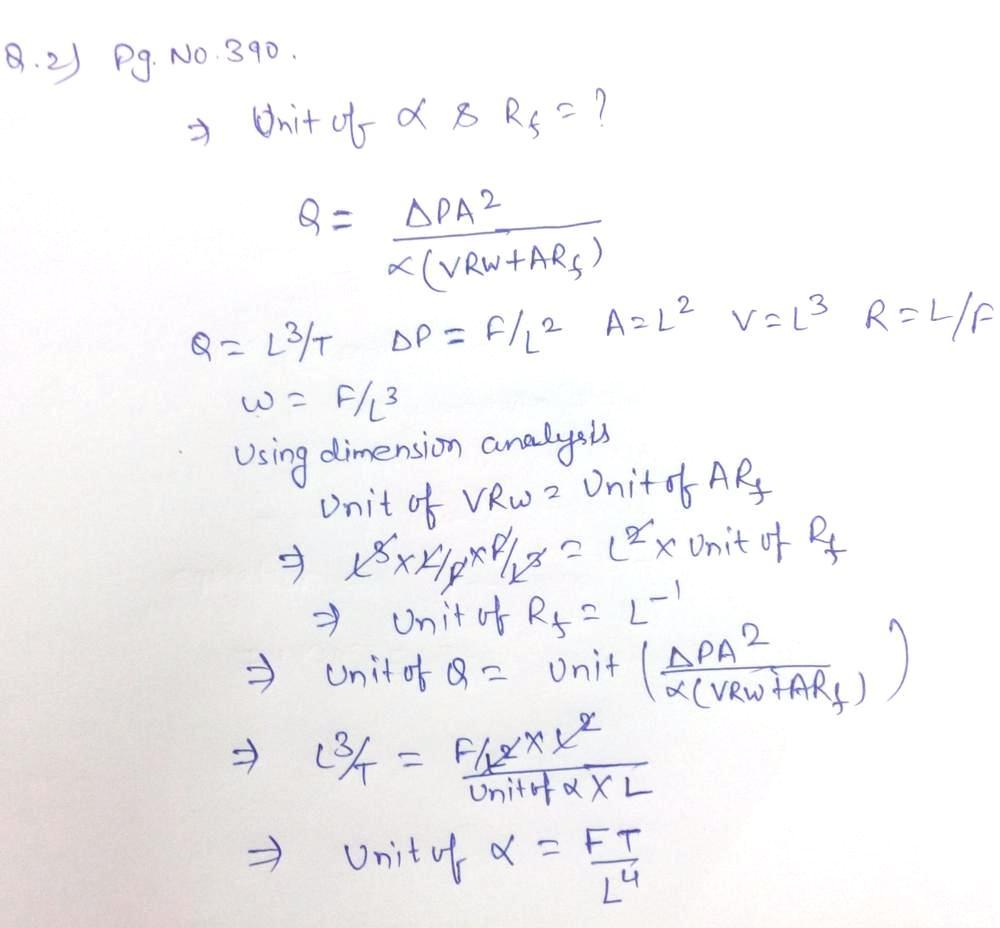
An equation used to evaluate vacuum filtration is Q = ΔpA2 α(VRw + ARf) , Where Q ≐ L3/T is the filtrate volume flow rate, Δp ≐
larisa86 [58]

Answer:

Explanation:

The explanations and answers are shown in the following attachments

6 0
2 years ago
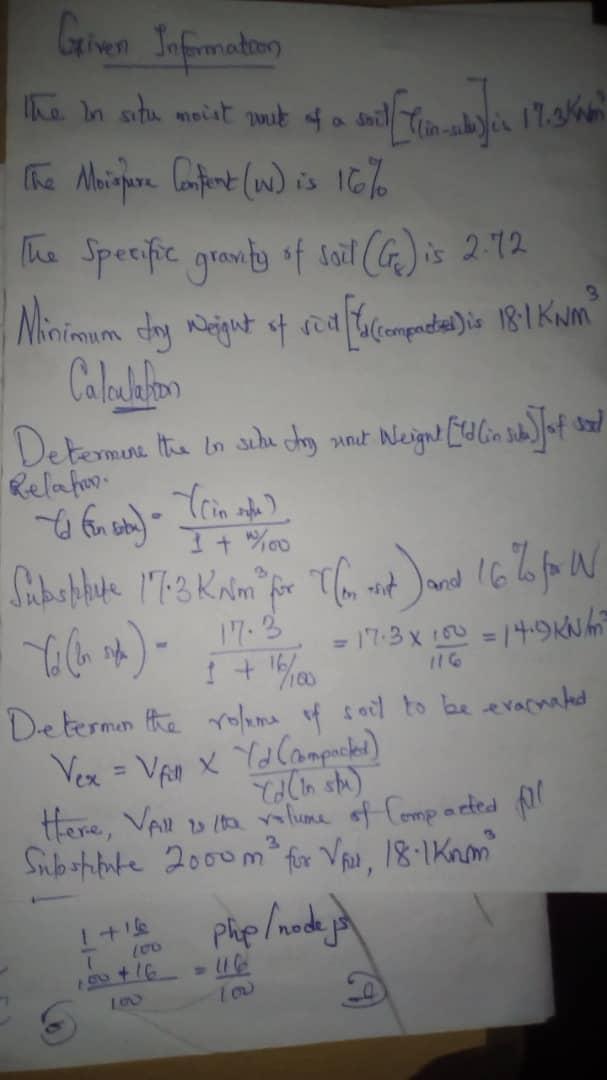
The in situ moist unit weight of a soil is 17.3 kN/m^3 and the moisture content is 16%. The specific gravity of soil solids is 2
hammer [34]

Answer:

Explanation:

The solution to given problem is attached below

7 0
2 years ago
Determine F12 and F21 for the following configurations: (a) A long semicircular duct with diameter of 0.1 meters: (b) A hemisphe
uysha [10]

Answer:

long duct: 1.0 and 0.424

Hemisphere 1.0 ; 0.125; 0.5

Explanation:

For a long duct:

By inspection, F_{12} = 1.0

Calculating by reciprocity, F_{21} = \frac{A_{1} }{A_{2}F_{12}  }  = \frac{2RL}{\frac{3}{4}*2\pi RL  }* 1.0\\                                                         = 0.424

Hemisphere:

By reciprocity gives = 0.125

using the summation rule: F_{21} + F_{22} + F_{23} = 1

However, because this is a hemisphere, the value will be= 0.5 * 1

                                                                                               = 0.5

6 0
2 years ago
What action below would tell your computer to "Send" an email?
Fynjy0 [20]
Click I think:) not sure tho
4 0
2 years ago
Read 2 more answers
Other questions:
  • How much extra water does a 21.5 ft, 175-lb concrete canoe displace compared to an ultra-lightweight 38-lb Kevlar canoe of the s
    8·1 answer
  • A square loop of wire surrounds a solenoid. The side of the square is 0.1 m, while the radius of the solenoid is 0.025 m. The sq
    6·1 answer
  • A 12-L volume of oil is subjected to a pressure change, which produces a volume strain on the oil of -3.0 × 10⁻⁴. The bulk modu
    6·1 answer
  • Choose the correct sequence of the following events leading to the sensory processing of a stimulus. 1. transmission 2. transduc
    13·1 answer
  • A vineyard owner is planting several new rows of grapevines, and needs to know how many grapevines to plant in each row. She has
    8·1 answer
  • Sea water with a density of 1025 kg/m3 flows steadily through a pump at 0.21 m3 /s. The pump inlet is 0.25 m in diameter. At the
    8·1 answer
  • With thermodynamics, one cannot determine ________.
    14·1 answer
  • Solid spherical particles having a diameter of 0.090 mm and a density of 2002 kg/m3 are settling in a solution of water at 26.7C
    8·1 answer
  • According to the EWR specifications, ___ is responsible for picking up and disposing of debris or rubbish from
    15·1 answer
  • When encountering low visibility from rain or fog, you should use your ____.
    12·1 answer
Add answer
Login
Not registered? Fast signup
Signup
Login Signup
Ask question!