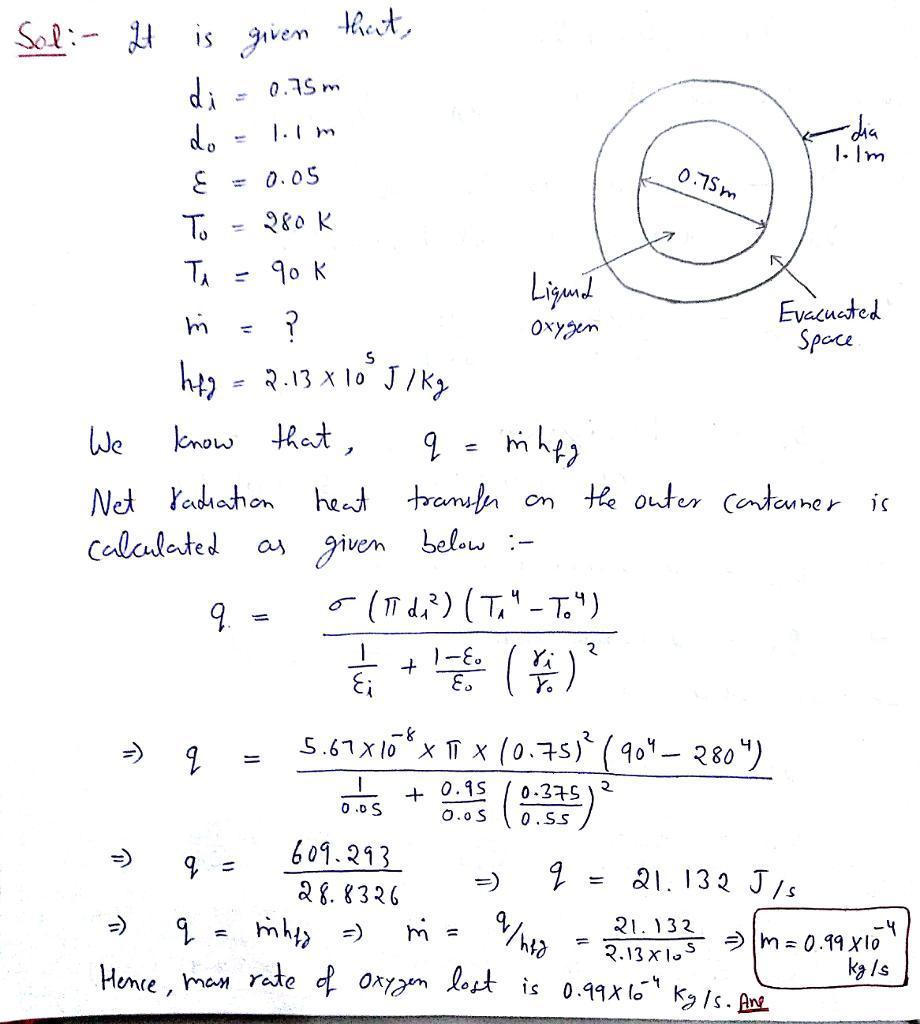
answer.
Ask question
Login Signup
Ask question
All categories
  • English
  • Mathematics
  • Social Studies
  • Business
  • History
  • Health
  • Geography
  • Biology
  • Physics
  • Chemistry
  • Computers and Technology
  • Arts
  • World Languages
  • Spanish
  • French
  • German
  • Advanced Placement (AP)
  • SAT
  • Medicine
  • Law
  • Engineering
HACTEHA [7]
2 years ago
13

Select True/False for each of the following statements regarding aluminum / aluminum alloys: (a) Aluminum alloys are generally n

ot viable as lightweight structural materials in humid environments because they are highly susceptible to corrosion by water vapor. (b) Aluminum alloys are generally superior to pure aluminum, in terms of yield strength, because their microstructures often contain precipitate phases that strain the lattice, thereby hardening the alloy relative to pure aluminum. (c) Aluminum is not very workable at high temperatures in air, in terms of extrusion and rolling, because a non-protective oxide grows and consumes the metal, converting it to a hard and brittle ceramic. (d) Compared to most other metals, like steel, pure aluminum is very resistant to creep deformation. (e) The relatively low melting point of aluminum is often considered a significant limitation for high-temperature structural applications.
Engineering
1 answer:
kicyunya [14]2 years ago
3 0

Explanation:

(a) Aluminum alloys are generally not viable as lightweight structural materials in humid environments because they are highly susceptible to corrosion by water vapor.

False, aluminium is not susceptible to any corrosion by the presence of water vapor.

(b) Aluminum alloys are generally superior to pure aluminum, in terms of yield strength, because their micro structures often contain precipitate phases that strain the lattice, thereby hardening the alloy relative to pure aluminum.

True.

(c) Aluminum is not very workable at high temperatures in air, in terms of extrusion and rolling, because a non-protective oxide grows and consumes the metal, converting it to a hard and brittle ceramic.

False, aluminium is stable at high temperatures and does not oxidizes.

(d) Compared to most other metals, like steel, pure aluminum is very resistant to creep deformation.

False,pure aluminium is not resistant to the creep deformation.

(e) The relatively low melting point of aluminum is often considered a significant limitation for high-temperature structural applications.

False.

You might be interested in
Use the predicate specifications(x, y): x beats yF (x): x is an (American) football teamQ(x, y): x is quarterback of yL(x,y): x
attashe74 [19]

Answer:

a) ∀y∃x(Q(x, y))

b) (B(Jayhawks, W ildcats)→¬∀y(L(Jayhawks, y)))

c) ∃x(B(Wildcats, x) ∧ B(x, Jayhawks))

Explanation:

a) The statement can be rewritten as "For all football teams, there exists a quarterback" which is written in logical symbols.

b) The statement is an implication and thus have a premise and a conclusion. The premise states "Jayhawks beat the Wildcats" which is translated using B(x, y). The conclusion can be rewritten as "It is not the case that Jayhawks lose to all football teams".

c) The statement is a simple conjunction which can be written as "There exists a team x such that the Wildcats beats x and x beats Jayhawks"

7 0
2 years ago
A shaft consisting of a steel tube of 50-mm outer diameter is to transmit 100 kW of power while rotating at a frequency of 34 Hz
nikitadnepr [17]

Answer:

25 - \sqrt[4]{26.66*10^{-8} }  mm

Explanation:

Given data

steel tube : outer diameter = 50-mm

power transmitted = 100 KW

frequency(f) = 34 Hz

shearing stress ≤ 60 MPa

Determine tube thickness

firstly we calculate the ; power, angular velocity and torque of the tube

power = T(torque) * w (angular velocity)

angular velocity ( w ) = 2\pif = 2 * \pi * 34 = 213.71

Torque (T) = power / angular velocity = 100000 / 213.71 = 467.92 N.m/s

next we calculate the inner diameter  using the relation

  \frac{J}{c_{2}  } = \frac{T}{t_{max} }  = 467.92 / (60 * 10^6) =  7.8 * 10^-6 m^3

also

c2 = (50/2) = 25 mm

\frac{J}{c_{2} } = \frac{\pi }{2c_{2} } ( c^{4} _{2} - c^{4} _{1} ) =  \frac{\pi }{0.050} [ ( 0.025^{4} - c^{4} _{1}  ) ]

therefore; 0.025^4 - c^{4} _{1} = 0.050 / \pi (7.8 *10^-6)

c^{4} _{1} = 39.06 * 10 ^-8 - ( 1.59*10^-2 * 7.8*10^-6)

    39.06 * 10^-8 - 12.402 * 10^-8 =26.66 *10^-8

c_{1} = \sqrt[4]{26.66 * 10^{-8} }  =

THE TUBE THICKNESS

c_{2} - c_{1} = 25 - \sqrt[4]{26.66*10^{-8} }  mm

4 0
2 years ago
The ingredient weights for making 1 yd (cyd) of concrete by assuming aggregates in SSD state are given below. The volume of air
Pachacha [2.7K]

Answer:

Explanation:

Ans) Given batch weight of each component :

Cement = 700 lb

Water = 315 lb

Coarse aggregate = 1575 lb

Fine aggregate = 1100 lb

Part 1) Amount of water = 328.5 lb

Amount of water is needed to be increased if the aggregates has absorption capacity, To maintain constant water cement ratio, the mixing water is increased because some of the water is absorbed by aggregates.

Amount of water absorbed = 328.5 lb - 315 lb = 13.5 lb

Total amount of aggregates = 1575 + 1100 = 2675 lb

=> % Absorption capacity = 13.5 x 100 / 2675 = 0.5 %

Hence, new amount of Coarse aggregate = (1 - 0.005) x 1575 lb = 1567.125 lb

New amount of fine aggregate = (1 - 0.005) x 1100 = 1094.5 lb

Since, water cement ratio is maintained constant , amount of cement remains unchanged

=> Volume of water = 328.5 / 62.4 = 5.26 ft3

=> Volume of cement = 700 / (3.15 x 62.4) = 3.56 ft3

=> Volume of coarse aggregate = 1567.125 / (2.4 x 62.4) = 10.46 ft3

=> Volume of fine aggregate = 1100 / (2.4 x 62.4) = 7.34 ft3

Volume of air = 2% = 0.02 x 27 = 0.54 ft3

Total concrete volume = 5.26 + 3.56 + 10.46 + 7.34 + 0.54 \approx 27 ft3 = 1 yd3

Hence, calculated amount of each component is correct

Part 2) We know, minus sign indicated that the aggregate will absorb some moisture from concrete, hence mixing water amount needed to be corrected .

=> Amount of water absorbed by coarse aggregate = 0.01 x 1567.125 lb = 15.67 lb

=> Amount of water absorbed by fine aggregate = 0.02 x 1094.50 lb = 21.89 lb

Total amount of water absorbed = 15.67 + 21.89 = 37.56 lb

To maintain same water cement ratio, amount of mixing water is needed to be increased

=> Corrected amount of mixing water = 328.5 lb + 37.56 lb = 366 lb

=> Corrected amount of coarse aggregate = (1 - 0.01) x 1567.125 = 1551.45 lb

=> Corrected amount of fine aggregate = (1 - 0.02) x 1094.5 = 1072.6 lb

Part 3) We know,

Unit weight = Sum of weight of each material / Total volume

=> Sum of weight = 366 + 700 + 1551.45 + 1072.6 = 3690.05 lb

Total volume = 1 yd3 or 27 ft3

=> Expected Unit Weight = 3690.05 lb / 27 ft3 = 136.67 lb/ft3

Also, Concrete Yield = Weight of all components / Unit weight of concrete

=> Yield = 3690.05 / 136.67 = 27 ft3 or 1 yd3

4 0
2 years ago
An adiabatic gas turbine expands air at 1300 kPa and 500◦C to 100 kPa and 127◦C. Air enters the turbine through a 0.2-m2 opening
Viktor [21]

Given:

Pressure, P_{1} = 1300 kPa

Temperature,  T_{1} = 500^{\circ}

P_{2} = 100 kPa

T_{2} = 127^{\circ}  

velocity, v = 40 m/s

A = 1m^{2}

Solution:

For air propertiess at

P_{1} = 1300 kPa

T_{1} = 500^{\circ}

h_{1} = 793kJ/K

v_{1} = 0.172\frac{m^{3}}{kg}

and also at

P_{2} = 100 kPa

T_{2} = 127^{\circ}  

h_{2} = 401 KJ/K

v_{2} =  1.15\frac{m^{3}}{kg}

a) Mass flow rate is given by:

m' = \frac{Av}{v_{1}}

Now,

m = \frac{0.2\times 40}{0.172} = 46.51 kg/s

b) for the power produced by turbine, P = m'(h_{1} - h_{2})

P = 46.51\times(793 - 401) = 18.231 MW

5 0
2 years ago
Liquid oxygen is stored in a thin-walled, spherical container 0.75 m in diameter, which is enclosed within a second thin-walled,
nadezda [96]

Answer:

Explanation:

the solution is well stated

3 0
2 years ago
Other questions:
  • Water has a density of 1.94 slug/ft^3. What is the density expressed in SI units? Express the answer to three significant figure
    8·1 answer
  • Which of the two materials (brittle vs. ductile) usually obtains the highest ultimate strength and why?
    5·1 answer
  • A mass of 12 kg saturated refrigerant-134a vapor is contained in a piston-cylinder device at 240 kPa. Now 300 kJ of heat is tran
    8·1 answer
  • Air in tankBis at 200 kPa, 280 K and mass 1 kg. It is connected to an empty piston/cylinder with a float pressure of 400 kPa sim
    6·1 answer
  • A vineyard owner is planting several new rows of grapevines, and needs to know how many grapevines to plant in each row. She has
    8·1 answer
  • The Gill Art Gallery wishes to maintain data on their customers, artists and paintings. They may have several paintings by each
    7·1 answer
  • The in situ moist unit weight of a soil is 17.3 kN/m3 and the moisture content is 16%. The specific gravity of soil solids is 2.
    12·1 answer
  • 7. Implement a function factorial in RISC-V that has a single integer parameter n and returns n!. A stub of this function can be
    9·1 answer
  • Consider a steady developing laminar flow of water in a constant-diameter horizontal discharge pipe attached to a tank. The flui
    14·1 answer
  • NEEDS TO BE IN PYTHON:ISBN-13 is a new standard for indentifying books. It uses 13 digits d1d2d3d4d5d6d7d8d910d11d12d13 . The la
    15·1 answer
Add answer
Login
Not registered? Fast signup
Signup
Login Signup
Ask question!