answer.
Ask question
Login Signup
Ask question
All categories
  • English
  • Mathematics
  • Social Studies
  • Business
  • History
  • Health
  • Geography
  • Biology
  • Physics
  • Chemistry
  • Computers and Technology
  • Arts
  • World Languages
  • Spanish
  • French
  • German
  • Advanced Placement (AP)
  • SAT
  • Medicine
  • Law
  • Engineering
antoniya [11.8K]
2 years ago
13

A technician has been dispatched to assist a sales person who cannot get his laptop to display through a projector. The technici

an verified the video is displaying properly on the laptop's built-in screen. Which of the following is the next step the technician should take?
Engineering
1 answer:
oee [108]2 years ago
7 0

Answer:verify proper cable is hooked between laptop and projector. HDMI ports or 15 pin video output to input.

And laptop is selected to output to respective video output.

Explanation:

You might be interested in
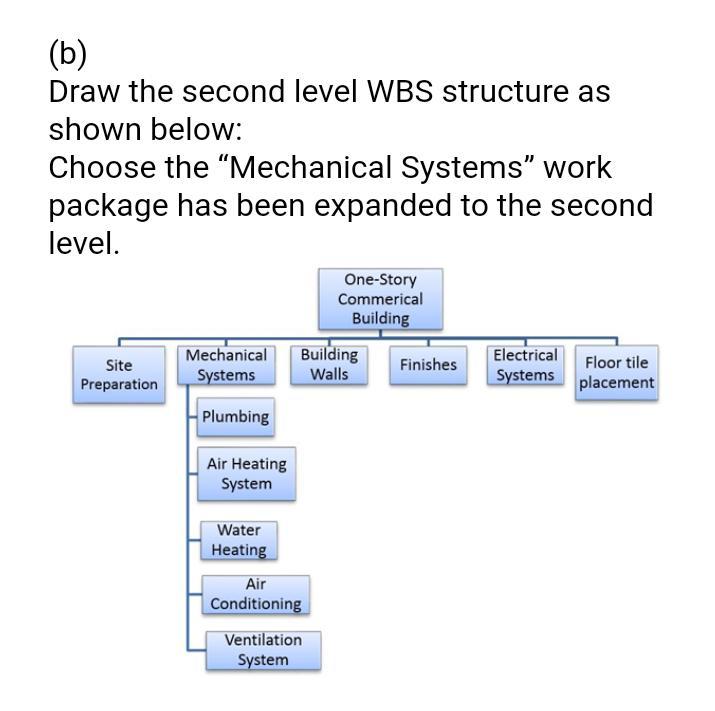
Develop a preliminary work breakdown structure (WBS) for a small one-story commercial building to be constructed on the site of
Zielflug [23.3K]

Answer:

The preliminary work breakdown structure will be divided into two steps, the first is to draw the first level and the second is to draw the second level.

Explanation:

Please look at attachment.

6 0
2 years ago
Read 2 more answers
Twenty distinct cars park in the same parking lot every day. Ten of these cars are US-made, while the other ten are foreign-made
Zina [86]

Answer:

Total no. of ways to line up cars is 20! = 2.43 c 10^18

Probability that the cars alternate is 0.00001 or 0.001%

Explanation:

Since, the position of a car is random.Therefore, number ways in which cars can line up is given as:

<u>No. of ways = 20! = 2.43 x 10^18</u>

For the probability that cars alternate, two groups will be formed, one consisting of US-made 10 cars and other containing 10 foreign made. The number of favorable outcomes for this can be found out as the arrangements of 2! between these groups multiplied by the arrangements of 10! for each group, due to the arrangements among the groups themselves.

Favorable Outcomes = 2! x 10! x 10!

Thus the probability of event will be:

Probability = Favorable Outcomes/Total No. of Ways

Probability = (2! x 10! x 10!)/20!

<u>Probability = 0.00001 = 0.001%</u>

4 0
2 years ago
Same rule: If both players spend the same number of coins, player 2 gains 1 coin. Off-by-one rule: If the players do not spend t
Galina-37 [17]

Answer:

Check the explanation

Explanation:

1 -

public int getPlayer2Move(int round)

{

  int result = 0;


  //If round is divided by 3

  if(round%3 == 0) {

      result= 3;

  }

  //if round is not divided by 3 and is divided by 2

  else if(round%3 != 0 && round%2 == 0) {

      result = 2;

  }

  //if round is not divided by 3 or 2

  else {

      result = 1;

  }


  return result;

}

2-

public void playGame()

{


  //Initializing player 1 coins

  int player1Coins = startingCoins;


  //Initializing player 2 coins

  int player2Coins = startingCoins;


  for ( int round = 1 ; round <= maxRounds ; round++) {


      //if the player 1 or player 2 coins are less than 3

      if(player1Coins < 3 || player2Coins < 3) {

          break;

      }


      //The number of coins player 1 spends

      int player1Spends = getPlayer1Move();


      //The number of coins player 2 spends

      int player2Spends = getPlayer2Move(round);


      //Remaining coins of player 1

      player1Coins -= player1Spends;


      //Remaining coins of player 2

      player2Coins -= player2Spends;


      //If player 2 spends the same number of coins as player 2 spends

      if ( player1Spends == player2Spends) {

          player2Coins += 1;

          continue;

      }


      //positive difference between the number of coins spent by the two players

      int difference = Math.abs(player1Spends - player2Spends) ;


      //if difference is 1

      if( difference == 1) {

          player2Coins += 1;

          continue;

      }


      //If difference is 2

      if(difference == 2) {

          player1Coins += 2;

          continue;

      }


  }


  // At the end of the game

  //If player 1 coins is equal to player two coins

  if(player1Coins == player2Coins) {

      System.out.println("tie game");

  }

  //If player 1 coins are greater than player 2 coins

  else if(player1Coins > player2Coins) {

      System.out.println("player 1 wins");

  }

  //If player 2 coins is grater than player 2 coins

  else if(player1Coins < player2Coins) {

      System.out.println("player 2 wins");

  }

}

3 0
2 years ago
A plane wall of thickness 2L = 60 mm and thermal conductivity k= 5W/m.K experiences uniform volumetric heat generation at a rate
aniked [119]

Answer:

Explanation:

A plane wall of thickness 2L=40 mm and thermal conductivity k=5W/m⋅Kk=5W/m⋅K experiences uniform volumetric heat generation at a rateq  

˙

q

q

˙

​  

, while convection heat transfer occurs at both of its surfaces (x=-L, +L), each of which is exposed to a fluid of temperature T∞=20∘CT  

∞

​  

=20  

∘

C. Under steady-state conditions, the temperature distribution in the wall is of the form T(x)=a+bx+cx2T(x)=a+bx+cx  

2

 where a=82.0∘C,b=−210∘C/m,c=−2×104C/m2a=82.0  

∘

C,b=−210  

∘

C/m,c=−2×10  

4

C/m  

2

, and x is in meters. The origin of the x-coordinate is at the midplane of the wall. (a) Sketch the temperature distribution and identify significant physical features. (b) What is the volumetric rate of heat generation q in the wall? (c) Determine the surface heat fluxes, q

′′

x

(−L)q  

x

′′

​  

(−L) and q

′′

x

(+L)q  

x

′′

​  

(+L). How are these fluxes related to the heat generation rate? (d) What are the convection coefficients for the surfaces at x=-L and x=+L? (e) Obtain an expression for the heat flux distribution q

′′

x

(x)q  

x

′′

​  

(x). Is the heat flux zero at any location? Explain any significant features of the distribution. (f) If the source of the heat generation is suddenly deactivated (q=0), what is the rate of change of energy stored in the wall at this instant? (g) What temperature will the wall eventually reach with q=0? How much energy must be removed by the fluid per unit area of the wall (J/m2)(J/m  

2

) to reach this state? The density and specific heat of the wall material are 2600kg/m32600kg/m  

3

 and 800J/kg⋅K800J/kg⋅K, respectively.

6 0
2 years ago
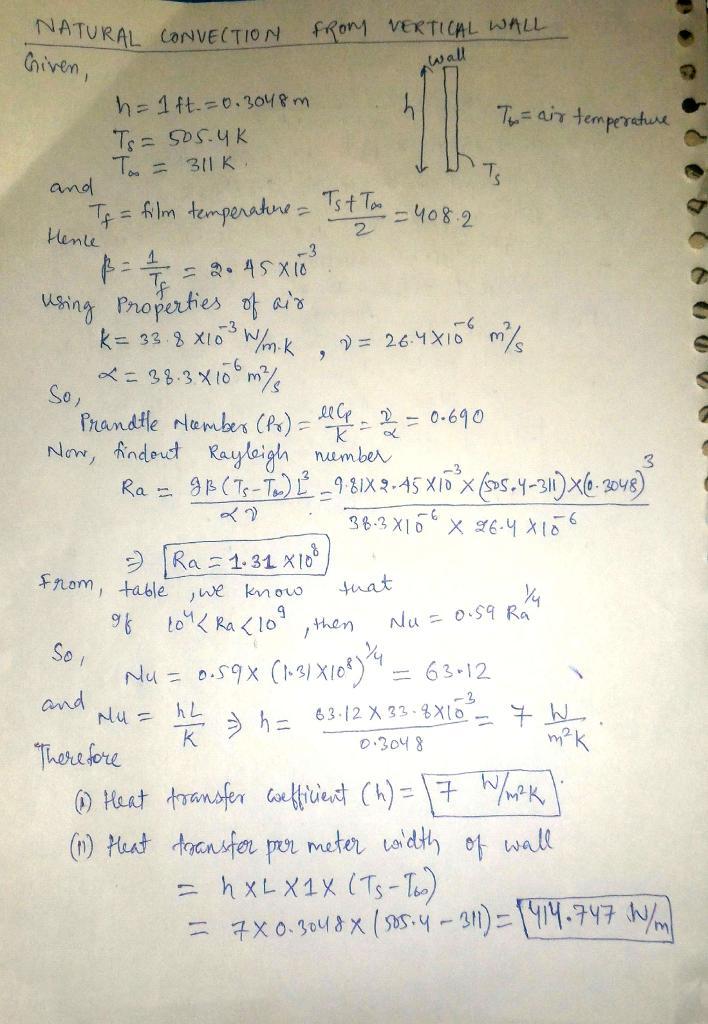
Natural Convection from an Oven Wall. The oven wall in Example 4.7-1 is insulated so that the surface temperature is 366.5 K ins
lukranit [14]

Answer:

i) Heat transfer coefficient (h) = 7 w/m²k

ii) Heat transfer per meter width of wall

      = h x L x 1 x (Ts - T₆₀)

        = 7 x 0.3048 x (505.4 - 322) = 414.747 w/m

Explanation:

see attached image

8 0
2 years ago
Other questions:
  • Pipe (2) is supported by a pin at bracket C and by tie rod (1). The structure supports a load P at pin B. Tie rod (1) has a diam
    15·1 answer
  • Suggest how any sorting algorithm can be augmented in a way to make the best-case count of its key comparisons equal to just n−1
    6·1 answer
  • Which one of the following activities is not an example of incident coordination
    15·1 answer
  • 13–27. The conveyor belt is moving downward at 4 m&gt;s. If the coefficient of static friction between the conveyor and the 15-k
    11·1 answer
  • Use the predicate specifications(x, y): x beats yF (x): x is an (American) football teamQ(x, y): x is quarterback of yL(x,y): x
    13·1 answer
  • Consider water at 27°C in parallel flow over an isothermal, 1‐m‐long flat plate with a velocity of 2 m/s. a) Plot the variation
    15·1 answer
  • A thin-walled tube with a diameter of 6 mm and length of 20 m is used to carry exhaust gas from a smoke stack to the laboratory
    7·1 answer
  • A thin, flat plate that is 0.2 m × 0.2 m on a side is oriented parallel to an atmospheric airstream having a velocity of 40 m/s.
    5·2 answers
  • simple power system consists of a dc generator connected to a load center via a transmission line. The load power is 100 kW. The
    11·1 answer
  • A liquid with a specific gravity of 2.6 and a viscosity of 2.0 cP flows through a smooth pipe of unknown diameter, resulting in
    6·1 answer
Add answer
Login
Not registered? Fast signup
Signup
Login Signup
Ask question!