answer.
Ask question
Login Signup
Ask question
All categories
  • English
  • Mathematics
  • Social Studies
  • Business
  • History
  • Health
  • Geography
  • Biology
  • Physics
  • Chemistry
  • Computers and Technology
  • Arts
  • World Languages
  • Spanish
  • French
  • German
  • Advanced Placement (AP)
  • SAT
  • Medicine
  • Law
  • Engineering
MrRa [10]
2 years ago
12

To determine an athlete's body fat, she is weighed first in air and then again while she's completely underwater. it is found th

at she weighs 690 n when weighed in air and 48.0 n when weighed underwater. what is her average density?

Physics
2 answers:
Makovka662 [10]2 years ago
6 0

Her average density is about 1070 kg/m³

\texttt{ }

<h3>Further explanation</h3>

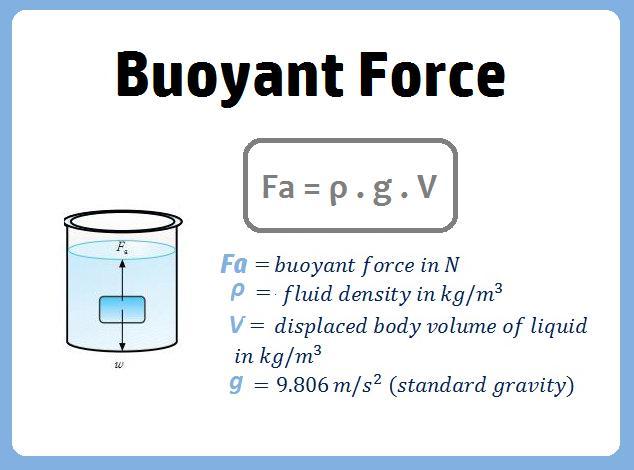
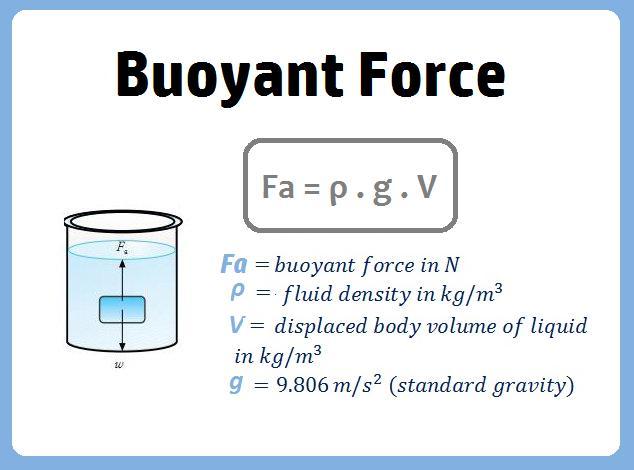
Let's recall Buoyant Force formula as follows:

\boxed{ F = \rho g V}

<em>where:</em>

<em>F = buoyant force ( N )</em>

<em>ρ = density of  fluid ( kg/m³ )</em>

<em>g = gravitational acceleration ( m/s² )</em>

<em>V = displaced body volume of liquid ( m³ )</em>

Let us now tackle the problem!

\texttt{ }

<u>Given:</u>

weight in air = w = 690 N

weight in underwater = w' = 48.0 N

density of water = ρ_w = 1000 kg/m³

<u>Asked:</u>

average density = ρ = ?

<u>Solution:</u>

<em>Firstly, we will calculate the volume of the athlete's body:</em>

w' = w - F

w' = w - \rho_w g V

\rho_w g V = w - w'

\boxed {V = ( w - w' ) \div ( \rho_w g )} <em>→ Equation 1</em>

\texttt{ }

<em>Next, we could calculate the average density of the athlete's body:</em>

\rho = m \div V

\rho = m \div [ ( w - w' ) \div ( \rho_w g ) ] <em>← Equation 1</em>

\rho = ( \rho_w m g) \div ( w - w' )

\rho = ( \rho_w w ) \div ( w - w' )

\rho = ( 1000 \times 690 ) \div ( 690 - 48.0 )

\boxed {\rho \approx 1.07 \times 10^3 \texttt{ kg/m}^3}

\texttt{ }

<h3>Learn more</h3>
  • Buoyant Force : brainly.com/question/13922022
  • Kinetic Energy : brainly.com/question/692781
  • Volume of Gas : brainly.com/question/12893622
  • Impulse : brainly.com/question/12855855
  • Gravity : brainly.com/question/1724648

\texttt{ }

<h3>Answer details</h3>

Grade: High School

Subject: Physics

Chapter: Pressure

il63 [147K]2 years ago
5 0

The difference in weight is due to the displacement of water (the buoyancy of water is acting on the athlete thus giving her smaller weight).<span>

The amount of weight displaced or the amount of buoyant force is: </span>

Fb = 690 N - 48 N

Fb = 642 N

From newtons law, F = m*g. Using this formula, we can calculate for the mass of water displaced:

m of water displaced = 642N / 9.8m/s^2

m of water displaced = 65.5 kg

Assuming a water density of 1 kg/L, and using the formula volume = mass/density:

V of water displaced = 65.5kg / 1kg/L = 65.5 L

The volume of water displaced is equal to the volume of athlete. Therefore:

V of athlete = 65.5 L

The mass of athlete can also be calculated using, F = m*g

m of athlete = 690 N/ 9.8m/s^2

m of athlete = 70.41 kg


Knowing the volume and mass of athlete, her average density is therefore:

average density = 70.41 kg / 65.5 L

<span>average density = 1.07 kg/L = 1.07 g/mL</span>
You might be interested in
Two swift canaries fly toward each other, each moving at 15.0 m/s relative to the ground, each warbling a note of frequency 1750
lesya692 [45]

Answer:

Part a)

f = 1911.5 Hz

Part b)

\lambda = 0.186 m

Explanation:

Here the source and observer both are moving towards each other

so we know that the apparent frequency is given as

f' = f_0 (\frac{v + v_o}{v - v_s})

here we know that

f_0 = 1750 Hz

v_o = 15 m/s

v_s = 15 m/s

now we will have

f' = (1750)(\frac{340 + 15}{340 - 15})

f' = 1911.5 Hz

Part b)

Apparent wavelength is given by the formula

\lambda = \frac{v_{relative}}{f_{app}}

here we will have

\lambda = \frac{340 + 15}{1911.5}

\lambda = 0.186 m

3 0
2 years ago
Sophia is planning on going down an 8-m water slide. Her weight is 50 N. She knows that she has gravitational potential energy (
RideAnS [48]

Answer:

Explanation:

graph would be a straight line from (0, 0) to (400, 8)

Plot points are

PE = mgh

50(0) = 0 J

50(2) = 100 J

50(4) = 200 J

50(6) = 300 J

50(8) = 400 J

4 0
2 years ago
A constant torque of 200Nm turns a wheel about its centre. The moment of inertia of it about the axis is 100kgm^s . Find the kin
AleksAgata [21]
It would turn  160 degrees after twenty truns

<span />
3 0
2 years ago
Read 2 more answers
The standing vertical jump is a good test of an athlete's strength and fitness. The athlete goes into a deep crouch, then extend
SashulF [63]

Answer:

<em>The athlete will rise 1.10 meters off the ground</em>

Explanation:

<u>Vertical Motion</u>

If an object is launched vertically upwards at an initial speed vo, then it will reach a maximum height given by

\displaystyle y_m=\frac{v_o^2}{2g}

The athlete can exert a net force upwards equal to twice his weight. It makes him accelerate upwards at

\displaystyle a=\frac{F_n}{m}=\frac{2W}{m}=2g

The speed at the end of his push can be computed by

v^2=2ay

Replacing the value of a obtained above:

v^2=4gy

where y is the length of this crouch

v^2=4\cdot 9.8\cdot 0.55

v=4.64\ m/s

This is the initial speed of this vertical launch, thus

\displaystyle y_m=\frac{4.64^2}{2\cdot 9.8}

y_m=1.10\ m

5 0
2 years ago
What makes some collisions elastic and others inelastic?
Veseljchak [2.6K]
A perfect elastic collision is defined as one in which there is no loss of kinetic energy in the collision. An inelastic collision is one in which part of the kinetic energy is changed into another form of energy in the collision. Well hope this answers your question :)
7 0
2 years ago
Read 2 more answers
Other questions:
  • A space shuttle orbits Earth at a speed of 21,000 km/hr. How far does it go in 3.5 hrs?
    14·1 answer
  • The image shows an example of white light entering a prism and coming out as colors of the rainbow. How does a prism a produce t
    11·2 answers
  • A catcher stops a 0.15-kg ball traveling at 40 m/s in a distance of 20 cm. what is the magnitude of the average force that the b
    10·2 answers
  • a crowbar of 2 meter is used to lift an object of 800N if the effort arm is 160cm , calculste the effort applied
    10·1 answer
  • An airplane flying parallel to the ground undergoes two consecutive dis- placements. The first is 75 km 30.0° west of north, and
    9·1 answer
  • Assume that the cart is free to roll without friction and that the coefficient of static friction between the block and the cart
    15·2 answers
  • a 0.0215m diameter coin rolls up a 20 degree inclined plane. the coin starts with an initial angular speed of 55.2rad/s and roll
    6·1 answer
  • Sophia was studying with Maalik about the layers of the Earth. They were given several different statements about the layers. Wh
    12·2 answers
  • A Body OF Volume 36cc Floats With 3/4 of its volume submerged in water . The density Of Body is
    13·1 answer
  • A 12-volt battery causes 0.60 ampere to flow through a circuit that contains a lamp and a resistor connected in parallel. The la
    10·1 answer
Add answer
Login
Not registered? Fast signup
Signup
Login Signup
Ask question!