answer.
Ask question
Login Signup
Ask question
All categories
  • English
  • Mathematics
  • Social Studies
  • Business
  • History
  • Health
  • Geography
  • Biology
  • Physics
  • Chemistry
  • Computers and Technology
  • Arts
  • World Languages
  • Spanish
  • French
  • German
  • Advanced Placement (AP)
  • SAT
  • Medicine
  • Law
  • Engineering
Darya [45]
2 years ago
4

Write the chemical symbols for three different atoms or atomic cations with 19 electrons.

Chemistry
2 answers:
MrRa [10]2 years ago
4 0
One of the chemical symbols for three different atoms or atomic cations with 19 electrons is the element with naturally 19 electrons is Potassium with a symbol (K). Other symbols may include those with additional electron charges (-) which are near the element potassium in the periodic table.  
Gnom [1K]2 years ago
4 0

<u>Answer:</u> The three chemical symbols are K, Ti^{3+}\text{ and }V^{4+}

<u>Explanation:</u>

Atomic number is defined as the number of electrons or protons that are present in a neutral atom. It is represented by Z.

When a neutral atom looses electrons, it leads to the formation of positive ions known as cations and when a neutral atom gains electrons, it leads to the formation of negative ions known as anions.

So, the atom having atomic number 19 is potassium. Its chemical symbol is 'K'

Titanium is the 22nd element of the periodic table. So, when this atom looses 3 electrons it will have 19 electrons in its orbit. Thus, the cation formed will be Ti^{3+}

Vanadium is the 23rd element of the periodic table. So, when this atom looses 4 electrons it will have 19 electrons in its orbit. Thus, the cation formed will be V^{4+}

Hence, the three chemical symbols are K, Ti^{3+}\text{ and }V^{4+}

You might be interested in
Is utensils a substance homogeneous mixture or heterogeneous mixture
Phoenix [80]

A pure substance or a homogeneous mixture consists of a single phase. A heterogeneous mixture consists of two or more phases. When oil and water are combined, they do not mix evenly, but instead form two separate layers.

7 0
2 years ago
analysis of a compound indicates that it contains 1.04 grams K 0.70 g Cr and 0.86 g O. Find its empirical formula
MrMuchimi
1.04gK*1molK/39.01g K= 0.0267 mol K
0.70gCr*1mol/52.0g Cr = <span>0.0135 mol Cr   
0.86 gO* 1 mol/16.0 g O = 0.0538 mol O
</span>0.0267 mol K/0.0135 = 2 mol K
0.0135 mol Cr  /0.0135= 1 mol Cr
 0.0538 mol O/0.035= 4 mol Cr
K2CrO4
6 0
2 years ago
Read 2 more answers
Write the chemical symbol for the ion with 95 protons and 89 electrons.
qaws [65]
The element is Am and since you lose e- there must be a postive charge. Am+6 is the symbol
3 0
2 years ago
What is the symbol for the isotope of 58 co that possesses 33 neutrons?
Leona [35]
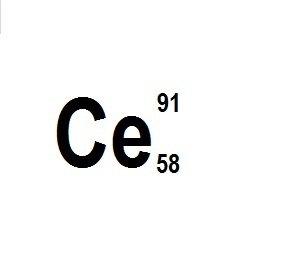
Element with an atomic number of 58 is actually Cerium, so the symbol should be Ce, not Co because that is Cobalt which has an atomic number of 27. With that being said, the notation for isotopes is the symbol of the element with a superscript and a subscript that are aligned. The superscript represents the mass number.

Mass number = protons + neutrons = 58 + 33 = 91

The subscript is the atomic number which is 58. The notation is written in the picture attached.

6 0
2 years ago
Read 2 more answers
If you start with 100 grams of hydrogen-3, how many grams will you have after 24.6 years?
svet-max [94.6K]

Answer:

The mass left after 24.6 years is 25.0563 grams

Explanation:

The given parameters are;

The mass of the hydrogen-3 = 100 grams

The half life of hydrogen-3 which is also known as = 12.32 years

The formula for calculating half-life is given as follows;

N(t) = N_0 \times \left (\dfrac{1}{2} \right )^{\dfrac{t}{t_{\frac{1}{2} }} }

Where;

N(t) = The mass left after t years

N₀ =  The initial mass of the hydrogen-3 = 100 g

t = Time duration of the decay = 24.6 years

t_{\frac{1}{2} } = Half-life = 12.32 years

N(24.6) = 100 \times \left (\dfrac{1}{2} \right )^{\dfrac{24.6}{12.32}} } = 25.0563

The mass left after 24.6 years = 25.0563 grams.

4 0
2 years ago
Other questions:
  • 26 Which substance is an electrolyte?(1) C6H12O6(s) (3) NaOH(s)(2) C2H5OH(L) (4) H2(g)
    7·2 answers
  • 100 points!!!!!!!!!!!!!!!!!! how does a volcanic eruption benefit the surrounding area? A. Lava and ash bury animal habitats. B.
    7·2 answers
  • An impure sample of zinc (zn) is treated with an excess of sulfuric acid (h 2 so 4) to form zinc sulfate (znso4) and molecular h
    5·1 answer
  • a quantity of 18.68 mL of KOH solution is needed to neutralize 0.4218 g of KHP. What is the concentration (in molarity) of the K
    8·1 answer
  • The lower the ph of a solution, the ______.
    15·2 answers
  • Andrea is performing an experiment in which she needs to know when a strong acid is present. She is not sure which indicator to
    15·2 answers
  • Which description correctly characterizes the acidity or basicity of a solution? The higher the pH is, the more the hydroxide io
    14·2 answers
  • Why do the deprotonated organic acid (RCO2-) and protonated organic base (RNH3+) go into the aqueous layer?
    11·1 answer
  • 50cm3 of sodium hydroxide solution was titrated against a solution of sulfuric acid. The concentration of the sodium hydroxide s
    7·1 answer
  • 9 The Haber process is a reversible reaction. N2(g) + 3H2(g) 2NH3(g) The reaction has a 30% yield of ammonia. Which volume of am
    12·1 answer
Add answer
Login
Not registered? Fast signup
Signup
Login Signup
Ask question!