answer.
Ask question
Login Signup
Ask question
All categories
  • English
  • Mathematics
  • Social Studies
  • Business
  • History
  • Health
  • Geography
  • Biology
  • Physics
  • Chemistry
  • Computers and Technology
  • Arts
  • World Languages
  • Spanish
  • French
  • German
  • Advanced Placement (AP)
  • SAT
  • Medicine
  • Law
  • Engineering
dangina [55]
2 years ago
3

Which combination will produce a precipitate? agno3 (aq) and ca(c2h3o2)2 (aq) naoh (aq) and hcl (aq) nacl (aq) and hc2h3o2 (aq)

nh4oh (aq) and hcl (aq) fe(no3)2 (aq) and koh (aq)?
Chemistry
1 answer:
Kruka [31]2 years ago
5 0
The combination that will produce a precipitate is Fe(NO₃)₂(aq) and KOH(aq). The balanced chemical equation shows the production of iron(II) oxide, Fe(OH)₂(s) and potassium nitrate, KNO₃.

Fe(NO₃)₂(aq) + 2KOH(aq) → Fe(OH)₂(s) + 2KNO₃(aq)

Fe(OH)₂ is insoluble in water. It is naturally a white solid but in the presence of even a small amount of oxygen, it turns into a green color. That is why, it is also referred to as "green rust". The other product KNO₃ is an ionic salt that forms an aqueous solution in water. 
<span>
<span>Other combinations among the choices do not produce a solid. This is based on the solubility rules wherein it is stated that:</span>

1. All compounds of C₂H₃O₂, Na⁺, NH₄⁺ along with other alkali metals are soluble in water.</span><span>
<span>2. All compounds with Cl are soluble except for Pb, Hg, and Ag.</span></span>
You might be interested in
How many grams of h2 gas can be produced by the reaction of 63.0 grams of al(s) with an excess of dilute hydrochloric acid in th
vitfil [10]
How many grams of h2 gas can be produced by the reaction of 63.0 grams of al(s) with an excess of dilute hydrochloric acid in the reaction shown below? 2 al(s) + 6 hcl(aq) → 2 alcl3(aq) + 3 h2(g)?
7 0
2 years ago
Read 2 more answers
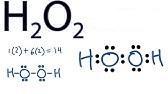
Many free radicals combine to form molecules that do not contain any unpaired electrons. The driving force for the radical–radic
Alexxandr [17]

Answer:

In the attached image the Lewis equation is shown where it is shown how two oxygens react with two hydrogens to meet the octet of the electrons.

Explanation:

Hydrogen peroxide is one of the most named chemicals since it is not only sold as "hydrogen peroxide" in pharmacies but it is also one of the great weapons of immune defense cells to defend ourselves against anaerobic bacteria.

The disadvantage of this compound is that when dividing it forms free oxygen radicals that are considered toxic or aging for our body.

4 0
2 years ago
Combined gas law problem: a balloon is filled with 500.0 mL of helium at a temperature of 27 degrees Celsius and 755 mmHg. As th
Papessa [141]
The statement of the combined gas law for a fixed amount of gas is,
PV/T = constant
Here, the units of pressure and volume must be consistent and the temperature must be the absolute temperature (Kelvin or Rankine).
0.65 atm is equivalent to 494 mmHg
Using the equation:
(755 x 500) / (27 + 273) = (494 x V) / (-33 + 273)
V = 3396 ml = 3.4 liters
8 0
2 years ago
Calculate the pH of a polyprotic acid given and sketch the titration curves for the following reaction:
victus00 [196]

Answer: (1). pH = 1.70

(2). pH = 2.3

(3). pH = 3.3

(4). pH = 4.3

(5). pH = 8.41

(6). pH = 10.22

Explanation:

we assume that the formula representation of acid is H₂A

the titration curve has reasonably sharp breaks at both equivalence points, corresponding to the reactions;

H₂A + OH⁻ → HA⁻ + H₂O

HA⁻ + OH⁻ → A²⁻ + H₂O

the volume of NaOH (V₀) at the first equivalent point is,

V₀ = (20.0 mL)(0.100M) / 0.100M = 20.0mL

where volume of NaOH at 1/2 equivalent point is,

V₀/2 = 10.0mL

also Volume of NaOH at the second equivalence (2V₀) point is 40.0mL

the volume of NaOH at 1/2 second equivalent point is,

V₀ + V₀/2 = 30.0mL

Volume of NaOH after second equivalence exceeds 40mL

therefore, at 0 mL NaOH addition;

where the extent of ionization is assumed to be x, we have

                        H₂A   ⇆     HA⁻   +   H⁺

where initial:   0.1 M       -            -

          change:   -x         +x           +x

          Equili:      0.1-x      x             x

Kаl = [HA⁻][H⁺] / [H₂A]

10⁻²³ = (x)(x) / (0.1-x)

x = 0.020

[H⁺] = 0.020 M

pH = -log [H⁺]

pH = -log(0.020)

pH = 1.70

(2). at 10 mL NaOH addition

[H₂A]ini = 0.10 M * 20.0 mL = 2 mmol

[OH⁻] = 0.1 M * 10 mL = 1 mmol

after reaction:

[H₂A] = 1 mmol

[H⁻] = 1 mmol

pH = pKa₁ + log [HA⁻] / [[HA⁻]

pH = 2.3 + log 1mmol / 1mmol

pH = 2.3

(3). pH at the first equivalence point is,

pH = 1/2 (pKa₁ + pKa₂)

pH = 1/2(2.3 + 4.3) = 3.3

pH = 3.3

(4). pH at the second 1/2 equivalence point is

pH = pKa₂ = 4.3

pH = 4.3

(5). pH at the second equivalence point;

all H₂A is converted into A²⁻

[A²⁻] = initial moles of H₂A / total volume = (20.0 mL)(0.10 M) / (20.0 + 40.0) mL = 0.033 M

at equilibrium:

                   A²⁻ + H²O    ⇆   HA⁺ OH⁻

          0.033 - x

from the Kb₁ expression,

Kb₁ = [OH⁻][HA⁻] / [A²]

Kw/Ka₂ = x²/(0.0333 - x)

10⁻¹⁴/10⁻⁴³ = x²/(0.0333 - x)

x = 2.57 * 10⁻⁶

[OH⁻] = 2.57 * 10⁻⁶M

pH = -log Kw/[OH⁻] = 8.41

pH = 8.41

(6). pH after second equivalence point;

assuming the volume of NaOH is 40.10 mL

after second equivalence point OH⁻ in excess

[OH⁻] = 0.10 M * 0.10 mL / (20 + 40.10) mL = 1.66 * 10⁻⁴ M

pH = 0=-log Kw/[OH⁻] = 10.22

pH = 10.22

8 0
2 years ago
The specific heat of aluminum is 0.214 cal/g.oC. Determine the energy, in calories, necessary to raise the temperature of a 55.5
Natasha2012 [34]
For this problem, we use the formula for sensible heat which is written below:

Q= mCpΔT
where Q is the energy
Cp is the specific heat capacity
ΔT is the temperature difference

Q = (55.5 g)(<span>0.214 cal/g</span>·°C)(48.6°C- 23°C)
<em>Q = 304.05 cal</em>
4 0
2 years ago
Other questions:
  • X-ray photons with a wavelength of 0.135 nm . express the energy numerically in kilojoules per mole.
    7·2 answers
  • A reaction A(aq)+B(aq)↽−−⇀C(aq) has a standard free‑energy change of −4.20 kJ/mol at 25 °C. What are the concentrations of A, B,
    8·1 answer
  • The delocalized π system in benzene is formed by a cyclic overlap of 6 ________ orbitals.
    8·1 answer
  • 3. For the reaction: 2X + 3Y 3Z, the combination of 2.00 moles of X with 2.00
    6·1 answer
  • What is the minimum mass of ethylene glycol (C2H6O2) that must be dissolved in 14.5 kg of water to prevent the solution from fre
    14·1 answer
  • 3. You measure a cube and determine that its sides are 0.65m. You place the cube on a mass scale and determine that this cube ha
    5·1 answer
  • Carlos stomps a soda con flat and throw it away. Which of the following statements BEST describes the change made in the soda ca
    8·1 answer
  • The equilibrium constant for the reaction is 1.1 x 10⁶ M. HONO(aq) + CN-(aq) ⇋ HCN(aq) + ONO-(aq) This value indicates that
    7·1 answer
  • Why is the atomic mass of iron, 55.845 amu, most similar to the mass of iron-56, yet less than 56 amu? The atomic mass is the si
    5·1 answer
  • 1. Given the image below, which calculation will NOT give you the correct average atomic mass?
    10·1 answer
Add answer
Login
Not registered? Fast signup
Signup
Login Signup
Ask question!