answer.
Ask question
Login Signup
Ask question
All categories
  • English
  • Mathematics
  • Social Studies
  • Business
  • History
  • Health
  • Geography
  • Biology
  • Physics
  • Chemistry
  • Computers and Technology
  • Arts
  • World Languages
  • Spanish
  • French
  • German
  • Advanced Placement (AP)
  • SAT
  • Medicine
  • Law
  • Engineering
jekas [21]
2 years ago
6

A 19.3-g mixture of oxygen and argon is found to occupy a volume of 16.2 l when measured at 675.9 mmhg and 43.4oc. what is the p

artial pressure of oxygen in this mixture?
Chemistry
1 answer:
Shtirlitz [24]2 years ago
7 0
<span>438.0 mmHg is the partial pressure of oxygen The ideal gas law is PV = nRT where P = pressure V = volume n = number of moles R = ideal gas constant (8.3144598 (L*kPa)/(K* mol) ) T = absolute temperature Converting the temperature from C to K gives 43.4 + 273.15 = 316.55 K Converting pressure from mmHg to kPa gives 675.9 mmHg * 0.133322387415 = 90.11260165 kPa Solving for n in the equation for the ideal gas law, gives PV = nRT n = PV/(RT) Substituting known values into the equation. n = PV/(RT) n = 90.11260165 kPa 16.2 L/(8.3144598 (L*kPa)/(K* mol) 316.55 K) n = 1459.824147 L*kPa / 2631.94225 (L*kPa)/(mol) n = 0.554656603 mol So we have 0.554656603 moles of gas particles. Now to determine how much of that is oxygen. Atomic weight oxygen = 15.999 g/mol Atomic weight argon = 39.948 g/mol Molar mass O2 = 2 * 15.999 = 31.998 g/mol Now we need to figure out how many moles of O2 gas and Ar will both add up to the number of moles of gas particles and have the proper mass. So M = number of moles of O2 0.554656603 - M = number of moles of Ar and M * 31.998 + (0.554656603 - M) * 39.948 = 19.3 Solve for M M * 31.998 + (0.554656603 - M) * 39.948 = 19.3 M * 31.998 + 22.15742198 - M * 39.948 = 19.3 -M * 7.95 + 22.15742198 = 19.3 -M * 7.95 = -2.857421977 M = 0.359424148 So we now know that we have 0.359424148 moles of oxygen gas out of a total of 0.554656603 moles of gas particles. So oxygen gas is providing: 0.359424148 / 0.554656603 = 0.648012024 = 64.8012024% of the total pressure of 675.9 mmHg. So the partial pressure is 675.9 * 0.648012024 = 437.9913271 mmHg = 438.0 mmHg</span>
You might be interested in
First-order reaction that results in the destruction of a pollutant has a rate constant of 0.l/day. (a) how many days will it ta
Klio2033 [76]

Rate equation for first order reaction is as follows:

t=\frac{2.303}{k}log\frac{A_{0}}{A_{t}}

Here, k is rate constant of the reaction, t is time of the reaction, A_{0} is initial concentration and A_{t} is concentration at time t.

The rate constant of the reaction is 0.1 day^{-1}.

(a) Let the initial concentration be 100, If 90% of the chemical is destroyed, the chemical present at time t will be 100-90=10, on putting the values,

t=\frac{2.303}{k}log\frac{A_{0}}{A_{t}}=\frac{2.303}{0.1 day^{-1}}log\frac{100}{10}=23.03 days

Thus, time required to destroy 90% of the chemical is 23.03 days.

(b) Let the initial concentration be 100, If 99% of the chemical is destroyed, the chemical present at time t will be 100-99=1, on putting the values,

t=\frac{2.303}{k}log\frac{A_{0}}{A_{t}}=\frac{2.303}{0.1 day^{-1}}log\frac{100}{1}=46.06 days

Thus, time required to destroy 99% of the chemical is 46.06 days.

(c)  Let the initial concentration be 100, If 99.9% of the chemical is destroyed, the chemical present at time t will be 100-99.9=0.1, on putting the values,

t=\frac{2.303}{k}log\frac{A_{0}}{A_{t}}=\frac{2.303}{0.1 day^{-1}}log\frac{100}{0.1}=69.09 days

Thus, time required to destroy 99.9% of the chemical is 69.09 days.

5 0
2 years ago
If 200.0 g of copper(II) sulfate react with an excess of zinc metal, what is the theoretical yield of copper? 1.253 g 50.72 g 79
Helen [10]
1)we need a balanced equation: CuSO₄ + Zn ---> ZnSO₄ + Cu

2) we need to convert the grams of CuSO₄ to moles using the molar mass. 

molar mass CuSO₄= 63.5 + 32.0 + (4 x 16.0)= 160 g/mol

200.0 g CuSO_4 ( \frac{1 mol}{160 grams} )= 1.25 mol CuSO_4

3) convert moles of CuSO₄ to moles of Cu

1.25 mol CuSO_4 ( \frac{1 mol Cu}{1 mol CuSO_4} )= 1.25 mol Cu

4) convert moles of Cu to grams using it's molar mass.

molar mass Cu= 63.5 g/mol

1.25 mol (\frac{63.5 grams}{1 mol} )= 79.4 grams Cu

I did it step-by-step as the explanation but you can do all of this in one step. 

200.0 g CuSO_4 ( \frac{1 mol CuSO_4}{160 g} ) ( \frac{1 mol Cu}{1 mol CuSO_4} ) ( \frac{63.5 grams}{1 mol Cu} )= 79.4 grams Cu


4 0
2 years ago
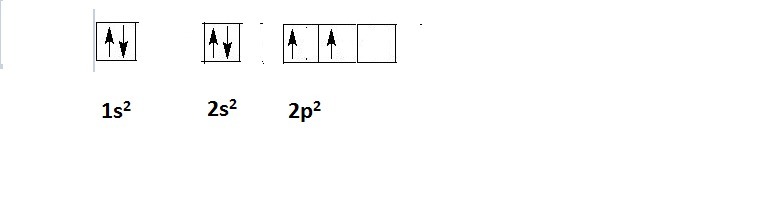
In which orbitals would the valence electrons for carbon <br> c. be placed?
katrin2010 [14]

Answer: 2s and 2p

Explanation: Carbon is an element with atomic number of 6 and thus contains 6 electrons. The electrons are filled in order of increasing energies and follows Afbau's rule.The electrons are singly filled first in each orbital having same spin, then only pairing occurs. This rule was known as Hund's Rule.

The valence electrons are the electrons which are present in last shell. Thus valence electrons are 4, two in s and 2 in p orbitals.

C: 6:1s^22s^22p_x^12p_y^1


8 0
2 years ago
Read 2 more answers
Give the product for the reaction of 1-butene with methanol in the presence of acid. The mechanism is the same as the mechanism
Nuetrik [128]

Answer:

The final result is <u>2-methoxybutane. </u>

<u />

Explanation:

1-butene has a carbon-carbon double bound between C1 and C2.

When it will react with methanol, in the presence of an acid, the result will be an ether.

C4H8 + CH3OH → C5H12O

An acid-catalyzed ether synthesis from alkenes is limited by carbocation stability.

In the first step, the double bound will disappear. The C2 atom will be a C+ atom, this becaus it has only 3 bounds and not 4.

This C+ -atom will atract the O- atom to form an ether. The CH3 of methanol will bind on the C3 atom, this is the most stable position.

2-methoxybutane will be formed. It has a structural formula of C5H12O

1-methoxybutane will not be formed, because it's less stable.

1-butanol will be formed when water is added to 1-butene. The mechanism has the same principle but not the same product.

1-ethoxybutane and 2-ethoxybutane have a structural formula of C6H14O, this will not be the final result.

The final result is <u>2-methoxybutane. </u>

<u />

8 0
2 years ago
With the help of balanced chemical equation explain what happens when:(1)Zinc is put in dilute hydrochloric acid (2)Zinc is put
UkoKoshka [18]
Find the attached document.

6 0
2 years ago
Read 2 more answers
Other questions:
  • Why does increasing the number of trials increase confidence in the results of the experiment?
    6·2 answers
  • Determine whether each of the examples or phrases describes an essential amino acid, a nonessential amino acid, or both essentia
    10·2 answers
  • A molecular biologist measures the mass of Cofactor A in an average yeast cell. The mass is 77.91pg. What is the total mass in m
    15·1 answer
  • Using two spring scales, students pull on opposite sides of a dynamic cart at rest. 7 Newtons of force is pulling left and 5 New
    7·1 answer
  • Which of these statements is/are true? Rewrite each false statement to make it true.
    5·2 answers
  • A car traveling at a constant speed travels 175 miles in four hours. How many minutes will it take for the car to travel 1000 fe
    5·1 answer
  • Atoms of iron (Fe) form metallic bonds with other iron atoms. How are the valence electrons of these atoms rearranged to form th
    12·2 answers
  • A certain compound with a molar mass of 120.0 g/mol crystallizes with the sodium chloride (rock salt) structure. The length of a
    10·1 answer
  • Sierra has a special kind of liquid rubber. She knows that ultraviolet light is absorbed by the rubber, X-ray light is transmitt
    14·1 answer
  • If two gases react, pumping more gas into the reaction container will _____ the rate of the reaction.
    12·2 answers
Add answer
Login
Not registered? Fast signup
Signup
Login Signup
Ask question!