answer.
Ask question
Login Signup
Ask question
All categories
  • English
  • Mathematics
  • Social Studies
  • Business
  • History
  • Health
  • Geography
  • Biology
  • Physics
  • Chemistry
  • Computers and Technology
  • Arts
  • World Languages
  • Spanish
  • French
  • German
  • Advanced Placement (AP)
  • SAT
  • Medicine
  • Law
  • Engineering
Strike441 [17]
2 years ago
11

Henry mixed salt and water together in a cup until he observed a clear solution. He measured the mass of the solution. Then he p

laced the cup outside for several sunny days during the summer. After a week, he observed that only solid salt remained in the cup and the mass had decreased. Henry concluded that a physical and chemical change occurred in this investigation.
Which statements correctly defend or dispute his conclusion?

1- He is correct. Dissolving salt in water is a physical change, but evaporating the water is a chemical change. Formation of a solid is evidence that a chemical change occurred.
He is correct. Evaporation is a physical change, but dissolving salt in water is a chemical change. The change in mass is evidence that a chemical change occurred.


2- He is incorrect. Dissolving salt in water and evaporation of the water are both physical changes. The reappearance of salt is evidence that the change was reversible by a physical change, so it could not be a chemical change.


3- He is incorrect. Dissolving salt in water and evaporation of the water are both chemical changes. The reappearance of salt is evidence that the change was reversible by a chemical change, so it could not be a physical change.

Chemistry
3 answers:
Keith_Richards [23]2 years ago
7 0

Answer:  

He is correct. Evaporation is a physical change, but dissolving salt in water is a chemical change. The change in mass is evidence that a chemical change occurred.

Explanation:

Dissolving Salt in water is a<u> Chemical Change, </u>Because the Salt arrangement is different in solid state than dissolved in water. As we can see in the image below, once the Salt is dissolved, it is separated into its ions, Na+ and Cl-

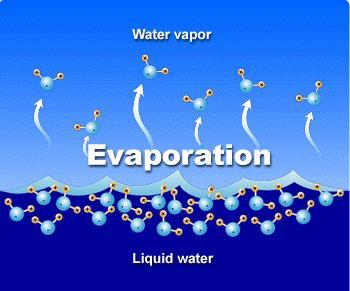
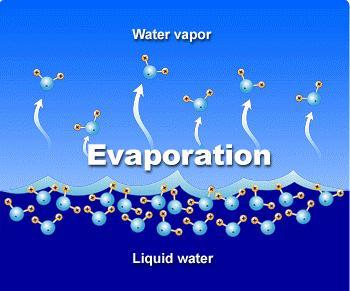
Now, The evaporation process is a <u>physical change,</u> because the water doesn´t change its configuration H20 and it only changes its form, as we can see in the image below.

Svet_ta [14]2 years ago
5 0
Statement 2 is correct.
solids moving into solution is a physical change as the core structure of the molecules remain the same. evaporation of water and crystallization of salt are both physical changes as well.
The water does not change it's H2O chemical makeup because salt was dissolved into it.
Guest1 year ago
0 0

He is correct. Evaporation is a physical change, but dissolving salt in water is a chemical change. The change in mass is evidence that a chemical change occurred.

You might be interested in
In addition to the separation techniques used in this lab (magnetism, evaporation, and filtering), there are other commonly used
DENIUS [597]

Answer:

A. Water and Sugar  can be separated by evaporation and then crystallization

B. Mixture of Hexane and Octane can be separated by distillation

C. Solid Iodine, I₂ and NaCl  can be separated by filtration and then evaporation

D. "Sharpie" permanent marking pen  can be separated by  chromatography

E. Nickel shavings and copper pellets can be separated by magnetic separation

Explanation:

A. A mixture of water and sugar can be separated by employing two separation techniques, evaporation and crystallization. First the sugar solution  is heated to evaporate most of the water. When the solution becomes very saturated, it is allowed to cool and then the sugar molecules are obtained through crystallization induced by seeding or scratching the walls of the container.

B. A mixture of hexane (boiling point = 68 °C) and Octane (boiling point = 125 °C) can be separated by distillation due to their significant difference in boiling points.

The mixture is heated in a flask connected to a Liebig condenser. Hexane with the lower boiling point will distill over first and is collected. Afterwards, octane next distills over and is collected as well.

C. A mixture of solid iodine and NaCl can be seperated by first dissolving in water. Iodine being non- polar does not dissolve and is collected as a residue from filtration using a filter paper, while the NaCl solution is collected as the filtrate. The NaCl is recovered from solution by evaporating to dryness in an evaporating dish.

D. "Sharpie" permanent marking pen contains a mixture of dyes which can be separated by paper chromatography.

A drop of the marker ink is placed on a spot above the solvent level on the paper strip used for the separation. The paper strip is  held vertically inside a jar containing a solvent which serves as the mobile phase. The jar is covered and the different dyes move along the paper which serves as the stationary phase, and is thus separated. The paper strip is removed from the jar when the ascending front of the solvent is approaching the top of the paper. The paper is dried and the various dyes can be identified by comparing the distance each has traveled with those of standards.

E. A mixture of nickel shavings and copper pellets can be separated by magnetic separation.

A magnet is brought near the mixture and the nickel shavings being magnetic is attracted to the magnet leaving copper pellets behind since copper is not magnetic.
4 0
2 years ago
1. A student sees tiny bubbles clinging to the inside of an unopened plastic bottle full of carbonated soft drinks. The student
Lina20 [59]

Answer:

1) The bubbles will grow, and more may appear.

2)Can A will make a louder and stronger fizz than can B.

Explanation:

When you squeeze the sides of the bottle you increase the pressure pushing on the bubble, making it compress into a smaller space. This decrease in volume causes the bubble to increase in density. When the bubble increases in density, the bubble will grow and more bubbles will appear. Therefore, Changing the pressure (by squeezing the bottle) changes the volume of the bubbles. The number of bubbles doesn't change, just their size increases.

Carbonated drinks tend to lose their fizz at higher temperatures because the loss of carbon dioxide in liquids is increased as temperature is raised. This can be explained by the fact that when carbonated liquids are exposed to high temperatures, the solubility of gases in them is decreased. Hence the solubility of CO2 gas in can A at 32°C is less than the solubility of CO2 in can B at 8°C. Thus can A will tend to make a louder fizz more than can B.

3 0
2 years ago
Distilled vinegar contains a solution of acetic acid (CH3CO2H) in H2O. What is the concentration of the solution that results fr
PIT_PIT [208]
D)1.68 M CH3CO2H
hope this helps
7 0
2 years ago
Read 2 more answers
How many hydrogen atoms are attached to each carbon adjacent to a double bond? nurition?
larisa [96]
That depends. there are 2 possible answers.
      H
C - C = C - H gives a different answer on the right than on the left.

One the left side, the second Carbon is attached to a double bond and has but one hydrogen attached to it.

The Carbon on the right of the double bond has 2
     H
C- C = C - H
            H

I'm not sure what you should put. It's one of those things that I would repeat my argument and submit it.
3 0
2 years ago
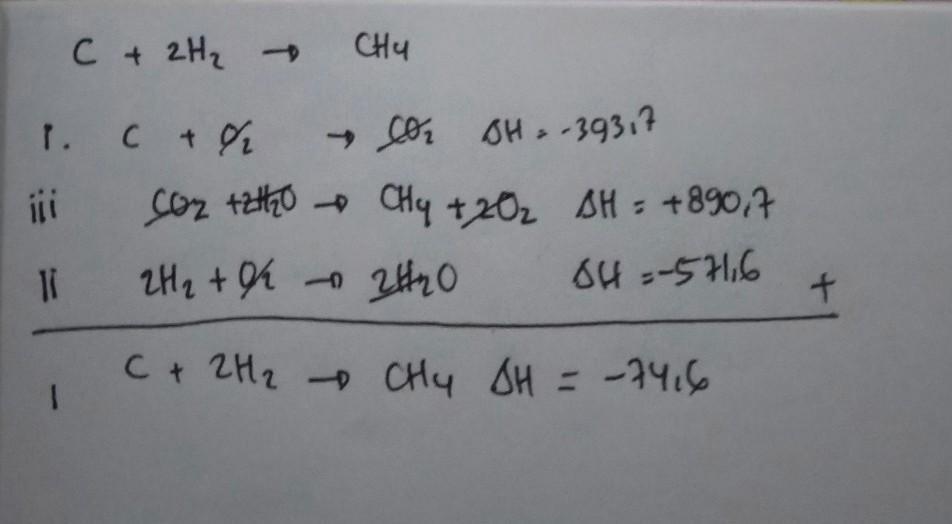
State Hess' law of constant heat summation.
AveGali [126]

Answer:

-74.6 kj/mol

Explanation:

you can see the answer at the pic

8 0
2 years ago
Other questions:
  • What mass of solid lead would displace exactly 234.6 liters of water?
    11·2 answers
  • The Lewis structure for a chlorate ion, ClO3-, should show ____ single bond(s), ____ double bond(s), and ____ lone pair(s).
    15·2 answers
  • Consider the equation: 2NO2(g) N2O4(g). Using ONLY the information given by the equation which of the following changes would in
    15·2 answers
  • What is the ph of a solution made by combining 157 ml of 0.35 m nac2h3o2 with 139 ml of 0.46 m hc2h3o2? the ka of acetic acid is
    14·1 answer
  • Bonds between two atoms that are equally electronegative are _____. bonds between two atoms that are equally electronegative are
    7·1 answer
  • H2PO4-(aq) ⇆ H+(aq) + HPO42-( which ion plays the role of hydrogen ion donor and which one plays the hydrogen ion acceptor in BP
    14·1 answer
  • An air sample consists of oxygen and nitrogen gas as major components. It also contains carbon dioxide and traces of some rare g
    6·1 answer
  • Isopentyl acetate (C7H14O2), the compound responsible for the scent of bananas, can be produced commercially. Interestingly, bee
    6·1 answer
  • A student noticed a yellow, solid substance was formed when mixing two clear liquids during a lab. What term describes this yell
    11·1 answer
  • If 4.59 g of potassium reacts with 3.6 g of sulfur according to the following reaction, how many grams of potassium sulfide can
    6·1 answer
Add answer
Login
Not registered? Fast signup
Signup
Login Signup
Ask question!