answer.
Ask question
Login Signup
Ask question
All categories
  • English
  • Mathematics
  • Social Studies
  • Business
  • History
  • Health
  • Geography
  • Biology
  • Physics
  • Chemistry
  • Computers and Technology
  • Arts
  • World Languages
  • Spanish
  • French
  • German
  • Advanced Placement (AP)
  • SAT
  • Medicine
  • Law
  • Engineering
bija089 [108]
2 years ago
3

Calculate the number of moles of o2 gas held in a sealed, 2.00-l tank at 3.50 atm and 25.0°c. how many moles would be in the tan

k if the temperature was raised to 49.0°c and the pressure remained constant (trick question)?
Chemistry
1 answer:
Ber [7]2 years ago
5 0
It's an ideal gas problem:

first, we will use this formula to get V2:

P1V1/T1 = P2V2/T2

when the Pressure still constant:

∴ V1/T1 = V2/ T2

when V1 = 2 L

T1 = 25 °C

T2 = 49°C

∴2 L /25°C = V2 / 49

∴V2 = 3.92 L

then we will use this formula to get no. of moles:

P2V2 = nRT

when P2 =P1 = 3.5 atm

V2 = 3.92

R= 0.0821

T2 = 49°C +273 = 322 K

by substitution:

∴3.5 atm * 3.92 L = n * 0.0821 * 322 K

∴n = 0.5 mol

∴ no.of moles = 0.5 mol
You might be interested in
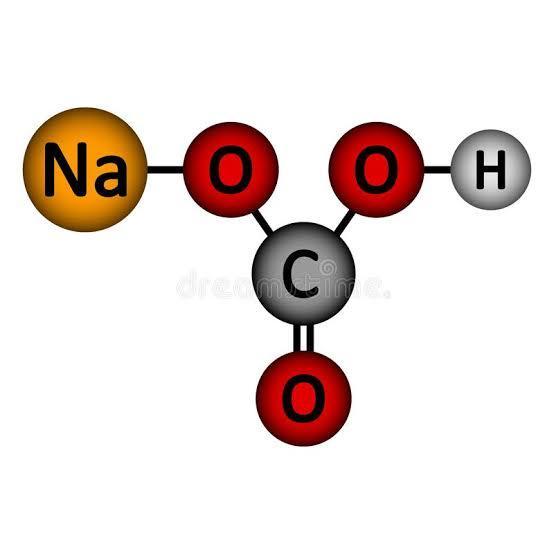
Two students are working together to build two models. Both models will represent the molecular structure of sodium bicarbonate,
otez555 [7]

Answer:

Each student will need;

1 red jelly bean, 1 white jelly bean, 1 black jelly bean and 3 red jelly beans.

Explanation:

Sodium bicarbonate molecule, NaHCO3, or baking soda is composed of the following:

1 atom of sodium, Na;

1 atom of hydrogen, H;

1 atom of carbon, C, and

3 atoms of oxygen.

For each of the models to be built by the two students, these atoms are to be represented accordingly.

Since Red jelly beans represent sodium atoms (Na), white jelly beans represent hydrogen atoms (H), black jelly beans represent carbon atoms (C), and blue jelly beans represent oxygen atoms (O), each student will need;

1 red jelly bean, 1 white jelly bean, 1 black jelly bean and 3 red jelly beans.

A sample model is found in the attachment below:

4 0
2 years ago
Diborane, B2H6 a possible rocket propellant, can be made by using lithium hydride (LiH): 6 LiH+ 2 BCl2àB2H6+ 6 LiCl . If you mix
Genrish500 [490]

Answer :

(a) Limiting reactant = LiH

(b) The excess reactant = BCl_3

(c) The percent of excess reactant is, 50.87 %

(d) The percent yield of B_2H_6 or percent conversion of LiH to B_2H_6 is, 38.80 %

(e) The mass of LiCl produced is, 1066.42 lb

Explanation : Given,

Mass of LiH = 200 lb = 90718.5 g

conversion used : (1 lb = 453.592 g)

Mass of BCl_3 = 1000 lb = 453592 g

Molar mass of LiH = 7.95 g/mole

Molar mass of BCl_3 = 117.17 g/mole

Molar mass of B_2H_6 = 27.66 g/mole

Molar mass of LiCl = 42.39 g/mole

First we have to calculate the moles of LiH and BCl_3.

\text{Moles of }LiH=\frac{\text{Mass of }LiH}{\text{Molar mass of }LiH}=\frac{90718.5g}{7.95g/mole}=11411.13moles

\text{Moles of }BCl_3=\frac{\text{Mass of }BCl_3}{\text{Molar mass of }BCl_3}=\frac{453592g}{117.17g/mole}=3871.23moles

Now we have to calculate the limiting and excess reagent.

The balanced chemical reaction is,

6LiH+2BCl_3\rightarrow B_2H_6+6LiCl

From the balanced reaction we conclude that

As, 6 moles of LiH react with 1 mole of BCl_3

So, 11411.13 moles of LiH react with \frac{11411.13}{6}=1901.855 moles of BCl_3

From this we conclude that, BCl_3 is an excess reagent because the given moles are greater than the required moles and LiH is a limiting reagent and it limits the formation of product.

Moles of remaining excess reactant = 3871.23 - 1901.855 = 1969.375 moles

Total excess reactant = 3871.23 moles

Now we have to determine the percent of excess reactant (BCl_3).

\% \text{ excess reactant}=\frac{\text{Moles of remaining excess reactant}}{\text{Moles of total excess reagent}}\times 100

\% \text{ excess reactant}=\frac{1969.375}{3871.23}\times 100=50.87\%

The percent of excess reactant is, 50.87 %

Now we have to calculate the moles of B_2H_6.

As, 6 moles of LiH react to give 1 mole of B_2H_6

So, 11411.13 moles of LiH react to give \frac{11411.13}{6}=1901.855 moles of B_2H_6

Now we have to calculate the mass of B_2H_6.

\text{Mass of }B_2H_6=\text{Moles of }B_2H_6\times \text{Molar mass of }B_2H_6

\text{Mass of }B_2H_6=(1901.855mole)\times (27.66g/mole)=52605.3093g

Now we have to calculate the percent yield of B_2H_6.

\%\text{ yield of }B_2H_6=\frac{\text{Actual yield of }B_2H_6}{\text{Theoretical yield of }B_2H_6}\times 100=\frac{20411.7g}{52605.3093g}\times 100=38.80\%

The percent yield of B_2H_6 or percent conversion of LiH to B_2H_6 is, 38.80 %

Now we have to calculate the moles of LiCl.

As, 6 moles of LiH react to give 6 mole of LiCl

So, 11411.13 moles of LiH react to give 11411.13 moles of LiCl

Now we have to calculate the mass of LiCl.

\text{Mass of }LiCl=\text{Moles of }LiCl\times \text{Molar mass of }LiCl

\text{Mass of }LiCl=(11411.13mole)\times (42.39g/mole)=483717.8007g=1066.42lb

The mass of LiCl produced is, 1066.42 lb

8 0
2 years ago
A 520-gram sample of seawater contains 0.317 moles of NaCl. What is the percent composition of NaCl in the water?
Volgvan

Answer:

c

Explanation:

8 0
2 years ago
How many grams of NH3 can be prepared from the synthesis of 77.3 grams of nitrogen and 14.2 grams of hydrogen gas?
lbvjy [14]

Answer:

80.41 g

Explanation:

Data Given:

Mass of Nitrogen (N₂) = 77.3 g

Mass of Hydrogen (H₂) = 14.2 g

many grams of NH₃ = ?

Solution:

First we look at the balanced synthesis reaction

              N₂   +    3 H₂  ------—> 2 NH₃

             1 mol      3 mol

As 1 mole of Nitrogen react with 3 mole of hydrogen

Convert moles to mass

molar mass of N₂ = 2(14) = 28 g/mol

molar mass of H₂ = 2(1) + 2 g/mol

Now

                     N₂             +           3 H₂        ------—>      2 NH₃

             1 mol (28 g/mol)     3 mol(2g/mol)

                    28 g                        6 g

28 grams of N₂ react with 6 g of H₂  

So

if 28 grams of N₂ produces 6 g of H₂  so how many grams of N₂ will react with 14.2 g of H₂.

Apply Unity Formula

                 28 g of N₂ ≅ 6 g of H₂

                 X g of N₂ ≅ 14.2 g of H₂

Do cross multiply

                X g of N₂ = 28 g x 14.2 g / 6 g

                X g of N₂ = 66.3 g

As we have given with 77. 3 g of N₂ but from this calculation we come to know that 66.3 g will react with 14.2 g of hydrogen and the remaining 10 g N₂ will be in excess

So, Hydrogen is limiting reactant in this reaction and the amount of NH₃ depends on the amount of hydrogen.

Now

To find mass of NH₃ we will do following calculation

Look at the reaction

As we Know

                     N₂             +           3 H₂        ------—>      2 NH₃

                                                   6 g                            2 mol

So, 6 g of hydrogen gives 2 moles of NH₃, then how many moles of NH₃ will be produce by 14.2 g

Apply Unity Formula

                 6 g of H₂ ≅ 2 mol of NH₃

                14.2 g of H₂ ≅ X mol of NH₃

Do cross multiply

               X mol of NH₃= 14.2 g x 2 mol / 6 g

                X mol of NH₃ = 4.73 mol

So, 14.2 g of hydrogen gives 4.73 moles of NH₃

Now

Convert moles of NH₃ to mass

Formula will be used

        mass in grams = no. of moles x molar mass . . . . . . (2)

Molar mass of  NH₃

Molar mass of  NH₃ = 14 + 3(1)

Molar mass of  NH₃ = 14 + 3 = 17 g/mol

Put values in equation 2

        mass in grams = 4.73 mole x 17 g/mol

        mass in grams =  80.41 g

mass of NH₃=  80.41 g

3 0
2 years ago
In the first step of glycolysis, the given two reactions are coupled. reaction 1:reaction 2:glucose+Pi⟶glucose-6-phosphate+H2OAT
dmitriy555 [2]

Answer: Reaction 1 is non spontaneous.

Explanation:

According to Gibb's equation:

\Delta G=\Delta H-T\Delta S

\Delta G = Gibbs free energy  

\Delta H = enthalpy change

\Delta S = entropy change  

T = temperature in Kelvin

When \Delta G = +ve, reaction is non spontaneous

\Delta G= -ve, reaction is spontaneous

\Delta G= 0, reaction is in equilibrium

For the given reaction 1: glucose+Pi\rightarrow glucose-6-phosphate+H_2O \Delta G=+13.8kJ/mol

As for the reaction 1 , the value of Gibbs free energy is positive and thus the reaction 1 is non spontaneous.

6 0
2 years ago
Other questions:
  • A 50.6 grams sample of magnesium hydroxide (Mg(OH)2) is reacted with 45.0 grams of hydrochloric acid (HCl). What is the theoreti
    15·2 answers
  • A 15.0 kg iron weightlifting plate has a volume of 1910 cm3 . What is the density of the iron plate in g/cm3?
    9·1 answer
  • What is the mass of nickel(ii) nitrate (182.71 g/mol) dissolved in 25.0 ml of 0.100 m ni(no3)2 solution?
    13·2 answers
  • To neutralize 1.65g LiOH, how much .150 M HCl would be needed?
    6·1 answer
  • For which of the following reactions is ΔHrxn equal to ΔHf of the product? You do not need to look up any values to answer this
    10·1 answer
  • What is the value of the σ∗1s mo wave function at the nodal plane?
    15·2 answers
  • Every single-celled organism is able to survive because it carries out *
    5·1 answer
  • What are the 3 critical components of an electromagnet and what purpose do they each serve?
    9·1 answer
  • 5.00 mol of ammonia are introduced into a 5.00 L reactor vessel in which it partially dissociates at high temperatures. 2NH 3(g)
    14·1 answer
  • Give an example of a rule of the natural world that a scientist can assume is always true.
    6·1 answer
Add answer
Login
Not registered? Fast signup
Signup
Login Signup
Ask question!