answer.
Ask question
Login Signup
Ask question
All categories
  • English
  • Mathematics
  • Social Studies
  • Business
  • History
  • Health
  • Geography
  • Biology
  • Physics
  • Chemistry
  • Computers and Technology
  • Arts
  • World Languages
  • Spanish
  • French
  • German
  • Advanced Placement (AP)
  • SAT
  • Medicine
  • Law
  • Engineering
nevsk [136]
2 years ago
6

If you were to plot y versus m using the equation y = (g/k) m + yo , please explain how would you calculate the value for k? whi

ch method you would use?
Chemistry
1 answer:
lara31 [8.8K]2 years ago
5 0

The given equation corresponds to that of a Linear Regression i.e. the data is fit to a straight line where the equation is-

y = (g/k) m + y0

This is of the form:

y = a x + b

where a = slope and b = intercept

In this case:

Intercept = y0

Slope = g/k

thus, k = g/slope

The value of slope can be deduced from the fit and along with the knowledge of the value of g, k can be calulated.

You might be interested in
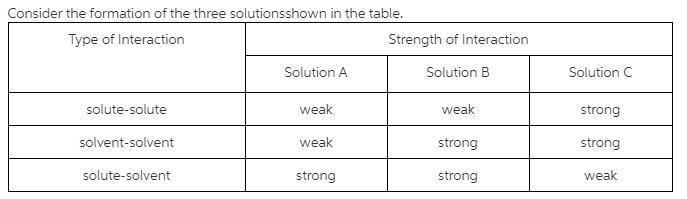
Rank the formation of the solutions A, B, and C from the most exothermic to the most endothermic. Rank the enthalpy of solution
Elodia [21]

This is an incomplete question, the table is attached below.

Answer : The correct ranking of the solution from most exothermic to most endothermic will be: A, B and C.

Explanation :

As we know that the intermolecular force of attraction play an important role in the interaction of solute-solute, solute-solvent and solvent solvent solution.

In the solution A, the solute-solute and solvent-solvent interactions are weak. So, their solute-solvent interaction will be strong. That means, the solution will be more exothermic.

In the solution C, the solute-solute and solvent-solvent interactions are strong. So, their solute-solvent interaction will be weak. That means, the solution will be more endothermic.

Thus, the correct ranking of the solution from most exothermic to most endothermic will be: A, B and C.

4 0
2 years ago
Luis is helping his parents paint a border around the walls of a room. He uses a stencil to repeat the same design on each wall
iren [92.7K]

Answer:

Polymerization.

Explanation:

Polymerization can be defined as a type of chemical reaction in which molecules that are relatively small in size chemically combine to form a huge chain of molecules.

Simply stated, polymerization refers to a chemical reaction where two or more smaller molecules react to produce larger molecules of the same network or repetitive structural units.

In polymerization, the relatively small molecules are generally referred to as monomers while the larger molecules they produce are known as polymers.

Polymerization is given by the chemical formula;

nA -----> A(n).

In this scenario, Luis uses a stencil to repeat the same design on each wall to form one long grapevine with a bunch of grapes every foot along its length.

Hence, the type of chemical reaction this best model is polymerization because it involved repeating the same design (monomers) to form a long grapevine with a bunch of grapes (polymers).

5 0
2 years ago
Iontophoresis is a noninvasive process that transports drugs through the skin without needles. In the photo, the red electrode i
anyanavicka [17]

Answer:

Follows are the explanation to this question:

Explanation:

When the drug is negatively charged, its negative electrolyte is annihilated to just the positive electrode. It is enticed, and it may not have a picture showing the electrode, however, We suppose that electrodes from either side of a skin slice. Its negative electrode will bypass or push thru the skin if in front of the counter terminal this becomes a red-positive electrode.

8 0
1 year ago
What is the pH of a solution of 0.400 M CH₃NH₂ containing 0.250 M CH₃NH₃I? (Kb of CH₃NH₂ is 4.4 × 10⁻⁴)
Karolina [17]

Answer:

\boxed{\text{10.84}}

Explanation:

A solution of a weak base and its conjugate acid is a buffer.

The equation for the equilibrium is

\rm CH$_3$NH$_2$ + H$_2$O $\, \rightleftharpoons \,$ CH$_3$NH$_2$+ H$_{3}$O$^{+}$\\\text{For ease of typing, let's rewrite this equation as}\\\rm B + H$_2$O $\longrightarrow \,$ BH$^{+}$ + OH$^{-}$; $K_{\text{b}}$ = 4.4 \times 10^{-4}$

The Henderson-Hasselbalch equation for a basic buffer is

\text{pOH} = \text{p}K_{\text{b}} + \log\dfrac{[\text{BH}^{+}]}{\text{[B]}}

Data:

   [B] = 0.400 mol·L⁻¹

[BH⁺] = 0.250 mol·L⁻¹

    Kb = 4.4 × 10⁻⁴

Calculations:

(a) Calculate pKb

pKb = -log(4.4× 10⁻⁴)  = 3.36

(b) Calculate the pH

\text{pOH} = 3.36 + \log \dfrac{0.250}{0.400} = 3.36 + \log 0.625 = 3.36 - 0.204 = 3.16\\\\\text{pH} =14.00 -3.16 = \mathbf{10.84}\\\\\text{The pH of the solution is }\boxed{\textbf{10.84}}

4 0
2 years ago
The burning of 80.3 g of SiH4 at constant pressure gives off 3790 kJ of heat. Calculate △H for this reaction. SiH4(g) + 2O2(g) ⟶
Trava [24]

Answer  : The value of ΔH for this reaction is, -1516 kJ/mol

Explanation :

First we have to calculate the moles of SiH_4

\text{Moles of }SiH_4=\frac{\text{Mass of }SiH_4}{\text{Molar mass of }SiH_4}

\text{Moles of }SiH_4=\frac{80.3g}{32.12g/mol}

\text{Moles of }SiH_4=2.5mol

Now we have to calculate the ΔH for this reaction.

As, 2.5 mole of SiH_4 react to gives heat = -3790 kJ

So, 1 mole of SiH_4 react to gives heat = -\frac{3790kJ}{2.5mol}

                                                                                = -1516 kJ/mol

Therefore, the value of ΔH for this reaction is, -1516 kJ/mol

7 0
2 years ago
Other questions:
  • According to the lab guide, which changes below will you look for in order to test the hypothesis? check all that apply. changes
    15·2 answers
  • What is the maximum number of grams of ammonia, nh3, which can be obtained from the reaction of 10.0 g of h2 and 80.0 g of n2? n
    8·1 answer
  • How does the equilibrium change to counter the removal of A in this reaction? A + B ⇌ AB
    5·2 answers
  • What is the mole fraction of potassium dichromate, K2Cr2O7, in a solution prepared from 24.42 g of potassium dichromate and 240.
    12·1 answer
  • Question14 of 20If 5.15 g FeCl3 is dissolved in enough water to make exactly 150.0 mL of solution, what is the molar concentrati
    10·1 answer
  • Write the word equation for the reaction of barium nitride with potassium
    9·2 answers
  • Determine the percent yield for the reaction between 6.92 g K and 4.28g of oxygen gas if 7.36 g of potassium oxide is produced.
    5·1 answer
  • A magnesium ion, Mg2+, with a charge of 3.2×10⁻¹⁹C and an oxide ion, O2−, with a charge of −3.2×10⁻¹⁹C, are separated by a dista
    6·1 answer
  • A student used 6.34 x 10⁻³ kg of t-butanol in the synthesis of BHT. Assuming no other substances are limiting, how many grams of
    6·2 answers
  • (i) Based on the graph, determine the order of the decomposition reaction of cyclobutane at 1270 K. Justify your answer.
    11·1 answer
Add answer
Login
Not registered? Fast signup
Signup
Login Signup
Ask question!