answer.
Ask question
Login Signup
Ask question
All categories
  • English
  • Mathematics
  • Social Studies
  • Business
  • History
  • Health
  • Geography
  • Biology
  • Physics
  • Chemistry
  • Computers and Technology
  • Arts
  • World Languages
  • Spanish
  • French
  • German
  • Advanced Placement (AP)
  • SAT
  • Medicine
  • Law
  • Engineering
MAVERICK [17]
2 years ago
5

If a bottle of olive oil contains 1.4 kg of olive oil, what is the volume, in milliliters ( mL ), of the olive oil?

Chemistry
1 answer:
Serhud [2]2 years ago
7 0

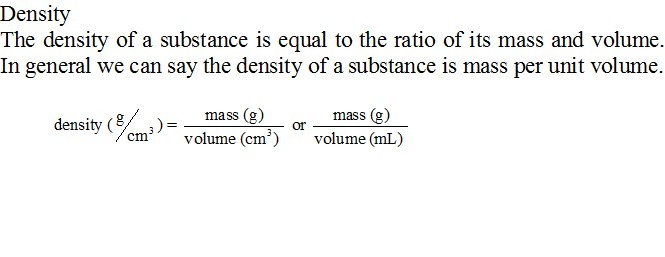
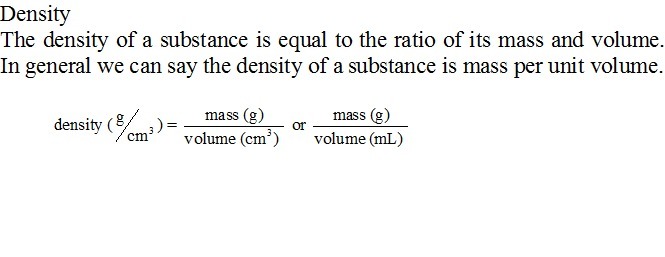
We know that density of olive oil = 0.93 g/mL

Given that mass of olive oil = 1.4 kg or 1400 g because 1000 g = 1.0 kg

From the definition of density;

Volume = mass/ density

= 1400 g/ 0.93 g/mL

=1505 mL

You might be interested in
When the reaction CO2(g) + H2(g) ⇄ H2O(g) + CO(g) is at equilibrium at 1800◦C, the equilibrium concentrations are found to be [C
UNO [17]

Answer:

The new molar concentration of CO at equilibrium will be  :[CO]=1.16 M.

Explanation:

Equilibrium concentration of all reactant and product:

[CO_2] = 0.24 M, [H_2] = 0.24 M, [H_2O] = 0.48 M, [CO] = 0.48 M

Equilibrium constant of the reaction :

K=\frac{[H_2O][CO]}{[CO_2][H_2]}=\frac{0.48 M\times 0.48 M}{0.24 M\times 0.24 M}

K = 4

CO_2(g) + H_2(g) \rightleftharpoons H_2O(g) + CO(g)

Concentration at eq'm:

0.24 M          0.24 M                 0.48 M            0.48 M

After addition of 0.34 moles per liter of CO_2 and H_2 are added.

(0.24+0.34) M    (0.24+0.34) M  (0.48+x)M         (0.48+x)M

Equilibrium constant of the reaction after addition of more carbon dioxide and water:

K=4=\frac{(0.48+x)M\times (0.48+x)M}{(0.24+0.34)\times (0.24+0.34) M}

4=\frac{(0.48+x)^2}{(0.24+0.34)^2}

Solving for x: x = 0.68

The new molar concentration of CO at equilibrium will be:

[CO]= (0.48+x)M = (0.48+0.68 )M = 1.16 M

3 0
2 years ago
Which of the following gives the molarity of a 17.0% by mass solution of sodium acetate, CH 3COONa (molar mass = 82.0 g/mol) in
weeeeeb [17]

Answer:

The molarity of this solution is 2.26 M (option D)

Explanation:

Step 1: Data given

Mass % = 17%

Molar mass of CH3COONa = 82.0 g/mol

Density of the solution = 1.09 g/mL

Step 2:

Assume the mass of the solution is 1.00 gram

⇒ 17.0 % CH3COONa = 0.17 grams

⇒ 83.0 % H2O = 0.83 grams

Step 3:

Density = 1.09 g/mL

Volume of the solution = total mass / density of solution

Volume of solution : 1.00 grams / 1.09 g/mL

Volume of the solution = 0.917 mL = 0.000917 L

Step 4: Calculate  number of moles of CH3COONa

Number of moles = Mass / molar mass

Number of moles CH3COONa = 0.170 grams / 82.0 g/mol

Number of moles = CH3COONa = 0.00207 moles

Step 5: Calculate molarity

Molarity = moles / volume

Molarity solution =   0.00207 / 0.000917 L

Molarity solution =  2.26 mol/L = 2.26 M

The molarity of this solution is 2.26 M (option D)
6 0
2 years ago
Two protons and two neutrons are released as a result of this reaction.
Murljashka [212]

<u>Answer:</u> The particle released in the given reaction is one alpha particle

<u>Explanation:</u>

In a nuclear reaction, the total mass and total atomic number remains the same.

For the given fission reaction:

^{222}_{86}\textrm{Rn}\rightarrow ^A_Z\textrm{X}+^{218}_{84}\textrm{Po}

  • <u>To calculate A:</u>

Total mass on reactant side = total mass on product side

222 = A + 218

A = 4

  • <u>To calculate Z:</u>

Total atomic number on reactant side = total atomic number on product side

86 = Z + 84

Z = 2

The isotopic symbol of unknown element is _{2}^{4}\textrm{He}. Another name of helium atom is alpha particle.

Hence, the particle released in the given reaction is one alpha particle

3 0
2 years ago
Read 2 more answers
Methane (CH4) reacts with excess oxygen gas (O2) to produce carbon dioxide (CO2) and water (H2O). What is the percent yield of c
musickatia [10]
(29.8 g) / [0.184 mol (44.00964 g CO2/mol)] =0.832= 83.2% yield CO2

(hope this helps)
4 0
2 years ago
Read 2 more answers
Beryllium has a nucleus composed of protons and neutrons. Given the data, how many protons are in a typical Beryllium nucleus?
Jlenok [28]

Atoms are made of 3 types of subatomic particles ; protons, neutrons and electrons

protons and neutrons are located inside the nucleus and electrons are found in energy shells around the nucleus. Protons are positively charged, electrons are negatively charged and neutrons are neutral. elements in their ground state are neutral with equal amounts of protons and electrons.

Atomic number is the number of protons. atomic number is characteristic for the element.

atomic number of Be is 4 therefore Be has 4 protons

answer is B. 4


5 0
2 years ago
Read 2 more answers
Other questions:
  • When sodium reacts with chlorine, sodium chloride is produced. Andrew represented this reaction with this equation: Na + Cl2 → 2
    6·2 answers
  • A compound is 80.0% carbon and 20.0% hydrogen by mass. assume you have a 100.-g sample of this compound. how many grams of each
    11·1 answer
  • Match the element or group to the rule assigning its oxidation state.
    10·2 answers
  • A 0.216 g sample of an aluminium compound X reacts with an excess of water to produce a single hydrocarbon gas. This gas burns c
    14·1 answer
  • * will mark you brainliest + 18 points *
    15·1 answer
  • For the Bradford assay, the instructor will make a Bradford reagent dye by mixing 50 ml of 95% v/v ethanol with 100 mg of Coomas
    6·1 answer
  • How many grams of NH3 can be prepared from the synthesis of 77.3 grams of nitrogen and 14.2 grams of hydrogen gas?
    5·1 answer
  • if the charcoal from an ancient fire contains 1/512 amount of carbon-14 as a living tree, how long ago did the fire occur? the h
    6·1 answer
  • A laser with a wavelength of 225 nm is shown on an isolated gas-phase sodium atom. Calculate the velocity of the ejected electro
    10·1 answer
  • How many moles are present in 2.126 g of H2O2 ?
    5·2 answers
Add answer
Login
Not registered? Fast signup
Signup
Login Signup
Ask question!