answer.
Ask question
Login Signup
Ask question
All categories
  • English
  • Mathematics
  • Social Studies
  • Business
  • History
  • Health
  • Geography
  • Biology
  • Physics
  • Chemistry
  • Computers and Technology
  • Arts
  • World Languages
  • Spanish
  • French
  • German
  • Advanced Placement (AP)
  • SAT
  • Medicine
  • Law
  • Engineering
yaroslaw [1]
2 years ago
4

The molar absorptivities of tryptophan and tyrosine at 240 nm are 2.00 x 10³ dm3 mol-1 cm-1 and 1.12 x 10⁴ dm3 mol-1 cm-1. At 28

0 nm, they are 5.40 x 10³ dm3 mol-1 cm-1 and 1.50 x 10³ dm3 mol-1 cm-1. A solution of the two has absorbances of 0.660 at 240 nm and 0.221 at 280 nm in a 1.0 cm thick cell. What are the concentrations of these two amino acids in this solution?
Chemistry
1 answer:
padilas [110]2 years ago
5 0

Explanation:

Let us assume that the molar concentrations of tryptophan and tyrosine be x and y respectively.

Mathematically,        A = \epsilon \times t \times C

where,     A = absorbance

             \epsilon = molar absorption coefficient

                t = thickness of the cell

                C = molar concentration

So, first calculate the molar concentration of tryptophan at 240 nm as follows.

            0.66 = 2000 \times 1 \times x + 11200 \times 1 \times y

              x = \frac{0.66 - 11200y}{2000}  ........... (1)

At 280 nm,

            0.221 = 5400 \times 1 \times x + 1500 \times 1 \times y

            0.221 = 5400x + 1500y  ........... (2)

Now, we will substitute the value of x from equation (1) into equation (2) as follows.

         0.221 = 5400 \times \frac{0.66 - 11200y}{2000} + 1500y

         0.221 = 1.782 - 30240y + 1500y

         0.221 = 1.782 - 28740y

         28740y = 1.561

            y = 54.3 \times 10^{-6} M

or,            = 54.3 \mu M ............ (3)

Hence, the molar concentration of tyrosine is 54.3 \mu M and putting this value into equation (1) we will get the value for concentration of tryptophan as follows.

              x = \frac{0.66 - 11200 \times 54.3 \times 10^{-6}}{2000}

                 = 25.8 \times 10^{-6}

or,              = 25.8 \mu M

Therefore, we can conclude that the concentration of tryptophan is 25.8 \mu M and concentration of tyrosine is 54.3 \mu M.

You might be interested in
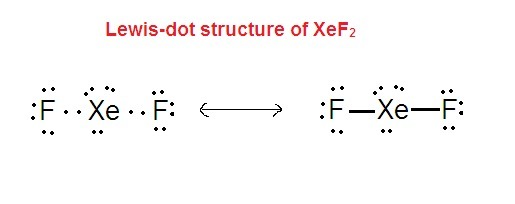
Determine the number of bonding electrons and the number of nonbonding electrons in the structure of xef2. enter the number of b
lakkis [162]

Answer : The number of bonding electrons and the number of non-bonding electrons are (4, 18).

Explanation :

The number of bonding electrons and non-bonding electrons in the structure of XeF_2 is determined by the Lewis-dot structure.

Lewis-dot structure : It tell us about the number of valence electrons of an atom within a molecule and it is also shows the bonding between the atoms of a molecule and the lone-pair of electrons.

In the given structure, 'Xe' is the central atom and 'F' is the terminal atom.

Xenon has 8 valence electrons and fluorine has 7 valence electrons.

Total number of valence electrons in XeF_2 = 8 + 2(7) = 22 electrons

From the Lewis-dot structure, we conclude that

The number of electrons used in bonding = 4

The number of electrons used in non-bonding (lone-pairs) = 22 - 4 = 18

Therefore, the number of bonding electrons and the number of non-bonding electrons are (4, 18).

The Lewis-dot structure of XeF_2 is shown below.

4 0
2 years ago
Read 2 more answers
Which solution contains the largest number of moles of chloride ions?
elixir [45]
Molarity = number of moles of solute/liters of solution
number of moles of solute = molarity x liters of solution

Part (a): <span>30.00 ml of 0.100m Cacl2
number of moles of CaCl2 =  0.1 x 0.03 = 3x10^-3 moles
1 mole of CaCl2 contains 2 moles of chlorine, therefore 3x10^-3 moles of CaCl2 contains 6x10^-3 moles of chlorine

Part (b): </span><span>10.0 ml of 0.500m bacl2
number of moles of BaCl2 = 0.5 x 0.01 = 5x10^-3 moles
1 mole of BaCl2 contains 2 moles of chlorine, therefore 5x10^-3 moles of BaCl2 contains 10x10^-3 moles of chlorine

Part (c): </span><span>4.00 ml of 1.000m nacl
number of moles of NaCl = 1 x 0.004 = 0.004 moles
1 mole of NaCl contains 1 mole of chlorine, therefore 4x10^-3 moles of NaCl contains 4x10^-3 moles of chlorine

Part (d): </span><span>7.50 ml of 0.500m fecl3
number of moles of FeCl3 = 0.5 x 0.0075 = 3.75x10^-3 moles
1 mole of FeCl3 contains 3 moles of chlorine, therefore 3.75x10^-3 moles of FeCl3 contains 0.01125 moles of chlorine

Based on the above calculations, the correct answer is (d)</span>
5 0
2 years ago
Read 2 more answers
Mgcl2 has a concentration of 0.054 M in the ocean. How many grams are present in 25ml of sea water ​
d1i1m1o1n [39]

Answer:

0.129g MgCl2

Explanation:

For this we need to understand the concept of molarity.

Molarity is number of moles of solute/litres of solution

M=n/L

Here we are given molarity of 0.054M and volume of 25ml. we just plug this in formula to find moles of MgCl2

0.054=x/(25/1000) (we divided 25 by 1000 to convert it to litres of solution)

x=0.00135 moles of MgCl2 (we are not done yet the question asks for grams so to convert to grams we multiply by molar mass of MgCl2.)

0.00135molesMgCl2 x 95.211g MgCl2/1molMgCl2

= 0.129g MgCl2

3 0
2 years ago
Phosphorous acid, H3PO3(aq), is a diprotic oxyacid that is an important compound in industry and agriculture. K pKa1 K pKa2 1.30
FrozenT [24]

Answer:

* Before addition of any KOH:

pH = 0,0301

*After addition of 25.0 mL KOH:

pH = 1,30

*After addition of 50.0 mL KOH:

pH = 2,87

*After addition of 75.0 mL KOH:

pH = 6,70

*After addition of 100.0 mL KOH:

pH = 10,7

Explanation:

H₃PO₃ has the following equilibriums:

H₃PO₃ ⇄ H₂PO₃⁻ H⁺

k = [H₂PO₃⁻] [H⁺] / [H₃PO₃] k = 10^-(1,30) <em>(1)</em>

H₂PO₃⁻ ⇄ HPO₃²⁻ + H⁺

k = [HPO₃²⁻] [H⁺] / [H₂PO₃⁻] k = 10^-(6,70) <em>(2)</em>

Moles of H₃PO₃ are:

0,0500L×(1,8mol/L) = 0,09 moles of H₃PO₃

* Before addition of any KOH:

Using (1), moles in equilibrium are:

H₃PO₃: 0,09-x

H₂PO₃⁻: x

H⁺: x

Replacing:

10^{-1.30} = \frac{x^2}{0.09-x}

4.51x10⁻³ - 0.050x -x² = 0

The right solution of x is:

x = 0.0466589

As volume is 0,050L

[H⁺] = 0.0466589moles / 0,050L = 0,933M

As pH = -log [H⁺]

<em>pH = 0,0301</em>

*After addition of 25.0 mL KOH:

0,025L×1,8M = 0,045 moles of KOH that reacts with H₃PO₃ thus:

KOH + H₃PO₃ → H₂PO₃⁻ + H₂O

That means moles of KOH will be the same of H₂PO₃⁻ and moles of H₃PO₃ are 0,09moles - 0,045moles = 0,045moles

Henderson-Hasselbalch formula is:

pH = pka + log₁₀ [A⁻] /[HA]

Where A⁻ is H₂PO₃⁻ and HA is H₃PO₃.

Replacing:

pH = 1,30 + log₁₀ [0,045mol] / [0,045mol]

<em>pH = 1,30</em>

*After addition of 50.0 mL KOH:

The addition of 50.0 mL KOH consume all H₃PO₃. Thus, in the solution you will have just H₂PO₃⁻. Thus, moles in solution for the equilibrium will be:

H₂PO₃⁻: 0,09-x

HPO₃²⁻: x

H⁺: x

Replacing:

10^{-6.70} = \frac{x^2}{0.09-x}

1.8x10⁻⁸ - 2x10⁻⁷x - x² = 0

The right solution of x is:

x = 0.000134064

As volume is 50,0mL + 50,0mL = 100,0mL

[H⁺] = 0.000134064moles / 0,100L = 1.34x10⁻³M

As pH = -log [H⁺]

<em>pH = 2,87</em>

*After addition of 75.0 mL KOH:

Applying Henderson-Hasselbalch formula you will have 0,045 moles of both H₂PO₃⁻ HPO₃²⁻ and pka: 6,70:

pH = 6,70 + log₁₀ [0,045mol] / [0,045mol]

<em>pH = 6,70</em>

*After addition of 100.0 mL KOH:

You will have just 0,09moles of HPO₃²⁻, the equilibrium will be:

HPO₃²⁻ + H₂O ⇄ H₂PO₃⁻ + OH⁻ with kb = kw/ka = 1x10⁻¹⁴/10^-(6,70) = 5,01x10⁻⁸

kb = [H₂PO₃⁻] [OH⁻] / [HPO₃²⁻]

Moles are:

H₂PO₃⁻: x

OH⁻: x

HPO₃²⁻: 0,09-x

Replacing:

5.01x10^{-8} = \frac{x^2}{0.09-x}

4.5x10⁻⁹ - 5.01x10⁻⁸x - x² = 0

The right solution of x is:

x = 0.000067057

As volume is 50,0mL + 100,0mL = 150,0mL

[OH⁻] = 0.000067057moles / 0,150L = 4.47x10⁻⁴M

As pH = 14-pOH; pOH = -log [OH⁻]

<em>pH = 10,7</em>

<em></em>

I hope it helps!

6 0
2 years ago
Predict all bond angles in the following compound. Be sure to answer all parts. HCa≡CbCcH2OH
morpeh [17]

Answer:

See explanation below

Explanation:

What we have to consider is the hybridation of the three carbon atoms we are asked  in this question .

Hybridization   # bonds                            Angle

sp³                         4                                   109.5º

sp²                         3 +   1 pi bond              120º

sp                           2 + 2 pi bonds             180º

Carbon atom (a) is bonded to two atoms: Carbon (b) and one Hydrogen. It has a triple bond to Carbon (b). Therefore its hybridization is sp with two pi bonds, and for sp hybridization we know the angle is 180 º.

The same hybridization sp happens to carbon (b) bonded to Carbon (c) and C(a) using one sp bond to Carbon (a) and 2 pi bonds; it is also bonded using the other sp  to Carbon (c). The angle is therefore 180 between Carbons b and c.

Carbon C is bonded to 4 atoms, therefore, its hybridization is sp³ and the angles with these 4 atoms will be 109.5 º tehedral  ( one bond to OH, one to C(b), and 2 to H ) .

6 0
2 years ago
Other questions:
  • Name one manufactured device or natural phenomenon that emits electromagnetic radiation in each of the following wavelengths: ra
    5·1 answer
  • Describe how you would prepare approximately 2 l of 0.050 0 m boric acid, b(oh)3.
    12·1 answer
  • A student made the Lewis dot diagram of a compound as shown. Mg is written with two dots shown on its top. Cl is written on the
    8·2 answers
  • 5. Given the cell notation Cu(s)|Cu2+(aq)||Ag+(aq)|Ag(s), what is the half-reaction that occurs at the anode?
    5·2 answers
  • When 21.45 g of KNO3 was dissolved in water in a calorimeter, the temperature fell from 25.00°C to 14.14 °C. If the heat capacit
    7·1 answer
  • How many moles are there in 3.612 X 10^24 molecules of phosgene (COCL2)
    14·2 answers
  • White phosphorus (P4) is used to produce phosphorus oxides, such as P4O10. How many kilograms of P4O10 would be produced from 41
    7·1 answer
  • Imagine you are volunteering in a 1st grade classroom. The students recently learned about the water cycle. One student raises h
    10·1 answer
  • 5.00 mol of ammonia are introduced into a 5.00 L reactor vessel in which it partially dissociates at high temperatures. 2NH 3(g)
    14·1 answer
  • Please help like now please
    7·1 answer
Add answer
Login
Not registered? Fast signup
Signup
Login Signup
Ask question!