answer.
Ask question
Login Signup
Ask question
All categories
  • English
  • Mathematics
  • Social Studies
  • Business
  • History
  • Health
  • Geography
  • Biology
  • Physics
  • Chemistry
  • Computers and Technology
  • Arts
  • World Languages
  • Spanish
  • French
  • German
  • Advanced Placement (AP)
  • SAT
  • Medicine
  • Law
  • Engineering
siniylev [52]
2 years ago
14

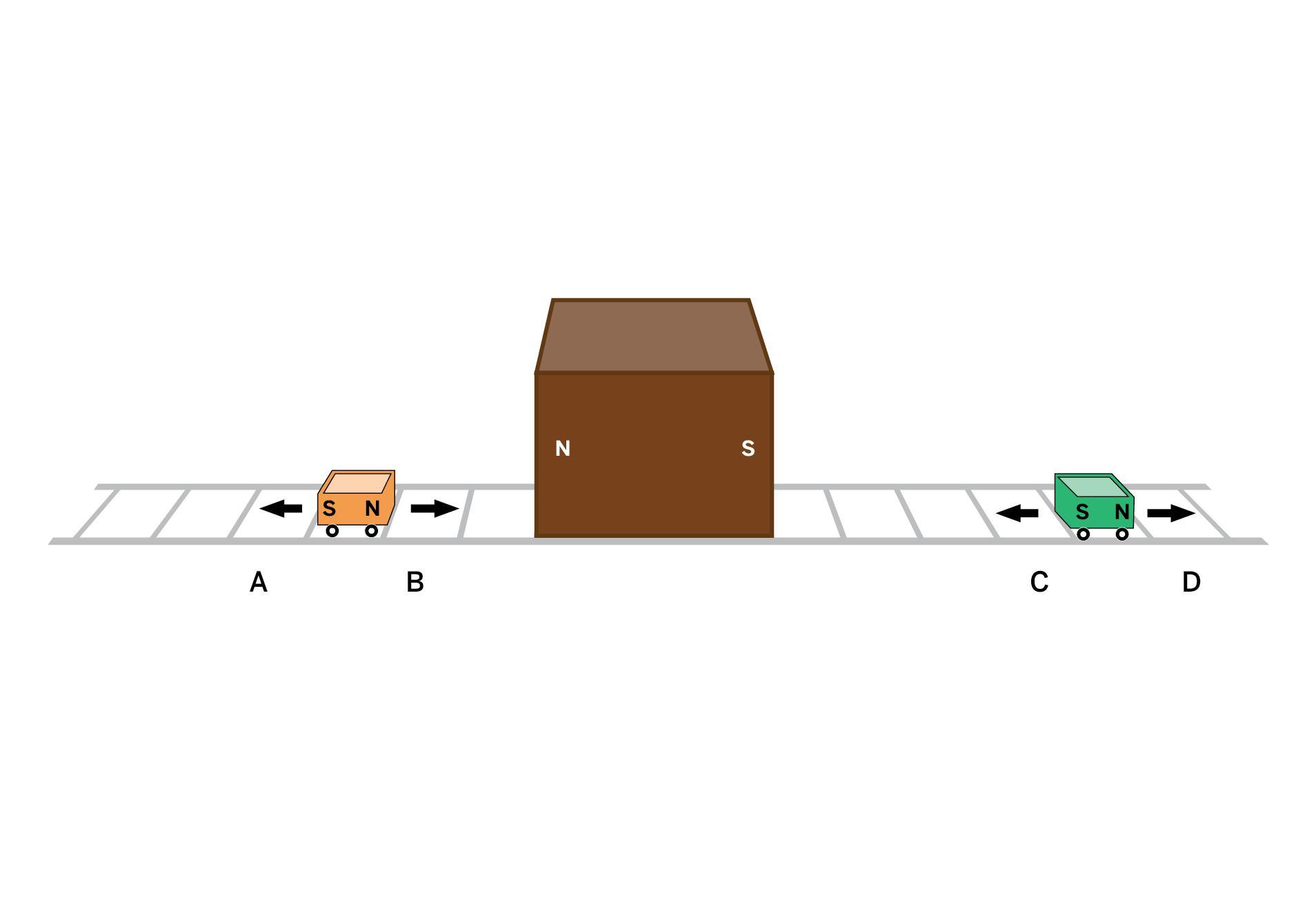
Shanika is an engineer at an amusement park who is experimenting with changes to the setup for a magnetic roller coaster ride. I

n one ride, there are two identical roller coaster cars (orange and green) that start on opposite sides of a large magnet located at the center of a station. Shanika wants to get the largest increase in potential energy she can by moving one car one space to the left or the right. Shanika can move the orange car to point A or point B, or she can move the green car to point C or point D. Which movement should she make? Why will that movement result in the largest increase in potential energy? Describe the magnetic force that will act on the roller coaster car she moves.

Chemistry
2 answers:
MaRussiya [10]2 years ago
8 0

Answer:

Shanika should move the orange coaster car to point A and move the green coaster car to point D. This movement will result in the largest increase in potential energy because the farther the carts are from the magnet, the faster they will travel to get to the magnetic force. Therefore, they will create a big increase in potential energy.

Explanation:

I'm not sure if this is correct but I hope this helps :)

Solnce55 [7]2 years ago
6 0

Answer:

Shanika should move the orange coaster car to point B. This movement will result in the largest increase in potential energy. This is because the carts are repelling, which means to increase the potential energy you have to go against the magnetic field. Because the carts are being repelled from the centre magnet to go against the magnetic field you would move the cart closer to the magnet. In this case, moving the orange cart to point b would increase the potential energy greater than any other move.

Explanation:

what i meant in the last sentence was that moving the orange cart to b (closer to centre magnet) would end in a greater potential energy change than moving the other, green, cart closer. This is because of the distances between the carts and the centre magnet. Potential energy does not increase linearly meaning that if a cart is one cart is an inch away from the magnet and another is a foot, if you moved both magnets a cm closer to the centre magnet the one an inch away would have a larger potential energy change.

You might be interested in
How do combination circuits help prevent problems in circuits in a home? If it helps, think about a bedroom since all electrical
den301095 [7]
‍♀️ ◻️✅◾️▫️‍◾️◻️◻️◼️
6 0
2 years ago
The density of mercury is 13.6 g/cm3 . What volume (in quarts) is occupied by 100. g of Hg? (1 L = 1.06 qt)
SpyIntel [72]

Answer:

0.00077 qt

Explanation:

Density -

Density of a substance is given by the mass of the substance divided by the volume of the substance .

Hence , d = m / V

V = volume

m = mass ,

d = density ,

From the question ,

The mass mercury = 100 g

Density of mercury = 13.6 g/cm³ .

Hence , by using the above formula ,and putting the corresponding values , the volume of mercury is calculated as -

d = m / V

13.6 g/cm³ = 100 g  / V

V = 7.35 cm³

1 cm³ = 0.001 L

V = 7.35 * 0.001 L = 0.0073 L

Since ,

1 L = 1.06 qt

V = 0.0073* 1.06 qt = 0.0077 qt

6 0
2 years ago
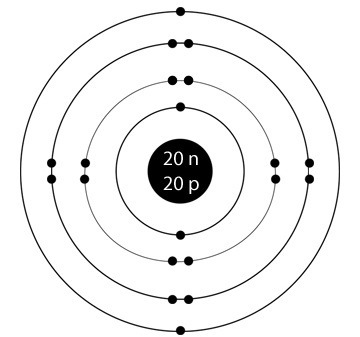
Illustrate a model of a calcium atom including the number and position of protons neutrons and electrons in the atom
andrey2020 [161]

The model would look something like the image below.

There would be a <em>central nucleus</em> containing <em>20 protons</em> and <em>20 neutrons</em>.

Surrounding the nucleus would be four concentric rings (energy levels) containing <em>20 electron</em>s.

Going out from the nucleus, the number of electrons in each ring would

be <em>2, 8, 8, 2</em>.

8 0
2 years ago
Pesticide concentrations in the Rhine River between Germany and France between 1969 and 1975 averaged 0.55 mg/L of hexachloroben
sertanlavr [38]

Answer:

1.93×10⁻³ mmoles/L of C₆Cl₆; 1.58×10⁻⁴ mmoles/L of C₁₂H₈Cl₆O; 3.51×10⁻³ mmoles/L of C₆H₆Cl₆

Explanation:

We have to find out the molar mass of each pesticide to calculate the moles, and then the milimoles

C₆Cl₆ → 12. 6 + 35.45 .6 = 284.7 g/m

C₁₂H₈Cl₆O →  12 . 12 + 8.1 + 35.45 .6 + 16 = 380.7 g/m

C₆H₆Cl₆ → 12.6 + 6.1 + 35.45 .6 = 290,7 g/m

Let's convert mg to g (/1000)

0.55 mg / 1000 = 5.5×10⁻⁴ g

0.060 mg / 1000 = 6×10⁻⁵ g

1.02 mg / 1000 = 1.02×10⁻³ g

Now we can know the moles (mass / molar mass)

5.5×10⁻⁴ g / 284.7 g/m = 1.93×10⁻⁶ moles of C₆Cl₆

6×10⁻⁵ g / 380.7 g/m = 1.58×10⁻⁷ moles of C₁₂H₈Cl₆O

1.02×10⁻³ g / 290,7 g/m = 3.51×10⁻⁶ moles of C₆H₆Cl₆

Milimoles = Mol . 1000

1.93×10⁻⁶ . 1000 = 1.93×10⁻³ mmoles of C₆Cl₆

1.58×10⁻⁷ . 1000 = 1.58×10⁻⁴ mmoles of C₁₂H₈Cl₆O

3.51×10⁻⁶ . 1000 = 3.51×10⁻³ mmoles of C₆H₆Cl₆
6 0
2 years ago
1. A student sees tiny bubbles clinging to the inside of an unopened plastic bottle full of carbonated soft drinks. The student
Lina20 [59]

Answer:

1) The bubbles will grow, and more may appear.

2)Can A will make a louder and stronger fizz than can B.

Explanation:

When you squeeze the sides of the bottle you increase the pressure pushing on the bubble, making it compress into a smaller space. This decrease in volume causes the bubble to increase in density. When the bubble increases in density, the bubble will grow and more bubbles will appear. Therefore, Changing the pressure (by squeezing the bottle) changes the volume of the bubbles. The number of bubbles doesn't change, just their size increases.

Carbonated drinks tend to lose their fizz at higher temperatures because the loss of carbon dioxide in liquids is increased as temperature is raised. This can be explained by the fact that when carbonated liquids are exposed to high temperatures, the solubility of gases in them is decreased. Hence the solubility of CO2 gas in can A at 32°C is less than the solubility of CO2 in can B at 8°C. Thus can A will tend to make a louder fizz more than can B.

3 0
2 years ago
Other questions:
  • To begin the experiment, 1.11g of methane CH4 is burned in a bomb calorimeter containing 1000 grams of water. The initial temper
    7·1 answer
  • The molar mass of c3h8o2 (four significant figures) is ________.
    6·1 answer
  • Which element has atoms with the strongest attraction for electrons in a chemical bond?1)aluminium, 2)carbon, 3)chlorine, 4)lith
    5·1 answer
  • Three units put together in different patterns essentially make
    12·2 answers
  • A 3.0-L sample of helium was placed in container fitted with a porous membrane. Half of the helium effused through the membrane
    11·1 answer
  • How many moles of CaC2 are needed to react completely with 45.0g H2O?
    14·1 answer
  • Which statement describes a chemical property of an object? A:The object is white in color.B:The object has a powdery texture.C:
    15·1 answer
  • A 1-L soda bottle contains dissolved carbon dioxide gas. Which bottle would have the highest concentration of dissolved gas? a b
    7·2 answers
  • Which is an example of how society affects science?
    9·2 answers
  • Two mixtures were prepared from three very narrow molar mass distribution polystyrene samples with molar masses of 10,000, 30,00
    5·1 answer
Add answer
Login
Not registered? Fast signup
Signup
Login Signup
Ask question!