answer.
Ask question
Login Signup
Ask question
All categories
  • English
  • Mathematics
  • Social Studies
  • Business
  • History
  • Health
  • Geography
  • Biology
  • Physics
  • Chemistry
  • Computers and Technology
  • Arts
  • World Languages
  • Spanish
  • French
  • German
  • Advanced Placement (AP)
  • SAT
  • Medicine
  • Law
  • Engineering
gladu [14]
2 years ago
13

What term describes a guardrail system

Engineering
2 answers:
Ymorist [56]2 years ago
7 0

Answer:

The ( Fall Protection in Construction ) is the term which relates to these mechanisms , i.e , guardrail system, a positioning system and a personal fall arrest system.

Explanation:

thanks me later

Nitella [24]2 years ago
5 0

Answer:

The ( Fall Protection in Construction ) is the term which relates to these mechanisms , i.e , guardrail system, a positioning system and a personal fall arrest system.

<em>WAS</em><em> </em><em>THIS</em><em> </em><em>ANSWER</em><em> </em><em>HELPFUL</em><em> </em><em>?</em><em> </em>

MARK ME AS A BRAINLIEST

You might be interested in
A thermometer requires 1 minute to indicate 98% of the response to a unit step input. Assuming the thermometer to be a first ord
Rama09 [41]

Answer:

Time constant = 15.34 seconds

The thermometer shows an error of 0.838°

Explanation:

Given

t = 1 minute = 60 seconds

c(t) = 98% = 0.98

According to the question, the thermometer is a first order system.

The first order system transfer function is given as;

C(s)/R(s) = 1/(sT + 1).

To calculate the time constant, we need to calculate the step response.

This is given as

r(t) = u(t) --- Take Laplace Transformation

R(s) = 1/s

Substitute 1/s for R(s) in C(s)/R(s) = 1/(sT + 1).

We have

C(s)/1/s = 1/(sT + 1)

C(s) = 1/(sT + 1) * 1/s

C(s) = 1/s - 1/(s + 1/T) --- Take Inverse Laplace Transformation

L^-1(C(s)) = L^-1(1/s - 1/(s + 1/T))

Since, e^-t <–> 1/(s + 1) --- {L}

1 <–> 1/s {L}

So, the unit response c(t) = 1 - e^-(t/T)

Substitute 0.98 for c(t) and 60 for t

0.98 = 1 - e^-(60/T)

0.98 - 1 = - e^-(60/T)

-0.02 = - e^-(60/T)

e^-(60/T) = 0.02

ln(e^-(60/T)) = ln(0.02)

-60/T = -3.912

T = -60/-3.912

T = 15.34 seconds

Time constant = 15.34 seconds

The error signal is given as

E(s) = R(s) - C(s)

Where the temperature changes at the rate of 10°/min; 10°/60 s = 1/6

So.

E(s) = R(s) - 1/6 C(s)

Calculating C(s)

C(s) = 1/s - 1/(s + 1/T)

C(s) = 1/s - 1/(s + 1/15.34)

Remember that R(s) = 1/s

So, E(s) becomes

E(s) = 1/s - 1/6(1/s - 1/(s + 1/15.34))

E(s) = 1/s - 1/6(1/s - 1/(s + 0.0652)

E(s) = 1/s - 1/6s + 1/(6(s+0.0652))

E(s) = 5/6s + 1/(6(s+0.0652))

E(s) = 0.833/s + 1/(6(s+0.0652)) ---- Take Inverse Laplace Transformation

e(t) = 1/6e^-0.652t + 0.833

For a first order system, the system attains a steady state condition when time is 4 times of Time constant.

So,

Time = 4 * 15.34

Time = 61.36 seconds

So, e(t) becomes

e(t) = 1/6e^-0.652t + 0.833

e(t) = 1/(6e^-0.652(61.36)) + 0.833

e(t) = 0.83821342824942664566211

e(t) = 0.838 --- Approximated

Hence, the thermometer shows an error of 0.838°

4 0
2 years ago
Read 2 more answers
Refrigerant-134a enters a diffuser steadily as saturated vapor at 600 kPa with a velocity of 160 m/s, and it leaves at 700 kPa a
Zina [86]

Answer:

a) V_2 = 82.1 m/s

b) m = 0.298 Kg/s

Explanation:

from A-11 to A-13 we have the following data

P_1 = 600 kpa

V_1 = 0.033925 m^3/kg

h_1 = 262.52 kJ/kg

P_2 = 700 kpa

V_2 = 0.0313 m^3/kg

T_2 = 40°C = 313K

h_2 = 278.66 kJ/kg

Now, from the conversation of mass,

A_2*V_2/u_2 = A_1*V_1/u_1

V_2 = A_1/A_2*u_2/u_1*V_1

V_2 = A_1/1.8*A_1 * 0.0313 /0.033925*160

V_2 = 82.1 m/s

now from the energy balance equation

E_in = E_out

Q_in + m(h_1 + V_1^2/2) =  m(h_2 + V_2^2/2)

m = 0.298 Kg/s

4 0
2 years ago
Read 2 more answers
2.5 kg of air at 150 kPa and 12°C is contained in a gas-tight, frictionless piston-cylinder device. The air is now compressed to
Korolek [52]

Answer:

Work input =283.47 KJ

Explanation:

Given that

P_1=150\ KPa

P_2=600\ KPa

T=12°C=285 K

m= 2.5 kg

Given that this is the constant temperature process.

e know that work for isothermal process  

W=P_1V_1\ln \dfrac{P_1}{P_2}

W=mRT\ln \dfrac{P_1}{P_2}

So now putting the values

W=mRT\ln \dfrac{P_1}{P_2}

W=2.5\times 0.287\times 285\ln \dfrac{150}{600}

W=-283.47 KJ

Negative sign indicates that work is done on the system.

So work input =283.47 KJ

8 0
2 years ago
During an experiment conducted in a room at 25°C, a laboratory assistant measures that a refrigerator that draws 2 kW of power h
zvonat [6]

Answer:

Not reasonable.

Explanation:

To solve this problem it is necessary to take into account the concepts related to the performance of a reversible refrigerator. The coefficient of performance is basically defined as the ratio between the heating or cooling provided and the electricity consumed. The higher coefficients are equivalent to lower operating costs. The coefficient can be greater than 1, because it is a percentage of the output: losses, other than the thermal efficiency ratio: input energy. For a reversible refrigerator the coefficient is given by

COP_{R,rev} = \frac{1}{\frac{T_1}{T_2}-1}

Where,

T_1 =High temperature

T_2 =Low Temperature

With our values previous given we can find it:

T_2 = -30\°C = (-30+273)

T_2 = 243K

T_1 = 25\°C = (25+273)

T_1 = 298K

With these values we can now calculate the coefficient of performance:

COP_{R,rev} = \frac{1}{\frac{298}{243}-1}

COP_{R,rev} = 4.42

At the same time we can calculate the work consumption of the refrigerator, this is

W = \dot{W}\Delta t

Where,

\dot{W} = Required power input

t = time to remove heat from a cool to water medium

W = 2kJ/s * 20 min

W = 2kJ/s * 1200s

W = 2400kJ

In this way we can calculate the coefficient of the refrigerator directly:

COP_R = \frac{Q_L}{W}

Where,

Q = Amoun of heat rejected

COP_R = \frac{30000}{2400}

COP_R = 12.5

Comparing the values of both coefficients we have that the experiments are NOT reasonable, because the coefficient of a refrigerator is high compared to  coefficient of reversible refrigerator.

5 0
2 years ago
Write SQL queries to answer the following questions: What are the names of the course(s) that student Altvater took during the s
amm1812

Answer:

See explanations

Explanation:

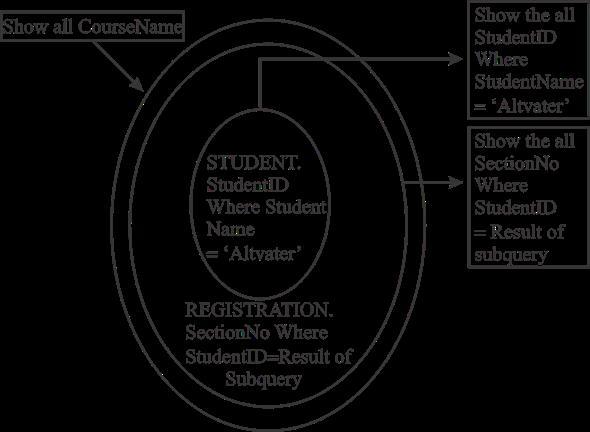
Consider the following Venn diagram to retrieve the name of course that student Altvater took during semester I-2015.

• In above Venn diagram inner Ellipse represent the subquery part, this subquery part select the Student ID from STUDENT table.

• Second sub query is used to determine the SectionNo of all student whose studentID retrived in the first subquery

• Finally the main query displays the CourseName from COURSE table.

6 0
2 years ago
Other questions:
  • Water at 400 kPa with a quality of 75% has its pressure raised 200 kPa (to 600 kPa) in a constant volume process. What is the ne
    15·1 answer
  • 5. Which statement regarding a finite state machine (FSM) is NOT true: (a) In a non-deterministic FSM, a string is invalid if th
    13·1 answer
  • We are undergoing a period of rapid technology change with cloud computing, artificial intelligence, robotics, mobile devices, w
    12·1 answer
  • On the reality television show "Survivor," two tribes compete for luxuries such as food and shelter. During such challenges, one
    12·1 answer
  • A particle has an initial velocity of v0 = 14 ft/s to the right, at s0 = 0, and a = 2 ft/s2 to the left. determine its position
    5·1 answer
  • Which of the following is correct regarding the principal stresses and maximum in-plane shear stresses? a. Principal stresses ca
    14·1 answer
  • The critical resolved shear stress for iron is 27 MPa (4000 psi). Determine the maximum possible yield strength for a single cry
    12·1 answer
  • A well-insulated tank in a vapor power plant operates at steady state. Saturated liquid water enters at inlet 1 at a rate of 125
    8·1 answer
  • A thin-walled tube with a diameter of 12 mm and length of 25 m is used to carry exhaust gas from a smoke stack to the laboratory
    7·1 answer
  • Benzene vapor at 480°C is cooled and converted to a liquid at 25°C in a continuous condenser. The condensate is drained into 1.7
    15·1 answer
Add answer
Login
Not registered? Fast signup
Signup
Login Signup
Ask question!