answer.
Ask question
Login Signup
Ask question
All categories
  • English
  • Mathematics
  • Social Studies
  • Business
  • History
  • Health
  • Geography
  • Biology
  • Physics
  • Chemistry
  • Computers and Technology
  • Arts
  • World Languages
  • Spanish
  • French
  • German
  • Advanced Placement (AP)
  • SAT
  • Medicine
  • Law
  • Engineering
KonstantinChe [14]
2 years ago
13

A plasma membrane and a cell wall _____.

Chemistry
2 answers:
klemol [59]2 years ago
5 0
<h3><u>Answer;</u></h3>

<em>D. Have different structures and different functions</em>

A plasma membrane and a cell wall <em><u>have different structures and different functions</u></em>.

<h3><u>Explanation;</u></h3>
  • <em><u>Plasma membrane</u></em> is a structure that is found in <u><em>both animal cell and plants cells</em></u>. It is made up of a <u><em>bi-layer consisting of lipid and proteins</em></u>. Plasma membrane are semi-permeable which means the<em><u> allow selective movement of materials in and out of the cell. </u></em>
  • <em><u>Cell wall</u></em>, on the other hand is a structure that is found on plant cells and lacks in animal cell. It <em><u>contains cellulose in its structure </u></em>which enables it to be rigid and enhances it <em><u>protect the cell from mechanical damage</u></em> from harsh conditions such as pressure in the outside environment.

murzikaleks [220]2 years ago
5 0

A plasma membrane and a cell wall have different structures and different functions.

Further Explanation:

Plasma membrane present in all the animals and plants. A cell wall covers the plasma membrane in plants. The plasma membrane is mainly made up of lipid bilayer which is semi-permeable to some molecule, ions and gases. Through this, the plasma membrane regulates the efflux and influx of a molecule.

Major functions of a plasma membrane are:

  • Maintain the structure of a cell.
  • Help in interaction with other cells.
  • Protect outside.
  • Help in the transport of toxic and nutrient substances or chemicals out of the cell.

The cell wall is the outermost covering of the cell. They are made up of hemicelluloses and cellulose, which provide the plant cell with extra support and protection. The cell wall is not present in an animal cell. The prokaryotic cell wall provides more protection than the eukaryotic cell wall. They help to maintain the shape of a cell and provide defense against dehydration.

Learn more:

  1. Learn more about cell organelle <u>brainly.com/question/5923583 </u>
  2. Learn more about the diffusion <u>brainly.com/question/1386629 </u>
  3. Learn more about the plant <u>brainly.com/question/862697 </u>

<u> </u>

Answer Details:

Grade: High School

Subject: Biology

Chapter: Plant Cell

Keywords:

Plant cell, animal cell, cell wall, plasma membrane, dehydration, covering, shape, chemical, protection, defense, efflux, influx, lipid bilayer, semi-permeable.

You might be interested in
Combined gas law problem: a balloon is filled with 500.0 mL of helium at a temperature of 27 degrees Celsius and 755 mmHg. As th
Papessa [141]
The statement of the combined gas law for a fixed amount of gas is,
PV/T = constant
Here, the units of pressure and volume must be consistent and the temperature must be the absolute temperature (Kelvin or Rankine).
0.65 atm is equivalent to 494 mmHg
Using the equation:
(755 x 500) / (27 + 273) = (494 x V) / (-33 + 273)
V = 3396 ml = 3.4 liters
8 0
2 years ago
A mysterious white powder could be powdered sugar (C12H22O11), cocaine (C17H21NO4), codeine (C18H21NO3), norfenefrine (C8H11NO2)
rodikova [14]

Norfenefrine (C₈H₁₁NO₂).

<h3>Further explanation</h3>

We will solve a case related to one of the colligative properties, namely freezing point depression.

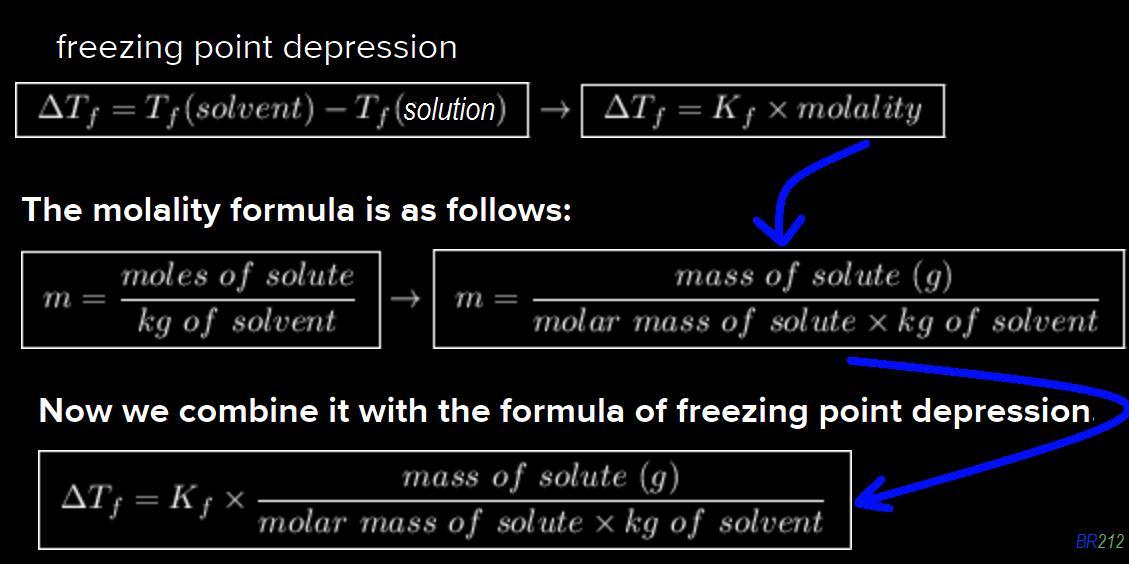
The freezing point of the solution is the temperature at which the solution begins to freeze. The difference between the freezing point of the solvent and the freezing point of the solution is called freezing point depression.

\boxed{ \ \Delta T_f = T_f(solvent) - T_f(solution) \ } \rightarrow \boxed{ \ \Delta T_f = K_f \times molality \ }

<u>Given:</u>

A mysterious white powder could be,

  • powdered sugar (C₁₂H₂₂O₁₁) with a molar mass of 342.30 g/moles,
  • cocaine (C₁₇H₂₁NO₄) with a molar mass of 303.35 g/moles,
  • codeine (C₁₈H₂₁NO₃) with a molar mass of 299.36 g/moles,
  • norfenefrine (C₈H₁₁NO₂) with a molar mass of 153.18 g/moles, or
  • fructose (C₆H₁₂O₆) with a molar mass of 180.16 g/moles.

When 82 mg of the powder is dissolved in 1.50 mL of ethanol (density = 0.789 g/cm³, normal freezing point −114.6°C, Kf = 1.99°C/m), the freezing point is lowered to −115.5°C.

<u>Question: </u>What is the identity of the white powder?

<u>The Process:</u>

Let us identify the solute, the solvent, initial, and final temperatures.

  • The solute = the powder
  • The solvent = ethanol
  • The freezing point of the solvent = −114.6°C
  • The freezing point of the solution = −115.5°C

Prepare masses of solutes and solvents.

  • Mass of solute = 82 mg = 0.082 g
  • Mass of solvent = density x volume, i.e., \boxed{ \ 0.789 \ \frac{g}{cm^3} \times 1.50 \ cm^3 = 1.1835 \ g = 0.00118 \ kg  \ }

We must prepare the solvent mass unit in kg because the unit of molality is the mole of the solute divided by the mass of the solvent in kg.

The molality formula is as follows:

\boxed{ \ m = \frac{moles \ of \ solute}{kg \ of \ solvent} \ } \rightarrow \boxed{ \ m = \frac{mass \ of \ solute \ (g)}{molar \ mass \ of \ solute \times kg \ of \ solvent} \ }

Now we combine it with the formula of freezing point depression.

\boxed{ \ \Delta T_f =  K_f \times \frac{mass \ of \ solute \ (g)}{molar \ mass \ of \ solute \times kg \ of \ solvent} \ }

It is clear that we will determine the molar mass of the solute (denoted by Mr).

We enter all data into the formula.

\boxed{ \ -114.6^0C - (-115.5^0C) = 1.99 \frac{^0C}{m} \times \frac{0.082 \ g}{Mr \times 0.00118 \ kg} \ }

\boxed{ \ 0.9 = \frac{1.99 \times 0.082}{Mr \times 0.00118} \ }

\boxed{ \ Mr = \frac{0.16318}{0.9 \times 0.00118} \ }

We get \boxed{ \ Mr = 153.65 \ }

These results are very close to the molar mass of norfenefrine which is 153.18 g/mol. Thus the white powder is norfenefrine.

<h3>Learn more</h3>
  1. The molality and mole fraction of water brainly.com/question/10861444
  2. About the mass and density of ethylene glycol as an  antifreeze brainly.com/question/4053884
  3. About the solution as a homogeneous mixture  brainly.com/question/637791

Keywords: a mysterious white powder, sugar, cocaine, codeine, norfenefrine, fructose, the solute, the solvent, dissolved, ethanol, normal freezing point, the freezing point depression, the identity


7 0
2 years ago
Read 2 more answers
Be sure to answer all parts. ΔH o f of hydrogen chloride [HCl(g)] is −92.3 kJ/mol. Given the following data, determine the ident
Akimi4 [234]

Answer:

NH₄Cl(s) → NH₃(g) + HCl(g)

ΔH°rxn 74,89 kJ/mol

Explanation:

The change in enthalpy of formation (ΔHf) is defined as the change in enthalpy in the formation of a substance from its constituent elements. For HCl(g):

<em>(1) </em>¹/₂H₂(g) + ¹/₂ Cl₂ → HCl(g) ΔH = -92,3 kJ/mol

It is possible to sum ΔH of different reactions to obtain ΔH of a global reaction (Hess's law).

For the reactions:

<em>(2) </em>N₂(g) + 4H₂(g) + Cl₂(g) → 2NH₄Cl(s) ΔH°rxn = −630.78 kJ/mol

<em>(3)</em> N₂(g) + 3H₂(g) → 2NH₃(g) ΔH°rxn = −296.4 kJ/mol

The sum of -(2) + (3) gives:

<em>-(2) </em>2NH₄Cl(s) → N₂(g) + 4H₂(g) + Cl₂(g) ΔH°rxn = +630.78 kJ/mol

<em>(3)</em> N₂(g) + 3H₂(g) → 2NH₃(g) ΔH°rxn = −296.4 kJ/mol

<em>-(2) + (3) </em>2NH₄Cl(s) → 2NH₃(g) + H₂(g) + Cl₂(g)

ΔH°rxn = +630.78 kJ/mol −296.4 kJ/mol = +334,38 kJ/mol

Now, the sum of -(2) + (3) + 2×(1)

<em>-(2) + (3) </em>2NH₄Cl(s) → 2NH₃(g) + H₂(g) + Cl₂(g) ΔH°rxn = +334,38 kJ/mol

<em>2×(1)  </em>H₂(g) + Cl₂(g)→ 2HCl(g) ΔH = 2×-92,3 kJ/mol

<em>-(2) + (3) + 2×(1) </em>2NH₄Cl(s) → 2NH₃(g) + 2HCl(g)

ΔH°rxn = +334,38 kJ/mol + 2×-92,3 kJ/mol = 149,78 kJ/mol

The reaction of:

<em>NH₄Cl(s) → NH₃(g) + HCl(g)</em>

<em>Has ΔH°rxn = 149,78kJ/mol / 2 = 74,89 kJ/mol</em>

I hope it helps!

8 0
2 years ago
Which of these is a chemical property of a substance? texture ductility reactivity conductivity
beks73 [17]

Reactivity is a chemical property of a substance. According to EPA regulations, it is normally unstable and readily

undergoes violent change without detonating. it can explode or violently react when exposed to water, when heated, or under STP.

8 0
2 years ago
Read 2 more answers
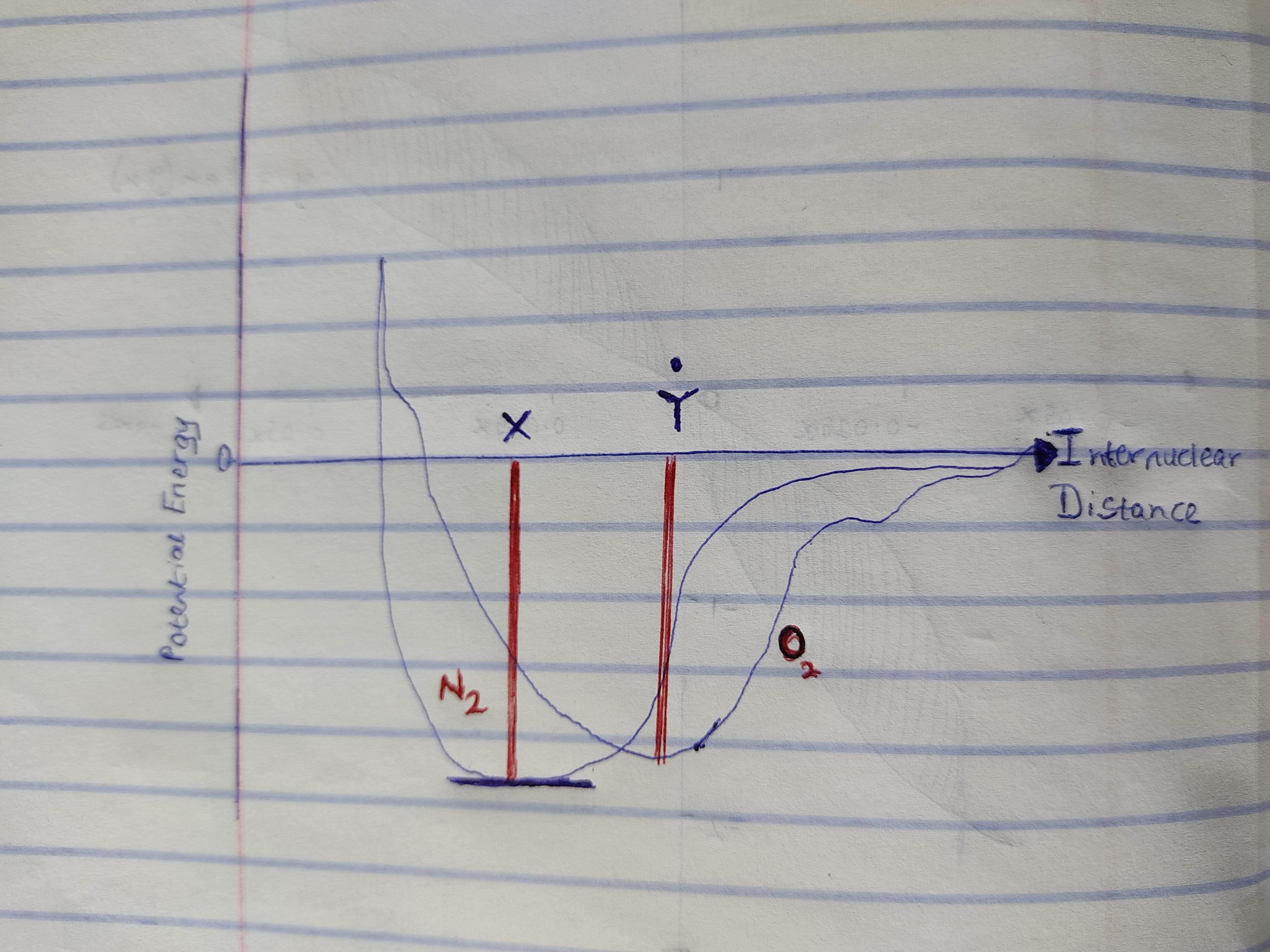
On the graph, indicate the distance that corresponds to the bond length of the N2 molecule by placing an X on the horizontal axi
Brut [27]

Answer:

Check the image in the file attached below.

Explanation:

The objective of this question is to use the diagram provided to indicate the distance that corresponds to the bond length of the N2 molecule by placing X on the horizontal axis.

The bond length shows the distance of the bonds between the nuclei of the bonded atoms between the N2 molecule and O2 molecule. From the diagram, we can see that the bond length of O2 shows a greater tendency over the N2 molecule and it also have higher potential energy than the N2 molecule.

6 0
2 years ago
Other questions:
  • One molecule of a compound weighs 2.03x10⁻²² g. what is the molar mass of that compound?
    15·2 answers
  • Draw the structure of (z)-3-methylhept-3-ene. be sure the stereochemistry is drawn clearly.
    7·1 answer
  • Identify the precipitate (if any) that forms when nach3coo (also written as nac2h3o2) and hcl are mixed. express your answer as
    13·2 answers
  • From the list below, which items describe beta decay? Check all that apply. APEX
    7·1 answer
  • What mass of solid NaOH (97.0 % by mass) is required to prepare 1.00 L of a 10.0% solution of NaOH by mass? The density of the 1
    10·1 answer
  • In the electrochemical cell using the redox reaction below, the anode half reaction is ________. Sn4+ (aq) + Fe (s) → Sn2+ (aq)
    13·1 answer
  • If a penny is made of 3.11 grams of copper, how many atoms of copper are in the penny
    6·1 answer
  • How many molecules of PF5 are found in 39.5 grams of PF5?
    8·1 answer
  • How many grams of K2CO3 would you need to put on the spill to neutralize the acid according to the following equation? 2HBr(aq)+
    6·1 answer
  • If you weigh 100 kg, how much would you weigh if all the water were removed from your body? A65 kg B45 kg C50 kg D35 kg
    9·1 answer
Add answer
Login
Not registered? Fast signup
Signup
Login Signup
Ask question!