answer.
Ask question
Login Signup
Ask question
All categories
  • English
  • Mathematics
  • Social Studies
  • Business
  • History
  • Health
  • Geography
  • Biology
  • Physics
  • Chemistry
  • Computers and Technology
  • Arts
  • World Languages
  • Spanish
  • French
  • German
  • Advanced Placement (AP)
  • SAT
  • Medicine
  • Law
  • Engineering
stealth61 [152]
2 years ago
10

How many atoms are in a sample of chromium with a mass of 13 grams?

Chemistry
1 answer:
r-ruslan [8.4K]2 years ago
3 0
Let's find the number of moles first.  
Number of moles = mass/molar mass
 Molar mass = 51.9961
 Number of moles = 13/ 51.9961 = 0.2500.
 1 mole of any particle contains 6.02 * 10^(23) atoms. 
 Hence 0.2500 moles contains X 
 Hence X = 0.25 * 6.022 * 10^(23) = 1.5055 * 10^(23)

You might be interested in
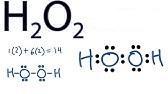
Many free radicals combine to form molecules that do not contain any unpaired electrons. The driving force for the radical–radic
Alexxandr [17]

Answer:

In the attached image the Lewis equation is shown where it is shown how two oxygens react with two hydrogens to meet the octet of the electrons.

Explanation:

Hydrogen peroxide is one of the most named chemicals since it is not only sold as "hydrogen peroxide" in pharmacies but it is also one of the great weapons of immune defense cells to defend ourselves against anaerobic bacteria.

The disadvantage of this compound is that when dividing it forms free oxygen radicals that are considered toxic or aging for our body.

4 0
2 years ago
2. If 2.50g of sodium hydroxide is being reacted with 4.30g of magnesium chloride, how many grams of magnesium hydroxide would b
Virty [35]

Answer:

1.822 g of magnesium hydroxide would be produced.

Explanation:

Balanced reaction: 2NaOH+MgCl_{2}\rightarrow Mg(OH)_{2}+2NaCl

     Compound                                 Molar mass (g/mol)

         NaOH                                           39.997

         MgCl_{2}                                           95.211

        Mg(OH)_{2}                                        58.3197

So, 2.50 g of NaOH = \frac{2.50}{39.997} mol of NaOH = 0.0625 mol of NaOH

      4.30 g of MgCl_{2}  = \frac{4.30}{95.211} mol of MgCl_{2} = 0.0452 mol of MgCl_{2}

According to balanced equation-

2 mol of NaOH produce 1 mol of Mg(OH)_{2}    

So, 0.0625 mol of NaOH produce (\frac{0.0625}{2}) mol of NaOH or 0.03125 mol of NaOH

1 mol of MgCl_{2} produces 1 mol of Mg(OH)_{2}

So, 0.0452 mol of MgCl_{2} produce 0.0452 mol of Mg(OH)_{2}

As least number of moles of Mg(OH)_{2} are produced from NaOH therefore NaOH is the limiting reagent.

So, amount of Mg(OH)_{2} would be produced = 0.03125 mol

                                                                           = (0.03125\times 58.3197) g

                                                                           = 1.822 g

6 0
2 years ago
Given: CaC2 + N2 → CaCN2 + C In this chemical reaction, how many grams of N2 must be consumed to produce 265 grams of CaCN2? Exp
weeeeeb [17]

Answer : The grams of N_2 consumed is, 89.6 grams.

Solution : Given,

Mass of CaCN_2 = 265 g

Molar mass of CaCN_2 = 80 g/mole

Molar mass of N_2 = 28 g/mole

First we have to calculate the moles of CaCN_2.

\text{Moles of }CaCN_2=\frac{\text{Mass of }CaCN_2}{\text{Molar mass of }CaCN_2}=\frac{265g}{80g/mole}=3.2moles

The given balanced reaction is,

CaC_2+N_2\rightarrow CaCN_2+C

from the reaction, we conclude that

As, 1 mole of CaCN_2 produces from 1 mole of N_2

So, 3.2 moles of CaCN_2 produces from 3.2 moles of N_2

Now we have to calculate the mass of N_2

\text{Mass of }N_2=\text{Moles of }N_2\times \text{Molar mass of }N_2

\text{Mass of }N_2=(3.2moles)\times (28g/mole)=89.6g

Therefore, the grams of N_2 consumed is, 89.6 grams.

5 0
2 years ago
Read 2 more answers
A 0.529-g sample of gas occupies 125 ml at 60. cm of hg and 25°c. what is the molar mass of the gas?
Llana [10]

<span>Let's </span>assume that the gas has ideal gas behavior. <span>
Then we can use ideal gas formula,
PV = nRT<span>

</span><span>Where, P is the pressure of the gas (Pa), V is the volume of the gas (m³), n is the number of moles of gas (mol), R is the universal gas constant ( 8.314 J mol</span></span>⁻¹ K⁻¹) and T is temperature in Kelvin.<span>
<span>
</span>P = 60 cm Hg = 79993.4 Pa
V = </span>125  mL = 125 x 10⁻⁶ m³

n = ?

<span> R = 8.314 J mol</span>⁻¹ K⁻¹<span>
T = 25 °C = 298 K
<span>
By substitution,
</span></span>79993.4 Pa<span> x </span>125 x 10⁻⁶ m³ = n x 8.314 J mol⁻¹ K⁻¹ x 298 K<span>
                                          n = 4.0359 x 10</span>⁻³ mol

<span>
Hence, moles of the gas</span> = 4.0359 x 10⁻³ mol<span>

Moles = mass / molar mass

</span>Mass of the gas  = 0.529 g 

<span>Molar mass of the gas</span> = mass / number of moles<span>
                                    = </span>0.529 g / 4.0359 x 10⁻³ mol<span>
<span>                                    = </span>131.07 g mol</span>⁻¹<span>

Hence, the molar mass of the given gas is </span>131.07 g mol⁻¹

4 0
2 years ago
How many moles of sodium bicarbonate is needed to neutralize 0.8 ml of sulphuric acid?
svet-max [94.6K]

Answer:

n NaHCO3 = 9.6 E-3 mol

Explanation:

balanced reaction:

  • 2 NaHCO3(s) + H2SO4(ac) ↔ Na2SO4(ac) + 2 CO2(g) + 2 H2O(l)
  • assuming a concentration of H2SO4 6M....normally worked in the lab

⇒ n H2SO4 = 8 E-4 L * 6 mol/L = 4.8 E-3 mol H2SO4

according to balanced reaction, we have that for every mol of H2SO4 there are two mol of NaHCO3 ( sodium bicarbonate)

⇒ mol NaHCO3 = 4.8 E-3 mol H2SO4 * ( 2 mol NaHCO3 / mol H2SO4 )

⇒ ,mol NaHCO3 = 9.6 E-3 mol

So 9.6 E-3 mol NaHCO3,  are the minimun moles necessary to neutralize the acid.

6 0
2 years ago
Other questions:
  • Under identical conditions of temperature and pressure, which of the following gasses is the densest: Ne, CO2, or Cl2?
    7·1 answer
  • Benzene, C6H6, reacts with oxygen, O2, to form CO2 and H2O. How much O2 is required for the complete combustion of 1.0 mol C6H6?
    6·2 answers
  • If the following elements were to form ions, they would attain the same number of electrons as which noble gas? As , Be , O , S
    6·2 answers
  • The molar mass of nitrogen (N2) is 28.02 g/mol. What is the mass, in grams, of 4.60 mol of N2?
    12·2 answers
  • A cup of gold colored metal beads was measured to have a mass 425 grams. By water displacement, the volume of the beads was calc
    8·1 answer
  • The nucleus of an atom is dense and positively charged. What was observed when positively charged particles were radiated onto a
    5·2 answers
  • Why are chemical tests necessary to tell a dextrose solution from a saline solution?
    14·1 answer
  • Each molecule of nitric acid has the formula hno3. if there are 6000 oxygen atoms present and 6000 nitrogen atoms present, how m
    15·1 answer
  • The half-life of C-14 is 5470 years. If a particular archaeological sample has one-quarter of its original radioactivity remaini
    15·2 answers
  • For the reaction PCl5(g) &lt;--&gt; PCl3(g) Cl2(g) at equilibrium, which statement correctly describes the effects of increasing
    5·1 answer
Add answer
Login
Not registered? Fast signup
Signup
Login Signup
Ask question!