answer.
Ask question
Login Signup
Ask question
All categories
  • English
  • Mathematics
  • Social Studies
  • Business
  • History
  • Health
  • Geography
  • Biology
  • Physics
  • Chemistry
  • Computers and Technology
  • Arts
  • World Languages
  • Spanish
  • French
  • German
  • Advanced Placement (AP)
  • SAT
  • Medicine
  • Law
  • Engineering
wariber [46]
2 years ago
4

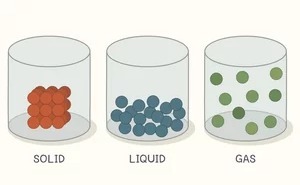
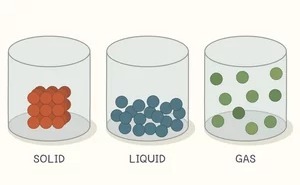
Rubbing alcohol evaporates from your arm quickly, leaving a cooling effect on your skin. How do the molecules of gas compare to

the molecules as a liquid?
A. The gas particles move faster, have the same molecular composition, and have weaker attractions between them than the liquid particles.
B. The gas particles move faster than the liquid particles, and the bonds of the molecules are broken during evaporation to allow gas atoms to spread apart.
C. The gas particles move slower but have the same molecular structure and the same attraction between them as the liquid particles.
D. The gas and liquid particles move at the same speed, but the bonds of the molecules are broken during evaporation to allow the gas atoms to spread apart.

Chemistry
2 answers:
Ludmilka [50]2 years ago
8 0

Answer : (A) The gas particles moves faster, have the same molecular composition, and have weaker attractions between them than the liquid particles.

Explanation : As we know Evaporation is a cooling process because during evaporation the particles of liquid absorb energy from the surroundings and this absorption of energy lost during evaporation and surrounding get cooler.

Alcohol is the volatile substance which easily vaporises, it absorb heat from our hand and gets converted into gaseous form. That is why we feel cooling on our skin.

The intermolecular forces of attraction in gases is weaker as compared to the liquids. So the molecules of gases can move very fast as compared to liquids.


IgorC [24]2 years ago
6 0

The answer is option A "The gas particles move faster, have the same molecular composition, and have weaker attractions between them than the liquid particles." Some differences between a gas and a liquid is their physical characteristics, and also gas molecules move faster then liquids. Just like how liquid molecules move faster then solid molecules.

Hope this helps.  

You might be interested in
A compound is made up of 28 g N, 24 g C, 48 g O, and 8 g H .What is the empirical formula?
vovikov84 [41]

Answer:

\rm C_2H_8N_2O_3.

Explanation:

<h3>Step One: calculate the coefficients. </h3>

Look up the relative atomic mass of these four elements on a modern periodic table:

  • \rm C: approximately 12.
  • \rm H: approximately 1.
  • \rm N: approximately 14.
  • \rm O: approximately 16.

The relative atomic mass of an element is numerically equal to the mass (in grams, \rm g,) of one mole of atoms of this element.

For example, the relative atomic mass of \rm C is approximately 12. Therefore, each mole of \rm C\! atoms would have a mass of 12\; \rm g.

This sample contains 24\; \rm g of carbon. That would correspond to approximately \displaystyle \left(\frac{24}{12}\right)\; \rm mol = 2\; \rm mol of \rm C atoms.

Similarly, for the other three elements:

\displaystyle n(\mathrm{H}) \approx \frac{8\; \rm g}{1\; \rm g \cdot mol^{-1}} = 8\; \rm mol.

\displaystyle n(\mathrm{N}) \approx \frac{28\; \rm g}{14\; \rm g \cdot mol^{-1}} = 2\; \rm mol.

\displaystyle n(\mathrm{O}) \approx \frac{48\; \rm g}{16\; \rm g \cdot mol^{-1}} = 3\; \rm mol.

Hence, the ratio between these elements in this compound would be:

n(\mathrm{C}): n(\mathrm{H}): n(\mathrm{N}):n(\mathrm{O}) = 2: 8 : 2 : 3.

In the empirical formula of a compound, the coefficients should represent the smallest possible integer ratio between the number of atoms of these elements.

n(\mathrm{C}): n(\mathrm{H}): n(\mathrm{N}):n(\mathrm{O}) = 2: 8 : 2 : 3 is indeed the smallest possible integer ratio between the number of atoms of these elements.

<h3>Step Two: arrange the elements in an appropriate order</h3>

Apply the Hill System to arrange these four elements in the empirical formula. In the Hill System:

If carbon, \rm C, is present in this compound, then:

  • \rm C (carbon) and then \rm H (hydrogen) will be the first two elements listed in the formula (ignore the hydrogen if it is not in the compound.)
  • The other elements in this compound will be listed in alphabetical order.

If there is no carbon \rm C in this compound, then list all the elements in this compound in alphabetical order.

Both \rm C (carbon) and \rm H (hydrogen) are found in this compound. Therefore, the first element in the list would be \rm C\!. The second would be \rm H\!, followed by \rm N\! and then \rm O\!.

Hence, the empirical formula of this compound would be \rm C_2H_8N_2O_3.

6 0
2 years ago
What is the molarity of a HNO3 solution prepared by adding 290.7 mL of water to 350.0 mL of 12.3 M HNO3?
Lisa [10]

Answer:

6.72M of HNO3

Explanation:

In the problem you are diluting the original HNO3 solution by the addition of some water. The final volume is:

290.7mL + 350.0mL = 640.7mL

And you are diluting the solution:

640.7mL / 350.0mL = 1.8306 times

As the original concentration was 12.3M, the final concentration will be:

12.3M / 1.8306 =

<h3>6.72M of HNO3</h3>
5 0
2 years ago
James was in an automobile accident in which he suffered a severely broken nose when his head hit the dashboard. Months later, h
stiks02 [169]
It wasn’t as powerful because your sense of smell enhances your sense of taste
4 0
2 years ago
Read 2 more answers
To show the electron configuration for an atom, when would it be better to use an orbital notation than to use a written configu
VikaD [51]
The answer is <span>D.when the aim is to show electron distributions in shells. This is because there are some instances when elements don't possess a regular or normal electron configuration. There are those who have special electron configurations wherein a lower subshell isn't completely filled before occupying a higher subshell. It is best to visualize such cases using the orbital notation.</span>
8 0
2 years ago
How many grams of calcium chloride are needed to produce 1.50 g of potassium chloride? cacl2(aq) + k2co3(aq) → 2 kcl(aq) + caco3
Virty [35]
CaCl2(aq) + K2CO3(aq) → 2 KCl(aq) + CaCO3(aq)

1.12 g
2.23 g
0.896 g
4.47 g
1.12 g

Hope it helps :)
8 0
2 years ago
Read 2 more answers
Other questions:
  • Which polyatomic ion is found in the compound represented by the formula NaHCO3?
    9·2 answers
  • What percentage of solar radiation striking a plant is converted into chemical energy?
    8·1 answer
  • What is the volume of 43.7 g of helium at stp?
    15·2 answers
  • What is the [h3o+] for a solution at 25°c that has poh = 5.640?
    12·1 answer
  • In any engineering design problem, the first step is to understand the problem and identify one or more possible solutions. In t
    12·1 answer
  • You are asked to identify compound X (a white, crystalline solid), which was extracted from a plant seized by customs inspectors
    15·1 answer
  • If 0.15 mol of I2 vapor can effuses through an opening in a heated vessel in 36 sec, how long will it take 0.15 mol of Cl2 to ef
    5·1 answer
  • Can 1750 mL of water dissolve 4.6 moles of Copper Sulfate CuSO4? _________ Why? / Why not?
    8·1 answer
  • The stock concentration of dye is 3.4E-5M. The stock concentration of bleach is 0.36M. Assuming that the reaction goes to comple
    5·1 answer
  • Consider a 0.238 M aqueous solution of sodium hydroxide, NaOH.
    11·1 answer
Add answer
Login
Not registered? Fast signup
Signup
Login Signup
Ask question!