answer.
Ask question
Login Signup
Ask question
All categories
  • English
  • Mathematics
  • Social Studies
  • Business
  • History
  • Health
  • Geography
  • Biology
  • Physics
  • Chemistry
  • Computers and Technology
  • Arts
  • World Languages
  • Spanish
  • French
  • German
  • Advanced Placement (AP)
  • SAT
  • Medicine
  • Law
  • Engineering
quester [9]
2 years ago
6

Find a numerical value for ρearth, the average density of the earth in kilograms per cubic meter. use 6378km for the radius of t

he earth, g=6.67×10⁻¹¹m3/(kg⋅s2), and a value of g at the surface of 9.80m/s29.80m/s2.

Physics
2 answers:
Rufina [12.5K]2 years ago
5 0

The average density of the earth is about 5.50 × 10³ kg/m³

\texttt{ }

<h3>Further explanation</h3>

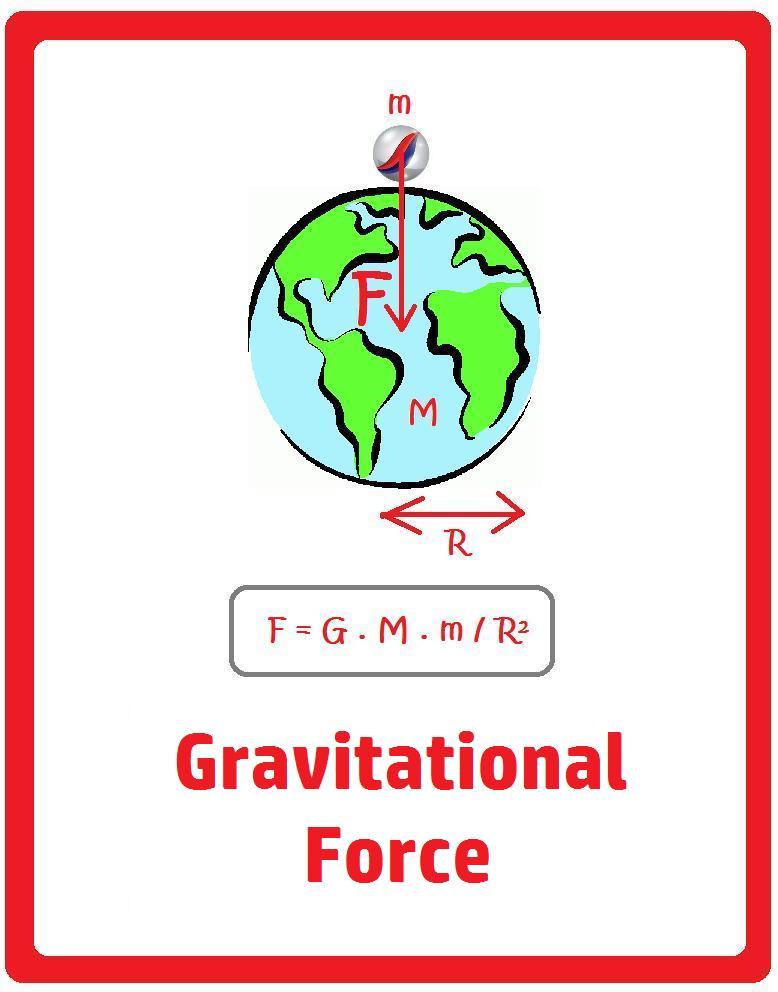
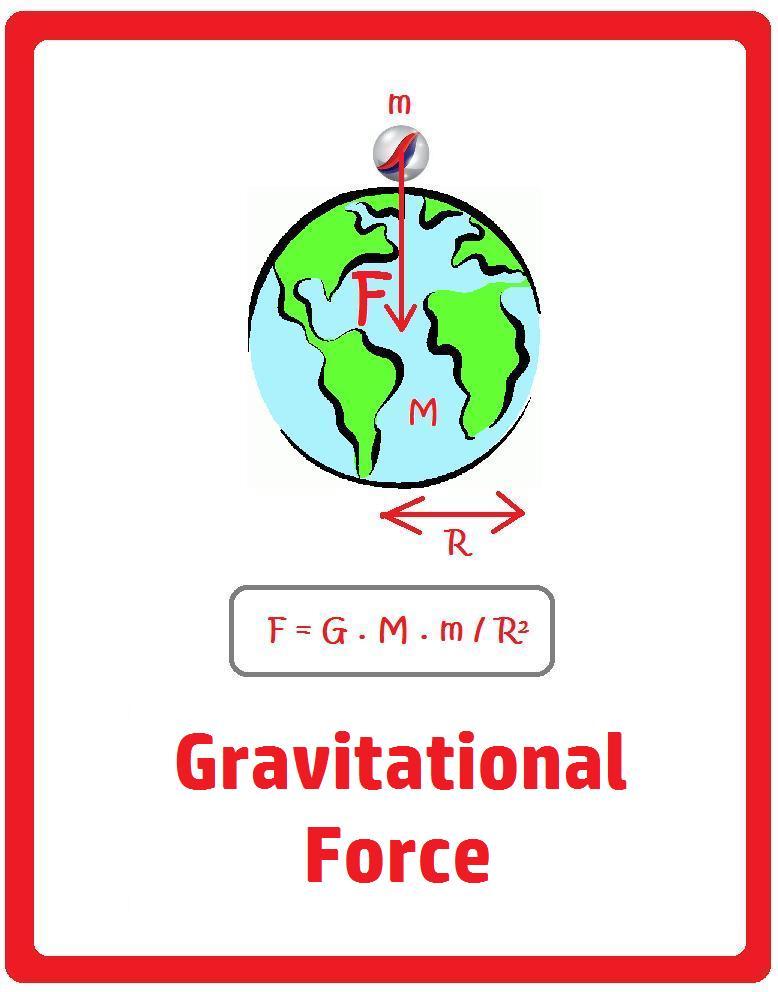
Let's recall the Gravitational Force formula:

\boxed {F = G\ \frac{m_1 m_2}{R^2}}

<em>where:</em>

<em>F = Gravitational Force ( N )</em>

<em>G = Gravitational Constant ( = 6.67 × 10⁻¹¹ Nm²/kg² )</em>

<em>m = mass of object ( kg )</em>

<em>R = distance between object ( m )</em>

Let us now tackle the problem!

\texttt{ }

<u>Given:</u>

Radius of The Earth = R = 6378 km = 6378000 m

Gravitational Constant = G = 6.67 × 10⁻¹¹ Nm²/kg²

Gravitational Acceleration = g = 9.90 m/s²

<u>Asked:</u>

Average Density of the Earth = ρ = ?

<u>Solution:</u>

<em>Firstly , we will calculate the mass of the Earth as follows:</em>

g = G \frac{M}{R^2}

\boxed {M = \frac{g R^2}{G} } → <em>Equation 1</em>

\texttt{ }

<em>Next , we could calculate the average density of the Earth as follows:</em>

\rho = M \div V

\rho = (\frac{g R^2}{G}) \div ( \frac{4}{3} \pi R^3 )  ← <em>Equation 1</em>

\rho = \frac{3gR^2}{4 \pi G R^3}

\rho = \frac{3g}{4 \pi G R}

\rho = \frac{3 \times 9.80}{ 4 \pi \times 6.67 \times 10^{-11} \times 6378000 }

\boxed {\rho \approx 5.50 \times 10^3 \texttt{ kg/m}^3}

\texttt{ }

<h3>Learn more</h3>
  • Unit of G : brainly.com/question/1724648
  • Velocity of Runner : brainly.com/question/3813437
  • Kinetic Energy : brainly.com/question/692781
  • Acceleration : brainly.com/question/2283922
  • The Speed of Car : brainly.com/question/568302

\texttt{ }

<h3>Answer details</h3>

Grade: High School

Subject: Mathematics

Chapter: Gravitational Force

Andre45 [30]2 years ago
4 0

Answer:

5501 kg/m^3

Explanation:

The value of g at the Earth's surface is

g=\frac{GM}{R^2}=9.70 m/s^2

where G is the gravitational constant

M is the Earth's mass

R=6378km = 6.378 \cdot 10^6 m is the Earth's radius

Solving the formula for M, we find the value of the Earth's mass:

M=\frac{gR^2}{G}=\frac{(9.81 m/s^2)(6.378\cdot 10^6 m)^2}{6.67\cdot 10^{-11}}=5.98\cdot 10^{24}kg

The Earth's volume is (approximating the Earth to a perfect sphere)

V=\frac{4}{3}\pi r^3 = \frac{4}{3}\pi (6.378\cdot 10^6 m)^3=1.087\cdot 10^{21} m^3

So, the average density of the Earth is

\rho = \frac{M}{V}=\frac{5.98\cdot 10^{24} kg}{1.087\cdot 10^{21} m^3}=5501 kg/m^3

You might be interested in
Where do incident rays that are parallel to the principal axis converge to after reflecting off a concave mirror?
morpeh [17]

Answer:

At focus

Explanation:

A concave mirror is converging in nature. In a mirror, concave in nature, the rays which are parallel to the principal axis are supposed to be coming from very large distances or we assume the source to be placed at infinity for such rays which are parallel to the principal axis.

These rays,  parallel to the principal axis, coming from infinity, converges at the focus of the mirror concave in nature after reflecting from the concave mirror

3 0
2 years ago
Which of the following most accurately represents John Dalton’s model of the atom? A. a tiny, solid sphere with an unpredictable
aleksley [76]
A and c are the answersss
6 0
2 years ago
A box slides down a frictionless plane inclined at an angle θ ¸ above the horizontal. The gravitational force on the box is dire
DedPeter [7]
<h2>Answer: at an angle \theta below the inclined plane. </h2>

If we draw the <u>Free Body Diagram</u> for this situation (figure attached), taking into account only the gravity force in this case, we will see the weight W of the block, which is directly proportional to the gravity acceleration g:  

W=m.g

This force is directed vertically at an angle \theta below the inclined plane, this means it has an X-component and a Y-component:

W=W_{X}+W_{Y}

W_{X}=m.g.cos(\theta)

W_{Y}=m.g.sin(\theta)

Therefore the correct option is c

6 0
2 years ago
Read 2 more answers
A common carnival ride, called a gravitron, is a large r = 11 m cylinder in which people stand against the outer wall. the cylin
Leya [2.2K]

Answer:

 v = 13.19 m / s

Explanation:

This problem must be solved using Newton's second law, we create a reference system where the x-axis is perpendicular to the cylinder and the Y-axis is vertical


X axis

       N = m a

Centripetal acceleration is

       a = v² / r

Y Axis

      fr -W = 0

      fr = W

The force of friction is

     fr = μ N

Let's calculate

    μ (m v² / r) = mg

   μ v² / r = g

   v² = g r / μ

   v = √ (g r /μ)

   v = √ (9.8 11 / 0.62)

   v = 13.19 m / s

7 0
2 years ago
When jumping, a flea accelerates at an astounding 1000 m/s2 but over the very short distance of 0.50 mm. If a flea jumps straigh
Nadusha1986 [10]

Answer:

The flea reaches a height of 51 mm.

Explanation:

Hi there!

The equations of height and velocity of the flea are the following:

During the jump:

h = h0 + v0 · t + 1/2 · a · t²

v = v0 + a · t

While in free fall:

h = h0 + v0 · t + 1/2 · g · t²

v = v0 + g · t

Where:

h = height of the flea at time t.

h0 = initial height.

v0 = initial velocity.

t = time.

a = acceleration of the flea due to the jump.

v = velocity of the flea at time t.

g = acceleration due to gravity.

First, let's calculate how much time it takes the flea to reach a height of 0.0005 m. With that time, we can calculate the speed reached by the flea during the jump:

h = h0 + v0 · t + 1/2 · a · t²

If we place the origin of the frame of reference on the ground, then, h0 = 0. Since the flea is initially at rest, v0 = 0. Then:

h = 1/2 · a · t²

We have to find the value of t for which h = 0.0005 m:

0.0005 m = 1/2 · 1000 m/s² · t²

0.0005 m / 500 m/s² = t²

t = 0.001 s

Now, let's find the velocity reached in that time:

v = v0 + a · t   (v0 = 0)

v = a · t

v = 1000 m/s² · 0.001 s

v = 1.00 m/s

When the flea is at a height of 0.50 mm, its velocity is 1.00 m/s. This initial velocity will start to decrease due to the downward acceleration of gravity. When the velocity is zero, the flea will be at the maximum height. Using the equation of velocity, let's find the time at which the flea is at the maximum height (v = 0):

v = v0 + g · t

At the maximum height, v = 0:

0 m/s = 1.00 m/s - 9.81 m/s² · t

-1.00 m/s / -9.81 m/s² = t

t = 0.102 s

Now, let's find the height reached by the flea in that time:

h = h0 + v0 · t + 1/2 · g · t²

h = 0.0005 m + 1.00 m/s · 0.102 s - 1/2 · 9.81 m/s² · (0.102 s)²

h = 0.051 m

The flea reaches a height of 51 mm.
5 0
2 years ago
Other questions:
  • A person drives an automobile with a mass of 450 kilograms at a velocity of 26 meters per second. The driver accelerates to a ve
    5·1 answer
  • Tom has built a large slingshot, but it is not working quite right. He thinks he can model the slingshot like an ideal spring wi
    15·1 answer
  • One end of a piano wire is wrapped around a cylindrical tuning peg and the other end is fixed in place. The tuning peg is turned
    11·1 answer
  • Seat belts and air bags save lives by reducing the forces exerted on the driver and passengers in an automobile collision. Cars
    14·1 answer
  • Tendons are strong elastic fibers that attach muscles to bones. To a reasonable approximation, they obey Hooke's law. In laborat
    14·1 answer
  • -A coconut falls out of a tree 12.0 m above the ground and hits a bystander 3.00 m tall on the top of the head. It bounces back
    11·1 answer
  • A gas laser has a cavity length of 1/3 m and a single oscillation frequency of 9.0 x 10¹⁴ Hz. What is the cavity mode number?
    13·1 answer
  • The constant pressure molar heat capacity, C_{p,m}C p,m ​ , of nitrogen gas, N_2N 2 ​ , is 29.125\text{ J K}^{-1}\text{ mol}^{-1
    12·1 answer
  • To fully describe the photoelectric effect, scientists must consider which of
    9·1 answer
  • According to the nebular theory of solar system formation, what key difference in their early formation explains why the jovian
    13·1 answer
Add answer
Login
Not registered? Fast signup
Signup
Login Signup
Ask question!