answer.
Ask question
Login Signup
Ask question
All categories
  • English
  • Mathematics
  • Social Studies
  • Business
  • History
  • Health
  • Geography
  • Biology
  • Physics
  • Chemistry
  • Computers and Technology
  • Arts
  • World Languages
  • Spanish
  • French
  • German
  • Advanced Placement (AP)
  • SAT
  • Medicine
  • Law
  • Engineering
Neko [114]
2 years ago
3

Model rocket engines are rated by their thrust force and by the impulse they provide. You can use this information to determine

the time interval at which the engines fire. Two rocket engines provide the same impulse. The first engine provides 6 N of thrust for 2 s; the second provides 4 N of thrust.
For how long does this second engine fire?

Physics
2 answers:
garri49 [273]2 years ago
7 0

Answer: 3 seconds

Explanation:

Since they provide the same impulse,

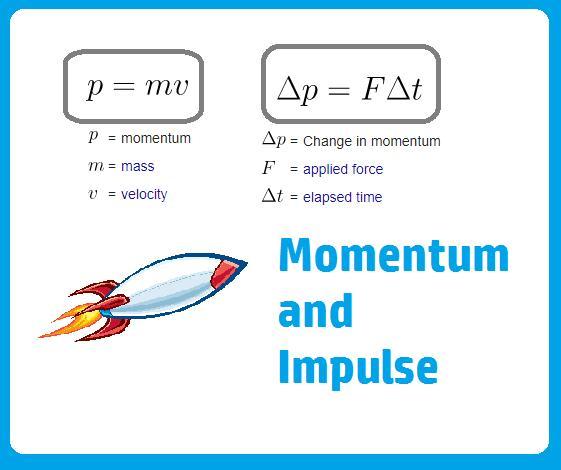
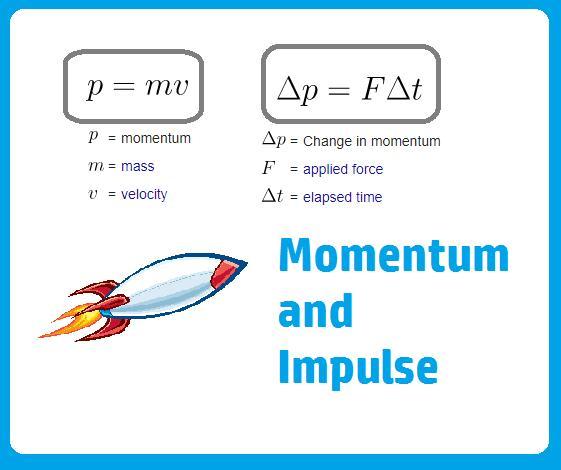
Impulse= Ft

F1 = 6N

t1 = 2s

F2= 4N

t2= ?

F1= Force of first engine

t1= time elapsed by first engine

F2= force of second engine

t2= time elapsed by second engine

F1t1 = F2t2

6 × 2 = 4t2

t2= 12/4

t2 = 3 seconds

lana [24]2 years ago
5 0

This second engine fires for 3 s

\texttt{ }

<h3>Further explanation</h3>

Acceleration is rate of change of velocity.

\large {\boxed {a = \frac{v - u}{t} } }

\large {\boxed {d = \frac{v + u}{2}~t } }

<em>a = acceleration (m / s²)v = final velocity (m / s)</em>

<em>u = initial velocity (m / s)</em>

<em>t = time taken (s)</em>

<em>d = distance (m)</em>

Let us now tackle the problem!

\texttt{ }

<u>Given:</u>

thrust of first engine = F₁ = 6 N

elapsed time of first engine = t₁ = 2 s

thrust of second engine = F₂ = 4 N

<u>Asked:</u>

elapsed time of second engine = t₂ = 2 s

<u>Solution:</u>

We will use Newton's Law of Motion to solve this problem as follows:

\Sigma F = ma

\Sigma F = m \Delta v \div t

\Sigma F = I \div t

\boxed {I = \Sigma F \times t} → <em>Impulse Formula</em>

\texttt{ }

<em>Two rocket engines provide the same impulse :</em>

I_1 = I_2

\Sigma F_1 \times t_1 = \Sigma F_2 \times t_2

6 \times 2 = 4 \times t_2

12 = 4 \times t_2

t_2 = 12 \div 4

\boxed {t_2 = 3 \texttt{ s}}

\texttt{ }

<h3>Learn more</h3>
  • Velocity of Runner : brainly.com/question/3813437
  • Kinetic Energy : brainly.com/question/692781
  • Acceleration : brainly.com/question/2283922
  • The Speed of Car : brainly.com/question/568302
  • Average Speed of Plane : brainly.com/question/12826372
  • Impulse : brainly.com/question/12855855
  • Gravity : brainly.com/question/1724648

\texttt{ }

<h3>Answer details</h3>

Grade: High School

Subject: Physics

Chapter: Dynamics

You might be interested in
For which of the following problems would a scientist most likely use carbon-14?
spayn [35]

Answer:

To calculate the age of a piece of bone

Explanation:

Carbon 14 is an isotope of carbon that is unstable and decays into Nitrogen 14 by emitting an electron. The decay rate of radioactive material is  normally expressed in terms of its "half-life" (the time required by half the radioactive nuclei of a sample to undergo radioactive decay). The nice thing about carbon 14 is that its "half-life" is about 5730 years, which gives a nice reference to measure the age of fossils that are some thousand years old.

Carbon 14 dating is used to determine the age of objects that have been living organisms long ago. They measure how much carbon 14 is left in the object after years of decaying without having exchange with the ambient via respiration, ingestion, absorption, etc. and therefore having renewed the normal amount of carbon 14 that is in the ambient.

A rock is not a living organism, so its age cannot be determined by carbon 14 dating.

3 0
2 years ago
A composite wall separates combustion gases at 2400°C from a liquid coolant at 100°C, with gas and liquid-side convection coeffi
evablogger [386]

Answer:

\text{heat loss} = 24864.05 \  W/m^2

Explanation:

If

  • T_1, T_2 are temperatures of gasses and liquid in Kelvins,
  • t_1 and t_2 are thicknesses of gas layer and steel slab in meters,
  • h_1, h_2 are convection coefficients gas and liquid in W/m^2 \cdot K,
  • R_c is the contact resistance in m^2 \cdot K/W,
  • and k_1, k_2 are thermal conductivities of gas and steel in W/m \cdot K,

then: part(a):

\text{heat loss } =  \frac{T_1 - T_2} { \frac{1}{h_1} + \frac{t_1}{t_2} + R_c + \frac{t_2}{k_2} + \frac{1}{h_2}}

using known values:

\text {heat loss} = 2486.05 W/m^2

part(b): Using the rate equation :

\text {heat loss} = h_1 (T_1 - T_{s1})

the surface temperature T_{s1} = 1678.438 \ K

and T_{c1} = T_{s1} - \frac {t_1 (\text{heat loss})}{k_1} = 1664.560 \ K

Similarly

T_{c2} = T_{c1} - R_c (\text{heat loss}) = 421.357 \ K

T_{s2} = T_{c2} - \frac {t_2 (\text{heat loss})}{ k_2} = 397.864 \ K

The temperature distribution is shown in the attached image

3 0
2 years ago
What is the final temperature when a 3.0 kg gold bar at 99 0C is dropped into 0.22 kg of water at 25oC?
slavikrds [6]

I will post my work, but is that 99 degrees Celsius and 25 degrees Celsius?


All you have to do is plug in the initial temperature for gold where it says Tg and the initial temperature for the water where it says Tw and then plug that in and you will have your answer.

8 0
2 years ago
José is pinned against the walls of the Rotor, a ride with a radius of 3.00 meters that spins so fast that the floor can be remo
zaharov [31]

r = radius of the circle of the ride = 3.00 meters

v = linear speed of the person during the ride = 17.0 m/s

m = mass of the person in angular motion in the ride

L = angular momentum of the person in the ride = 3570 kg m²/s

Angular momentum is given as

L = m v r

inserting the values

3570 kg m²/s = m (17 m/s) (3.00 m)

m = 3570 kg m²/s/(51 m²/s)

m = 7 kg

hence the mass comes out to be 7 kg


8 0
2 years ago
Determine the cutting force f exerted on the rod s in terms of the forces p applied to the handles of the heavy-duty cutter.
Alexus [3.1K]
If you use the next formula with the data given in the exercise you are asking:
Ey[3.4] - F[1.7] = 0 
<span>Ey = F/2 
</span>and after that what you need to do is sum the moments of the handle about D to zero asumming it is a positive moment and we proceed like this
Ey[1.5sin19] – P[21 – 1.5sin19] = 0 
<span>(F/2)[1.5sin19] = P[21 – 1.5sin19] </span>
<span>F = 2P[21 – 1.5sin19] / [1.5sin19] </span>
<span>F = 84P </span>

5 0
2 years ago
Read 2 more answers
Other questions:
  • A cart moves along a track at a velocity of 3.5 cm/s. when a force is applied to the cart, its velocity increases to 8.2 cm/s. i
    15·2 answers
  • For an object starting from rest and accelerating with constant acceleration, distance traveled is proportional to the square of
    8·1 answer
  • Describe a well-known hypothesis that was discarded because it was found to be untrue.earth-centered model of the universe. the
    6·1 answer
  • A government agency estimated that air bags have saved over 14,000 lives as of April 2004 in the United States. (They also state
    13·1 answer
  • Consider three identical metal spheres, A, B, and C. Sphere A carries a charge of -2.0 µC; sphere B carries a charge of -6.0 µC;
    6·1 answer
  • you are sitting on a beach and a wave strikes the shore every 10 seconds. a surfer tells you that these waves travel at a speed
    6·1 answer
  • HELP ME ASAP!!!!! A patient in the hospital is undergoing testing. The patient's brain is sending electrical signals to motor ne
    7·1 answer
  • A turntable of radius R1 is turned by a circular rubberroller of radius R2 in contact with it at their outeredges. What is the r
    7·1 answer
  • Irrigation channels that require regular flow monitoring are often equipped with electromagnetic flowmeters in which the magneti
    13·1 answer
  • 010) Identify the true statement. Group of answer choices The height of waves is determined by wind strength and fetch. Wave bas
    6·1 answer
Add answer
Login
Not registered? Fast signup
Signup
Login Signup
Ask question!