answer.
Ask question
Login Signup
Ask question
All categories
  • English
  • Mathematics
  • Social Studies
  • Business
  • History
  • Health
  • Geography
  • Biology
  • Physics
  • Chemistry
  • Computers and Technology
  • Arts
  • World Languages
  • Spanish
  • French
  • German
  • Advanced Placement (AP)
  • SAT
  • Medicine
  • Law
  • Engineering
Artist 52 [7]
2 years ago
12

What is the mass of silver in 3.4 g AgNo3?

Chemistry
1 answer:
Kruka [31]2 years ago
4 0
The answer is 2.2 g.

First, we need to calculate a molar mass (M) of AgNO₃<span>. The molar mass is a mass of 1 mole of a substance. It is the sum of relative atomic masses (Ar), which are masses of atoms of the elements.
Relative atomic mass of Ag: Ar(Ag) = 108 g
Relative atomic mass of N: Ar(N) = 14 g
Relative atomic mass of O: Ar(O) = 16 g
So, the molar mass of </span>AgNO₃ is:
M(AgNO₃) = Ar(Ag) + Ar(N) + 3Ar(O) = 108 + 14 + 3*16 = 170 g

Now, we can make a proportion:
If 108 g of Ag is in 170 g of AgNO₃, how many silver will be in 3.4 g of AgNO₃:
108 : 170 = x : 3.4

After crossing the products:
x = 108 × 3.4 ÷ 170 = 2.16 g ≈ 2.2 g
You might be interested in
Latent heat of vaporization is used to (1 Point) (a) overcome the forces of attraction between molecules in solid-state. (b) inc
Reil [10]

Answer:

Not sure what the answer is

Explanation:

I did this a while ago and dont remember sorry

4 0
2 years ago
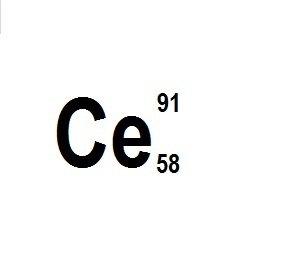
What is the symbol for the isotope of 58 co that possesses 33 neutrons?
Leona [35]
Element with an atomic number of 58 is actually Cerium, so the symbol should be Ce, not Co because that is Cobalt which has an atomic number of 27. With that being said, the notation for isotopes is the symbol of the element with a superscript and a subscript that are aligned. The superscript represents the mass number.

Mass number = protons + neutrons = 58 + 33 = 91

The subscript is the atomic number which is 58. The notation is written in the picture attached.

6 0
2 years ago
Read 2 more answers
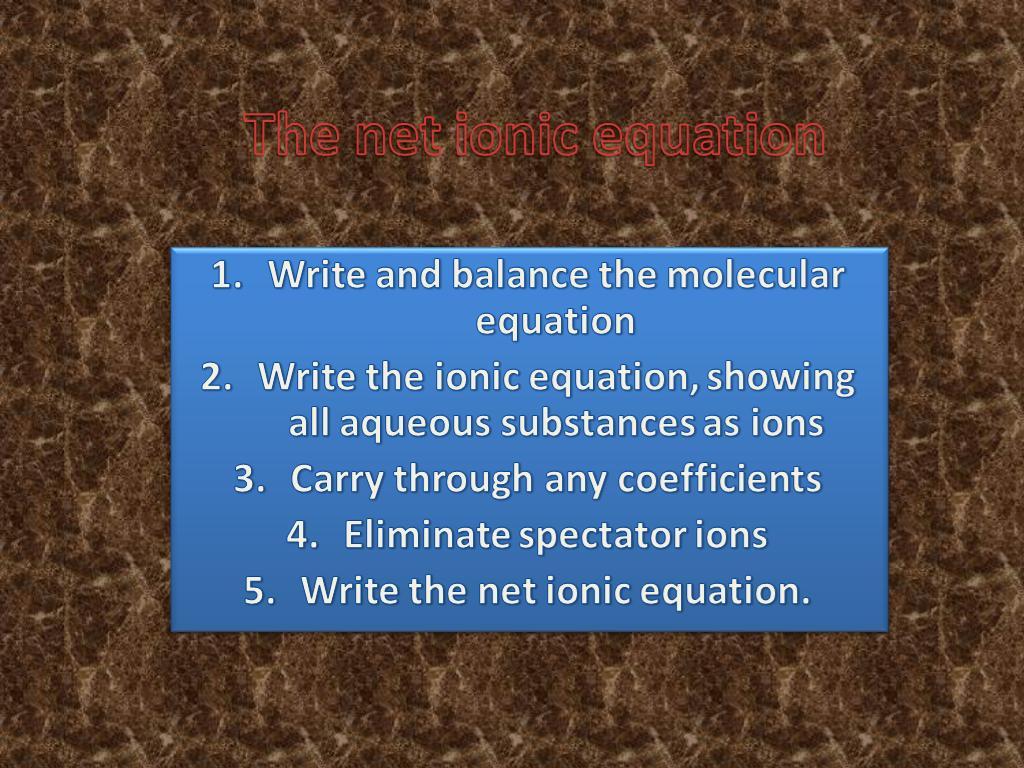
Enter the net ionic equation representing solid chromium (iii) hydroxide reacting with nitrous acid. express your answer as a ba
Colt1911 [192]

The net ionic equation of chromium (iii) hydroxide reacting with nitrous acid:

Cr(OH)₃ (s) + 3H⁺ (aq) ⇒ Cr³⁺ (aq) + 3H₂O (l)

<h3>Further explanation</h3>

The electrolyte in the solution produces ions.

The equation of a chemical reaction can be expressed in the equation of the ions

For strong electrolytes (the ionization rate = 1) is written in the form of separate ions, while the weak electrolyte (degree of ionization <1) is still written as an un-ionized molecule

In the ion equation, there is a spectator ion that is the ion which does not change (does not react) because it is present before and after the reaction

When these ions are removed, the ionic equation is called the net ionic equation

For gases and solids including water (H₂O) can be written as an ionized molecule

So only the dissolved compound is ionized ((expressed in symbol aq)

From the problem, it is stated that chromium (iii) hydroxide reacting with nitrous acid.

Reactions that occur:

Cr(OH)₃ (s) + 3HNO₂ (aq) ⇒ Cr(NO₂)₃ (aq) + 3H₂O (l)

Cr (OH)₃ solid form that does not decompose in the form of ions, as well as water (H₂O)

So the ionic equation becomes:

Cr(OH)₃ (s) + 3H⁺ (aq) + 3NO₂⁻ (aq) ⇒ Cr³⁺ (aq) + 3NO₂⁻ (aq) + 3H₂O (l)

There is an ion spectator that is 3NO₂⁻, so that if it is removed a net ionic equation will be formed:

Cr(OH)₃ (s) + 3H⁺ (aq) ⇒ Cr³⁺ (aq) + 3H₂O (l)

<h3>Learn more</h3>

the net ionic equation

brainly.com/question/11854070

brainly.com/question/10280219

brainly.com/question/9830467

Keywords: the net ionic equation, an ion spectator

5 0
2 years ago
Read 2 more answers
As a sodium atom is oxidized the number of protons in its nucleus
lara31 [8.8K]

Answer:

The proton remains the same.

Explanation:

Oxidation is simply defined as the loss of electron(s) during a chemical reaction either by an atom, molecule or ion.

Oxidation is strictly on the transfer of electron(s) and not proton.

A metal that undergoes oxidation still has its protons intact otherwise it will not be called the ion of the metal since atomic number is called the proton number.

Sodium (Na) undergoes oxidation as follow:

Na —> Na+ + e-

Na is called sodium metal.

Na+ is called sodium ion.

Na has 11 electrons and 11 protons

Na+ has 10 electrons and 11 protons

From the above illustration, we can see that the protons of Na and Na+ are the same why their electrons differ because Na+ indicates that 1 electron has been loss or transferred.

6 0
2 years ago
The total number of sodium atoms in 46.0 grams of solution is?
USPshnik [31]
Molar mass Na = 23g/mol
46g = 456/2 = 2mol
1mol = 6.022*10^23 atoms
2mol = 2*6.022*10623
= 1.204*10^24 atoms
7 0
2 years ago
Read 2 more answers
Other questions:
  • Are The Reactions Of Ordinary Molecular Hydrogen Slow Or Rapid ? Why ?
    10·1 answer
  • You are asked to go into the lab and prepare an acetic acid - sodium acetate buffer solution with a ph of 4.00  0.02. what mola
    12·1 answer
  • Reacting 35.4 ml of 0.220 m agno3 with 52.0 ml of 0.420 m k2cro4 results in what mass of solid formed
    6·1 answer
  • A student made the Lewis dot diagram of a compound as shown. Mg is written with two dots shown on its top. Cl is written on the
    8·2 answers
  • How much heat is required to raise the temperature of 670g of water from 25.7"C to 66,0°C? The specific heat
    13·1 answer
  • What is the theoretical yield of CuS when 31.8g of Cu(s) is heated with 50.0g of S? (Asume only CuS is produced in the reaction)
    6·2 answers
  • Write an equation to help Stacy find the gravitational force on an object if she knows the mass. In the equation, let W represen
    13·2 answers
  • Gasoline has a density of 0.749 g/mL. There are 454 grams in a pound and 3.7854 litres in a gallon. How many pounds does 19.2 ga
    15·1 answer
  • A sample of gas initially occupies 3.35 L at a pressure of 0.950 atm at 13.0oC. What will the volume (in L) be if the temperatur
    15·1 answer
  • The reading on a speedometer represents the average velocity of the car. True False
    15·1 answer
Add answer
Login
Not registered? Fast signup
Signup
Login Signup
Ask question!