answer.
Ask question
Login Signup
Ask question
All categories
  • English
  • Mathematics
  • Social Studies
  • Business
  • History
  • Health
  • Geography
  • Biology
  • Physics
  • Chemistry
  • Computers and Technology
  • Arts
  • World Languages
  • Spanish
  • French
  • German
  • Advanced Placement (AP)
  • SAT
  • Medicine
  • Law
  • Engineering
deff fn [24]
2 years ago
5

Each Excedrin tablet contains 250 mg aspirin (ACE), 250 mg of acetaminophen (ACE), and 65 mg of caffeine (CAF). Calculate the th

eoretical percent (%) recovery of each component using the mass of one tablet (675 mg). (a) ASP (b) ACE (c) CAF (250 mg / xx mg tablet) x 100% a)ASP: 37.04%b)ACE: 37.04%c)CAF: 9.63%
Chemistry
1 answer:
yawa3891 [41]2 years ago
3 0

Answer:

a) 37.04%  b) 37.04%  c) 9.63%

Explanation:

The theoretical percent recovery (Tr), is the total percentage of each compound in the sample. Depending on the technique used to recovery the compounds, the percent recovery will be less than the theoretical, because no technique is 100% efficient.

So, to calculate the theoretical, it will be the mass of the compound divided by the mass of the sample multiplied by 100%.

a) Tr = (250 mg)/(675 mg) * 100%

Tr = 37.04%

b) Tr = (250 mg)/(675 mg) * 100%

Tr = 37.04%

c) Tr = (65 mg)/(675 mg) * 100%

Tr = 9.63%

You might be interested in
The accepted value is 1.43. Which correctly describes this student’s experimental data?
Natalija [7]

Answer:

Neither accurate nor precise

Explanation:

The values were not near or even the same as the accepted value thus making it neither accurate nor precise.

4 0
2 years ago
Read 2 more answers
14) The central iodine atom in the ICl4- ion has __________ nonbonded electron pairs and __________ bonded electron pairs in its
masha68 [24]

Answer:

Two non bonded electron pairs and four bonded electron pairs

Explanation:

An image of the compound as obtained from chemlibretext is attached to this answer.

The ion ICl4- ion, is an AX4E2 ion. This implies that there are four bond pairs and two lone pairs of electrons. As expected, the shape of the ion is square planar since the lone pairs are found above and below the plane of the square. This is clear from the image attached.

7 0
2 years ago
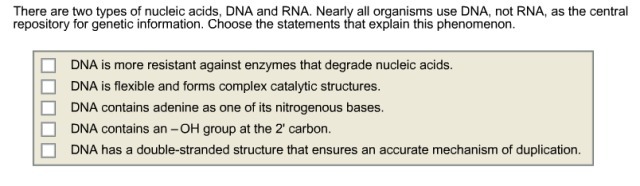
There are two types of nucleic acids, dna and rna. nearly all organisms use dna, not rna, as the central repository for genetic
Leya [2.2K]
Found the choices. Pls see attachment. 

The statements that explains this phenomenon are:
1) DNA contains adenine as one of its nitrogenous bases.
2) DNA has a double-stranded structure that ensures an accurate mechanism of duplication.

6 0
2 years ago
7. How many moles of argon are there in 20.0 L, at 25 degrees Celsius and 96.8 kPa?
suter [353]
<h3>Answer:</h3>

              0.8133 mol

<h3>Solution:</h3>

Data Given:

                 Moles  =  n  =  ??

                 Temperature  =  T  =  25 °C + 273.15  =  298.15 K

                  Pressure  =  P  =  96.8 kPa  =  0.955 atm

                  Volume  =  V  =  20.0 L

Formula Used:

Let's assume that the Argon gas is acting as an Ideal gas, then according to Ideal Gas Equation,

                  P V  =  n R T

where;  R  =  Universal Gas Constant  =  0.082057 atm.L.mol⁻¹.K⁻¹

Solving Equation for n,

                  n  =  P V / R T

Putting Values,

                  n  =  (0.955 atm × 20.0 L) ÷ (0.082057 atm.L.mol⁻¹.K⁻¹ × 298.15 K)

                 n  =  0.8133 mol

4 0
2 years ago
Read 2 more answers
BH+ClO4- is a salt formed from the base B (Kb = 1.00e-4) and perchloric acid. It dissociates into BH+, a weak acid, and ClO4-, w
Len [333]

Answer:

The pH of 0.1 M BH⁺ClO₄⁻ solution is <u>5.44</u>

Explanation:

Given: The base dissociation constant: K_{b} = 1 × 10⁻⁴, Concentration of salt: BH⁺ClO₄⁻ = 0.1 M

Also, water dissociation constant: K_{w} = 1 × 10⁻¹⁴

<em><u>The acid dissociation constant </u></em>(K_{a})<em><u> for the weak acid (BH⁺) can be calculated by the equation:</u></em>

K_{a}. K_{b} = K_{w}    

\Rightarrow K_{a} = \frac{K_{w}}{K_{b}}

\Rightarrow K_{a} = \frac{1\times 10^{-14}}{1\times 10^{-4}} = 1\times 10^{-10}

<em><u>Now, the acid dissociation reaction for the weak acid (BH⁺) and the initial concentration and concentration at equilibrium is given as:</u></em>

Reaction involved: BH⁺  +  H₂O  ⇌  B  +  H₃O+

Initial:                     0.1 M                    x         x            

Change:                   -x                      +x       +x

Equilibrium:           0.1 - x                    x         x

<u>The acid dissociation constant: </u>K_{a} = \frac{\left [B \right ] \left [H_{3}O^{+}\right ]}{\left [BH^{+} \right ]} = \frac{(x)(x)}{(0.1 - x)} = \frac{x^{2}}{0.1 - x}

\Rightarrow K_{a} = \frac{x^{2}}{0.1 - x}

\Rightarrow 1\times 10^{-10} = \frac{x^{2}}{0.1 - x}

As, x

\Rightarrow 0.1 - x = 0.1

\therefore 1\times 10^{-10} = \frac{x^{2}}{0.1 }

\Rightarrow x^{2} = (1\times 10^{-10})\times 0.1 = 1\times 10^{-11}

\Rightarrow x = \sqrt{1\times 10^{-11}} = 3.16 \times 10^{-6}

<u>Therefore, the concentration of hydrogen ion: x = 3.6 × 10⁻⁶ M</u>

Now, pH = - ㏒ [H⁺] = - ㏒ (3.6 × 10⁻⁶ M) = 5.44

<u>Therefore, the pH of 0.1 M BH⁺ClO₄⁻ solution is 5.44</u>

5 0
2 years ago
Other questions:
  • In which of these statements are protons, electrons, and neutrons correctly compared?
    6·2 answers
  • What is the mass of 3.0 x 10^23 atoms of neon
    8·1 answer
  • At 73.0 ∘c , what is the maximum value of the reaction quotient, q, needed to produce a non-negative e value for the reaction so
    11·1 answer
  • You are performing an experiment in your lab. To compare with other experiments you need your results to be in moles. During you
    12·2 answers
  • a) (1 point) Build anthracene, optimize its geometry and examine its structure. Describe its shape. b) (1 point) Measure the C-C
    13·1 answer
  • Complete the following equation of nuclear transmutation.
    14·1 answer
  • A 14.3-cm3 sample of tin has a mass of 0.104 kg.
    14·1 answer
  • Cl2 and N2 react according to the following equation 3Cl2(g) + N2(g) rightarrow 2NCl3(g) If 4 L of a stoichiometric mixture of c
    11·1 answer
  • Succinic acid is a substance produced by lichens, Chemical analysis indicates it is composed of 40.68% carbon, 5.08% hydrogen, a
    6·1 answer
  • Complete Table G to view the effect of surface area on the rate of reaction by transferring your data from Tables D and E to Tab
    15·1 answer
Add answer
Login
Not registered? Fast signup
Signup
Login Signup
Ask question!