answer.
Ask question
Login Signup
Ask question
All categories
  • English
  • Mathematics
  • Social Studies
  • Business
  • History
  • Health
  • Geography
  • Biology
  • Physics
  • Chemistry
  • Computers and Technology
  • Arts
  • World Languages
  • Spanish
  • French
  • German
  • Advanced Placement (AP)
  • SAT
  • Medicine
  • Law
  • Engineering
Harlamova29_29 [7]
2 years ago
6

How many moles are 25.0 mL of benzene (density 0.876 g/mL)?

Chemistry
1 answer:
Ainat [17]2 years ago
6 0

Answer:

There are 0.281 moles of benzene.

Explanation:

The density (δ) is the ratio between mass and volume of a compound. We obtain the mass of benzene using the density formula, then we calculate the weight of 1 mole of benzene (C6H6).

δ=m/v--> m=δxV= 0,876 g/ml x 25, 0 ml= 21, 9 g

Weight 1 mol C6H6= 6x(Weight C)+ 6x(Weight H) = 6 x 12 g+ 6 x 1g=78g/mol

78 g-----1 mol C6H6

21,9g-----x= (21, 9 g mol x1 mol C6H6)/ 78 g= <em>0,28076923 mol</em>

You might be interested in
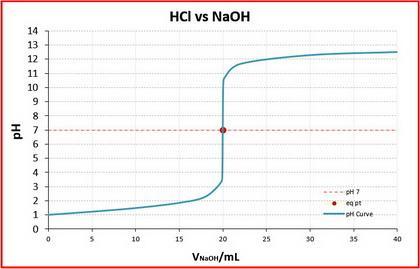
(g) On the graph in part (d) , carefully draw a curve that shows the results of the second titration, in which the student titra
atroni [7]

Answer:

Here's what I get  

Explanation:

(g) Titration curves

I can't draw two curves on the same graph, but I can draw two separate curves for you.  

The graph in part (d) had an equivalence point at 20 mL.

In the second titration, the NaOH was twice as concentrated, so the volume to equivalence point would be half as much — 10 mL.

The two titration curves are below.

(h) Evidence of reaction

HCl and NaOH are both colourless.

They don't  evolve a gas or form a precipitate when they react.

The student probably noticed that the Erlenmeyer flask warmed up — a sign of a chemical change.

4 0
2 years ago
A solution is made by dissolving 9.74 g of sodium sulfate in water to a final volume of 165 mL of solution. What is the weight/w
MatroZZZ [7]

Answer: The weight/weight % or percent by mass of the solute is 5.41 %.

Explanation:

Mass of the sodium sulfate,w = 9.74 g

Volume of the water = 165 mL

Density of the water = 1 g/mL

Density=1 g/mL=\frac{\text{Mass of water}}{\text{Volume of water}}

Mass of the water =1 g/mL\times 165 mL=165 g

Mass of the solution, W:

Mass of solute + Mass of solvent =9.47 g + 165 g=174.47 g

w/w\%=\frac{w\times 100}{W}=\frac{9.45 g\times 100}{174.47 g}=5.41 \%

The weight/weight % or percent by mass of the solute is 5.41 %.


8 0
2 years ago
According to reference table adv-10, which reaction will take place spontaneously?
olga_2 [115]
Missing table!! write the elements with the first letter of the symbol with Upper Caps letters!!!

http://www.chemeddl.org/services/moodle/media/QBank/GenChem/Tables/EStandardTable.htm

<span>Ni2+ +Pb(s) → Ni(s) + Pb2+
</span>The potential of the oxidation of Pb(s) --> Pb2+(aq) is 0.126 V 
The potential of the reduction go Ni2+(aq) --> Ni(s) is -0.25 V 

<span>Add the two together and the potential for the reaction is -0.124 V (NO SPONTANEOUS THE SIGN IS NEGATIVE)

</span><span>au3+ + al(s) → au(s) + al3+Au3+(aq) ->   Au(s)  +1.5 VAl -> Al3+  +1.66VV= 3.16 (SPONTANEOUS THE SIGN OF THE PONTENTIAL IS POSITIVE)</span><span>Sr2+ + Sn(s) → Sr(s) + Sn2+
</span>
Sr2+(aq) + 2 e–  <span>  Sr(s)  V= -2.89V
</span>Sn -> Sn2+ V= 0.14 V
V= -2.75 V (no spontaneous)

<span>Fe2+ + Cu(s) → Fe(s) + Cu2+
</span>Fe2+(aq) + 2 e–<span>  </span><span>  Fe(s)  V= -0.44 V
</span>Cu -> C2+  V = - 0.337V

V= - 0.777V (no spontaneous)
5 0
2 years ago
Gamma rays are often used to kill microorganisms in food, in an attempt to make the food safer. Some people contend that this ir
nikdorinn [45]

Answer:

b . Irradiated food is shown to not be radioactive.

Explanation:

If it can be proven that irradiated food is not radioactive, then it will effective dispute the idea that irradiated food are less safe to eat.

  • An irradiated food is one in which ionizing radiations have been employed to improve food quality.
  • Thus, bacteria and other food spoilers can be exterminated from the food.
  • Most irradiated food do not contain radiation and are fit for consumption.

If it can be proven, that this is true, then it will challenge the idea that irradiated foods are not safe.

4 0
1 year ago
The volume of a gas at 7.00°c is 49.0 ml. if the volume increases to 74.0 ml and the pressure is constant, what will the tempera
marshall27 [118]
Using charles law
v1/t1=v2/t2
v1=49ml
v2=74
t1=7+273=280k
t2=?
49/280=74/t2
0.175=74/t2  cross multiply
0.175t2=74
t2=74/0.175
t2=422k or 149celcius
8 0
2 years ago
Other questions:
  • If a runner completes a 10 kilometer race in 32.50 minutes, what is the 10.0 km pace in miles per hour? (1.609 km = 1 mile appro
    8·1 answer
  • You see a structural formula in which the symbols for elements are connected by a long dash. You can assume that the chemical bo
    5·2 answers
  • The Lewis structure for a chlorate ion, ClO3-, should show ____ single bond(s), ____ double bond(s), and ____ lone pair(s).
    15·2 answers
  • A standard solution of 0.243 m naoh was used to determine the concentration of a hydrochloric acid solution. if 46.33 ml of naoh
    8·1 answer
  • How many grams of the excess reagent are left over if 37.8g of cl2 react with 39.4 g of NaF?
    14·1 answer
  • Instrumental methods need only a microscopic sample to return an accurate result. Why is this so?
    7·1 answer
  • You run an electrolysis of NaCl and collect one of the products in a test tube. You realize later you did not label the test tub
    10·2 answers
  • Choose ALL TRUE statements about calorimetry from the choices below:
    10·1 answer
  • What type of ossification occurs to form an immovable joint
    15·1 answer
  • What information about a chemical solution can be inferred from knowing its pH value?
    10·1 answer
Add answer
Login
Not registered? Fast signup
Signup
Login Signup
Ask question!