answer.
Ask question
Login Signup
Ask question
All categories
  • English
  • Mathematics
  • Social Studies
  • Business
  • History
  • Health
  • Geography
  • Biology
  • Physics
  • Chemistry
  • Computers and Technology
  • Arts
  • World Languages
  • Spanish
  • French
  • German
  • Advanced Placement (AP)
  • SAT
  • Medicine
  • Law
  • Engineering
timama [110]
2 years ago
15

A sample of 5.36 liters of nitrogen gas are at -25c and 733 mmhg. What would be the volume at 128c and 1.5atm?

Chemistry
1 answer:
Marizza181 [45]2 years ago
6 0

Answer:

5.57 L  

Explanation:

- Use the formula formula for combined gas law.

- Convert C to K

- Convert mmHg to atm

- Put variables into formula.

- Hope this helped! If you would like me to show you the step by step process please let me know.

You might be interested in
How many grams o an ointment base must be added to 45 g o clobetasol (T EMOVAT E) ointment, 0.05% w/w, to change its strength to
saw5 [17]

Answer:

Drug calculation

If we have 45g of clobetasol  = 0.05%w/w

Then what mass in g of clobetasol is in 0.03%w/w = 45 x 0.03/0.05 =27g

It means that 27g of clobetasol must be added to change the drug strength to 0.03% w/w

3 0
2 years ago
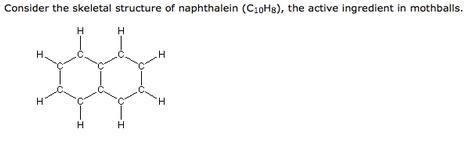
Consider the skeletal structure of naphthalein (C10H8), the active ingredient in mothballs. How many double bonds must be added
Greeley [361]

Answer:

four (4)

Explanation:

Naphthalein is an organic compound with formula C 10H 8. It is the simplest polycyclic aromatic hydrocarbon, and is a white crystalline solid with a characteristic odor that is detectable at concentrations as low as 0.08 ppm by mass. As an aromatic hydrocarbon, naphthalene's structure consists of a fused pair of benzene rings. It is best known as the main ingredient of traditional mothballs.

The molecule is planar, like benzene. Unlike benzene, the carbon–carbon bonds in naphthalene are not of the same length. The bonds C1−C2, C3−C4, C5−C6 and C7−C8 are about 1.37 Å (137 pm) in length, whereas the other carbon–carbon bonds are about 1.42 Å (142 pm) long. This difference, established by X-ray diffraction is consistent with the valence bond model in naphthalene and in particular, with the theorem of cross-conjugation. This theorem would describe naphthalene as an aromatic benzene unit bonded to a diene but not extensively conjugated to it (at least in the ground state), which is consistent with two of its three resonance structures.

Because of this resonance, the molecule has bilateral symmetry across the plane of the shared carbon pair, as well as across the plane that bisects bonds C2-C3 and C6-C7, and across the plane of the carbon atoms. Thus there are two sets of equivalent hydrogen atoms: the alpha positions, numbered 1, 4, 5, and 8, and the beta positions, 2, 3, 6, and 7. Two isomers are then possible for mono-substituted naphthalenes, corresponding to substitution at an alpha or beta position. Bicyclo[6.2.0]decapentaene is a structural isomer with a fused 4–8 ring system.

Therefore four (4) double bonds will be added to give each carbon atom an octet structure.

8 0
2 years ago
An ice cube measuring 5.80 cm by 5.80 cm by 5.80 cm has a density of 0.917 g/mL What is the mass?
OLga [1]

Answer: 178.9 g

Explanation:

Density = \frac{mass}{volume in mL}

find volume of the cube: (5.80 cm) (5.80 cm) (5.80cm) = 195.112 cm³

1.0 cm³ = 1.0 mL

so 195.112 cm³ = 195.112 mL

plug value into density equation:

0.917 g/mL = (mass) / (195.112 mL)

and solve for mass!

3 0
2 years ago
Calculate δg o for each reaction using δg of values:(a) h2(g) + i2(s) → 2hi(g) kj (b) mno2(s) + 2co(g) → mn(s) + 2co2(g) kj (c)
steposvetlana [31]
Part (a) :
H₂(g) + I₂(s) → 2 HI(g)
From given table:
G HI = + 1.3 kJ/mol
G H₂ = 0
G I₂ = 0
ΔG = G(products) - G(reactants) = 2 (1.3) = 2.6 kJ/mol

Part (b):
MnO₂(s) + 2 CO(g) → Mn(s) + 2 CO₂(g)
G MnO₂ = - 465.2
G CO = -137.16
G CO₂ = - 394.39
G Mn = 0
ΔG = G(products) - G(reactants) = (1(0) + 2*-394.39) - (-465.2 + 2*-137.16) = - 49.3 kJ/mol

Part (c):
NH₄Cl(s) → NH₃(g) + HCl(g)
ΔG = ΔH - T ΔS
ΔG = (H(products) - H(reactants)) - 298 * (S(products) - S(reactants))
      = (-92.31 - 45.94) - (-314.4) - (298 k) * (192.3 + 186.8 - 94.6) J/K
      = 176.15 kJ - 84.78 kJ = 91.38 kJ 


6 0
2 years ago
Read 2 more answers
The reaction pcl3(g)+cl2(g)←−→pcl5(g) has kp=0.0870 at 300 ∘c. a flask is charged with 0.50atmpcl3, 0.50atmcl2, and 0.20atmpcl5
bearhunter [10]
The question only asks regarding the direction of the equilibrium reaction. The general expression of Kp is:

Kp = [PCl₅]/[PCl₃][Cl₂]

The higher the value of K (greater than 1), the more spontaneous the reaction (favors the product side). Otherwise, it favors the reactant side. Since Kp = 0.087 which is less than 1, the direction favors the forward reaction towards the product side.
6 0
2 years ago
Read 2 more answers
Other questions:
  • X-ray photons with a wavelength of 0.135 nm . express the energy numerically in kilojoules per mole.
    7·2 answers
  • Why does the Sun appear larger and brighter as seen from Earth than the other stars in the chart? Use the table to help you answ
    9·2 answers
  • how many moles of hydrogen are evolved when an excess of sodium metal is added to one mole of citric acid?
    7·1 answer
  • How does a conductivity apparatus test whether a solution has ionic or covalent substances in it? It fails to light up except in
    8·2 answers
  • recheck Fusion reactions power the in space. Humans currently use fusion in , but researchers are seeking more applications.
    14·1 answer
  • Does it take more, less, or the same amount of heat to melt 1.0 kg of ice at 0°C, or to bring 1.0 kg of liquid water at 0°C to t
    13·1 answer
  • If you add a chunk of zinc to a beaker of acid and zinc shavings to another beaker of acid, the sample with the zinc shavings wi
    13·1 answer
  • A 0.050 M solution of AlCl3 had an observed osmotic pressure of 3.85 atmatm at 20°C.Calculate the van't Hoff factor iii for AlCl
    8·1 answer
  • Calculate the pOH of a solution that contains 3.9 x 10⁻⁵ M H3O+ at 25°C.
    9·1 answer
  • By mistake, a quart of oil was dumped into a swimming pool that measures 25.0 m by 30.0 m. The density of the oil was 0.750 g/cm
    13·1 answer
Add answer
Login
Not registered? Fast signup
Signup
Login Signup
Ask question!