answer.
Ask question
Login Signup
Ask question
All categories
  • English
  • Mathematics
  • Social Studies
  • Business
  • History
  • Health
  • Geography
  • Biology
  • Physics
  • Chemistry
  • Computers and Technology
  • Arts
  • World Languages
  • Spanish
  • French
  • German
  • Advanced Placement (AP)
  • SAT
  • Medicine
  • Law
  • Engineering
nikdorinn [45]
2 years ago
11

The forces of attraction that hold oppositely charged ions together in ionic compounds are called _______________.

Chemistry
1 answer:
lianna [129]2 years ago
7 0

<span>Anions and cations attract one another by means of.. the forces of attraction that hold oppositely charged ions together in ionic compounds

plz thank me 5 star brainlist me  </span>
You might be interested in
Describe the pattern of the lewis dot structure of the first 18 elements
posledela

Explanation: Lewis dot structures are the structures which represent the valence electrons of an atom. The dots in the structure are considered as the valence electrons.

First 18 elements of the periodic table are Hydrogen(H), Helium (He), Lithium (Li), Beryllium (Be), Boron (B), Carbon (C), Nitrogen (N), Oxygen (O), Fluorine (F), Neon(Ne), Sodium (Na), Magnesium (Mg), Aluminium (Al), Silicon (Si), Phosphorous (P), Sulfur (S), Chlorine (Cl) and Argon(Ar).

The valence electrons are the electrons which are present in the outermost shell of an atom. The electronic configuration of the elements are:

Hydrogen (H) = 1s^1 ; Valence electrons = 1

Helium (He) = 1s^2 ; Valence electrons = 2

Lithium (Li) = 1s^22s^1 ; Valence electrons = 1

Beryllium (Be) = 1s^22s^2 ; Valence electrons = 2

Boron (B) = 1s^22s^22p^1 ; Valence electrons = 3

Carbon (C) = 1s^22s^22p^2 ; Valence electrons = 4

Nitrogen (N) = 1s^22s^22p^3 ; Valence electrons = 5

Oxygen (O) = 1s^22s^22p^4 ; Valence electrons = 6

Fluorine (F) = 1s^22s^22p^5 ; Valence electrons = 7

Neon (Ne) = 1s^22s^22p^6 ; Valence electrons = 8

Sodium (Na) = 1s^22s^22p^63s^1 ; Valence electrons = 1

Magnesium (Mg) = 1s^22s^22p^63s^2 ; Valence electrons = 2

Aluminium (Al) = 1s^22s^22p^63s^23p^1 ; Valence electrons = 3

Silicon (Si) = 1s^22s^22p^63s^23p^2 ; Valence electrons = 4

Phosphorous (P) = 1s^22s^22p^63s^23p^3 ; Valence electrons = 5

Sulfur (S) = 1s^22s^22p^63s^23p^4 ; Valence electrons = 6

Chlorine(Cl) = 1s^22s^22p^63s^23p^5 ; Valence electrons = 7

Argon (Ar) = 1s^22s^22p^63s^23p^6 ; Valence electrons = 8

  • Elements hydrogen and helium belong to period 1 of the period table, so the lewis dot structures will have maximum of 2 electrons
  • Elements from lithium to neon belong to period 2 and the lewis dot structures will have maximum of 8 electrons.
  • Elements from sodium and argon belong to the period 3 of the periodic table, and will have maximum of 8 electrons in their lewis dot structures.

Lewis dot structures are attached below.

6 0
2 years ago
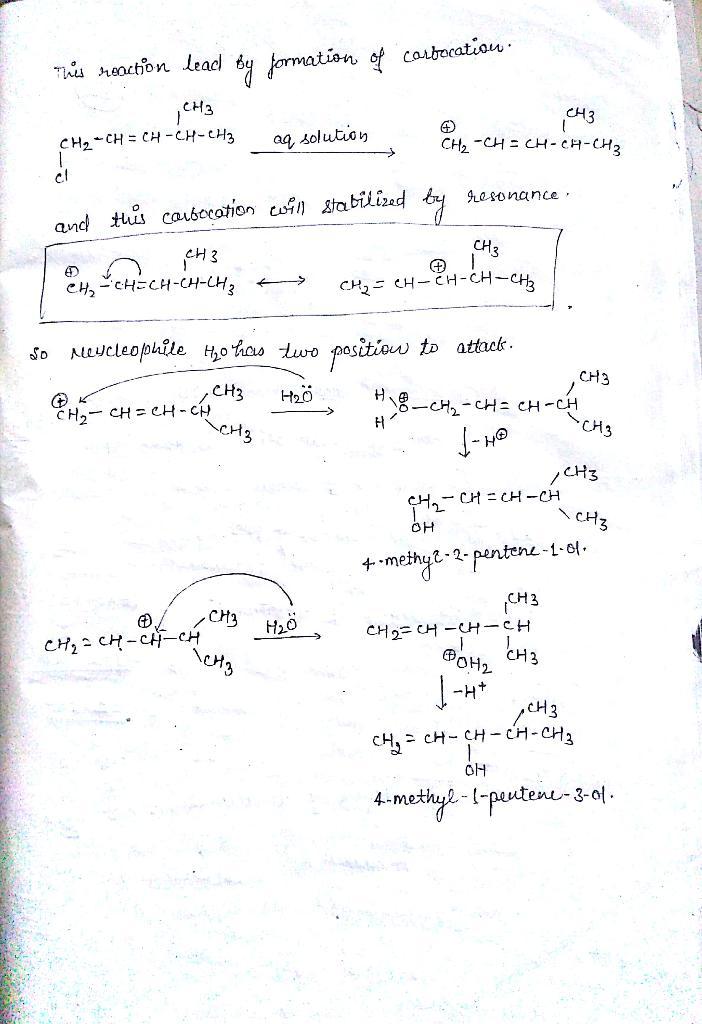
1-chloro-4-methyl-2-pentene undergoes hydrolysis in warm water to give a mixture of 4-methyl-2-penten-1-ol and 4-methyl-1-penten
agasfer [191]

Answer:

Explanation:

attached here is the diagram representing the structure

4 0
2 years ago
Which of the following is not a common use of gypsum? a. wallboard/drywall for homes b. a primary ingredient for toothpaste c. s
Nataliya [291]

Answer:

pH reducing agent for acidic soils

Explanation:

Gypsum is not used to reduce soil pH because it will displace the soil H+ but there's no means of extracting the H from the soil. So the pH of the soil remains the same.

3 0
2 years ago
If you were to perform the reaction KCl (s)→K+ (g)+ Cl−(g), would energy be absorbed or released? Lattice Energies for Some Ioni
lina2011 [118]

Answer:

Energy would be absorbed.

Explanation:

Lattice energy is defined as the energy required to break apart an ionic solid and convert its component atoms into gaseous ions. That is what you're doing in:

KCl (s) → K⁺(g) + Cl⁻(g)

The energy you require to obtain this reaction is 701 kJ/mol. As the value is positive, <em>energy would be absorbed.</em>

<em />

I hope it helps!

6 0
2 years ago
What is the molarity of a naoh solution if 11.9 ml of a 0.220 m h2so4 solution is required to neutralize a 25.0-ml sample of the
bulgar [2K]
0.355M x 0.0282L= 0.01 moles of H2SO4. Remember sulphuric acid is diprotic so it will release 2 from each molecule. 
<span>So moles of protons = 0.01 x 2 = 0.02 moles of H+ </span>
<span>For neutralization: moles H+ = moles OH- </span>
<span>Therefore moles of NaOH = 0.02 </span>
<span>conc = moles / volume </span>
<span>Conc NaOH = 0.02 / 0.025L = 0.8M </span>

4 0
2 years ago
Read 2 more answers
Other questions:
  • A gas can holds 2.9 gal of gasoline.<br><br><br> What is this quantity in cubic centimeters?
    5·1 answer
  • Caculate the mass of oxygen needed to burn 175.0grams of octane
    5·1 answer
  • In the diagram below, particles of the substance are moving from the liquid phase to the gas phase at the same rate as they move
    11·2 answers
  • Why would it be better to be an r-selected species if the water resources in an area were to become more limited over a short pe
    8·2 answers
  • 40pionts
    9·1 answer
  • CuSO4 absorbs light strongly at a wavelength of 635 nm. Consider that you measure the initial intensity of light, Io, entering t
    5·1 answer
  • After recrystallization, the final weight of biphenyl is found to be 0.02 g. Assume that all steps were carried out correctly, n
    7·1 answer
  • For each of the described sets of data, choose the graph that best displays the data.
    8·2 answers
  • 3. Which of these statements is an accurate description of the ionization energies of elements in the periodic table?
    15·1 answer
  • The density of honey is 1.42 g/mL. If you poured honey into a glass of water, would it sink to the bottom or float on top? Expla
    11·1 answer
Add answer
Login
Not registered? Fast signup
Signup
Login Signup
Ask question!