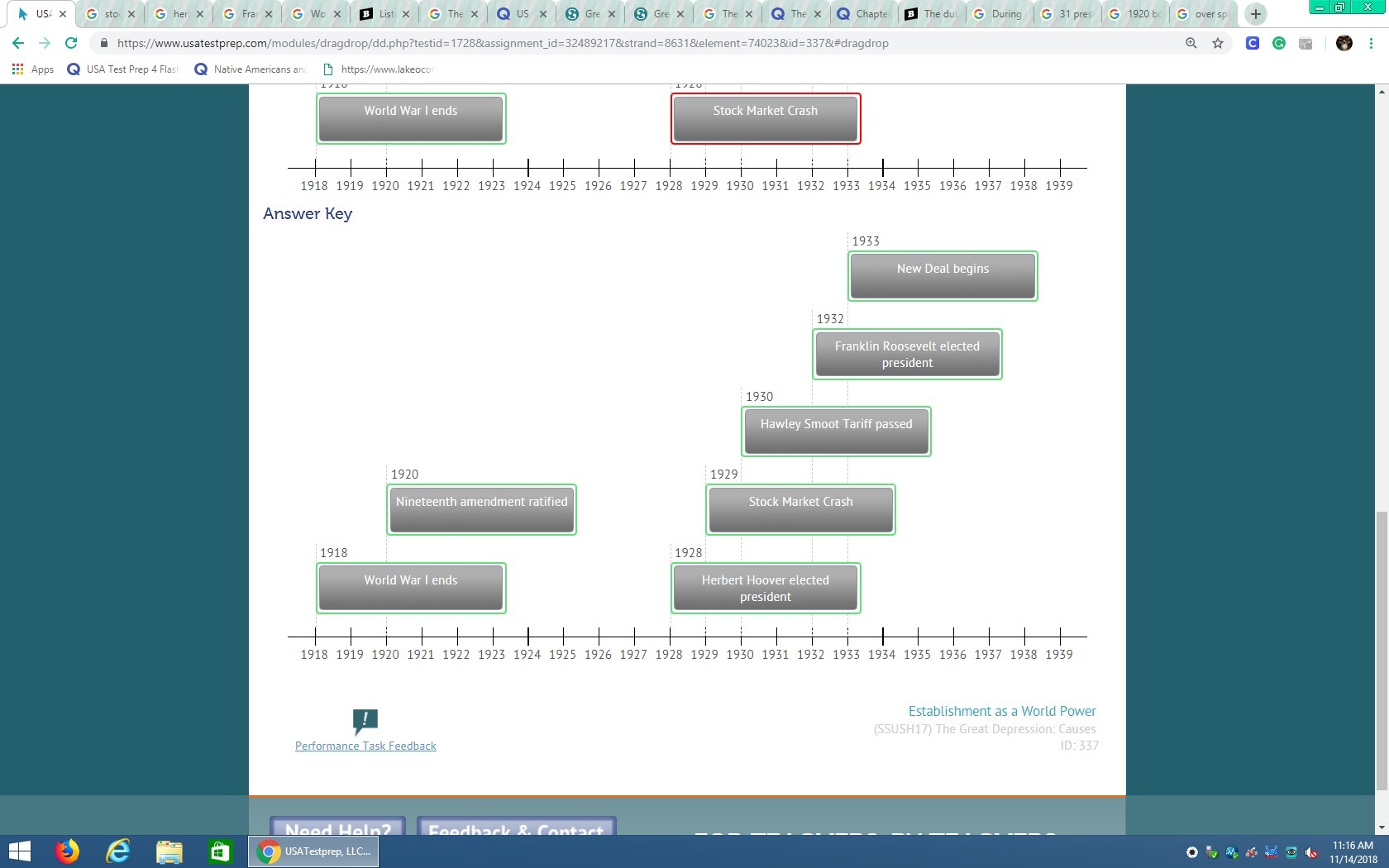
answer.
Ask question
Login Signup
Ask question
All categories
  • English
  • Mathematics
  • Social Studies
  • Business
  • History
  • Health
  • Geography
  • Biology
  • Physics
  • Chemistry
  • Computers and Technology
  • Arts
  • World Languages
  • Spanish
  • French
  • German
  • Advanced Placement (AP)
  • SAT
  • Medicine
  • Law
  • Engineering
Ede4ka [16]
2 years ago
15

Listed in the Item Bank are a number of key events from this field. Some events have more details available when you click on th

em. Drag and drop the events in chronological order by placing each in its corresponding open rectangle. If there is overlapping, simply trace the dashed line down to the timeline for clarification.
ITEMBANK: Move to Bottom
Brown recognizes and names the cell nucleusHooke coins the word cell after viewing cork cells with primitive microscopePasteur disproves spontaneous generation and proposes germ theorySchleiden & Schwann propose cell theoryVirchow describes cell division; proposes that all cells arise from other cellsvan Leeuwenhoek discovers bacteria with his improved microscope

Chemistry
2 answers:
Stella [2.4K]2 years ago
8 0

Here are the key events listed in chronological order with their corresponding year.


1. Hooke coins the word cell after viewing cork cells with primitive microscope. (1665)

2. van Leeuwenhoek discovers bacteria with his improved microscope. (1676)

3. Brown recognizes and names the cell nucleus. (1831)

4. Schleiden & Schwann propose cell theory. (1839)

5. Virchow describes cell division; proposes that all cells arise from other cells. (1855)

<span>6. Pasteur disproves spontaneous generation and proposes germ theory. (1861)</span>

maks197457 [2]2 years ago
5 0

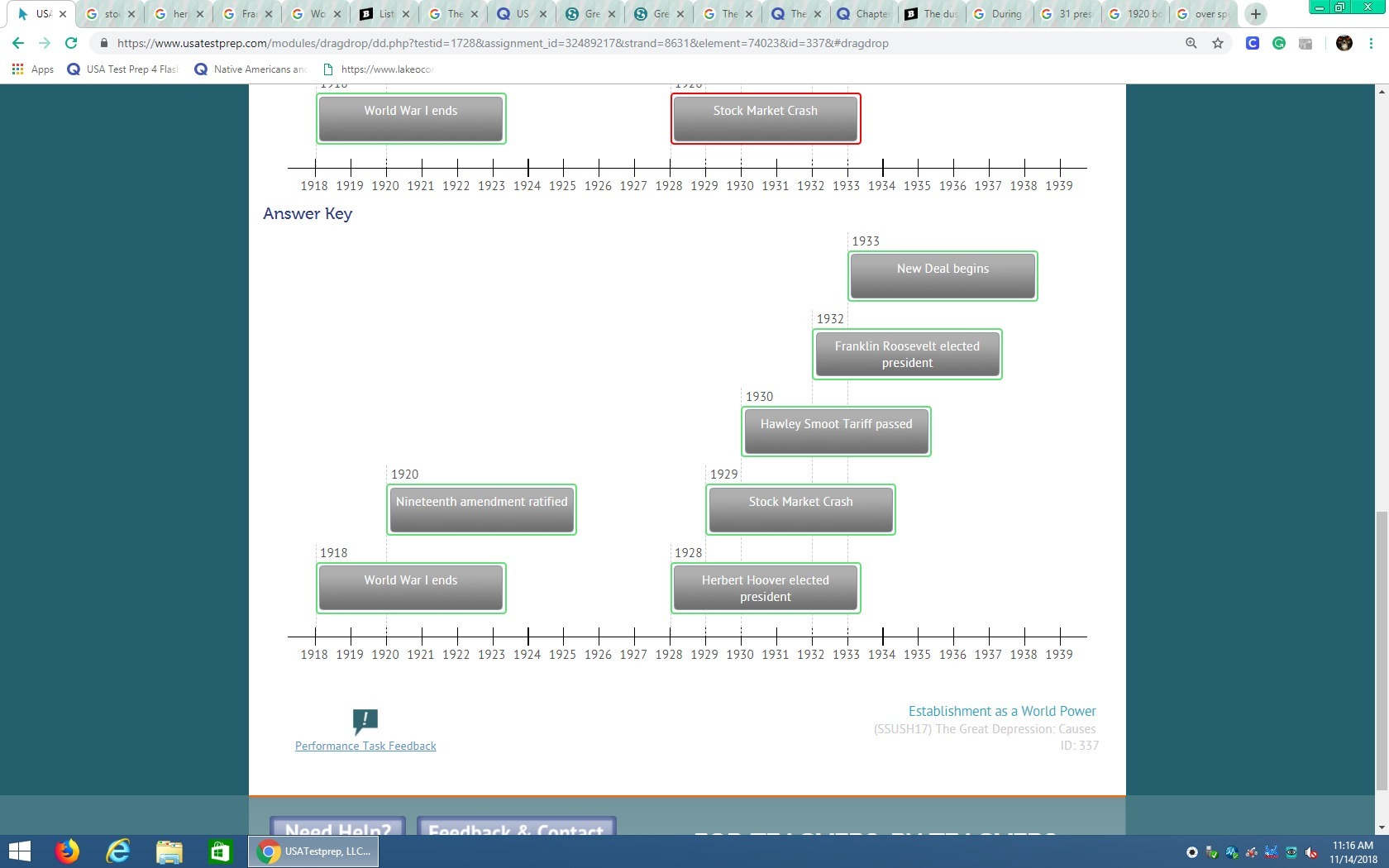
this is usa test prep answer


You might be interested in
The chlorination of methane occurs in a number of steps that results in the formation of chloromethane and hydrogen chloride. Th
kenny6666 [7]

Answer:

Total pressure = 0,806 atm

Partial pressure of CH₄: 0,037 atm

Partial pressure of Cl₂: 0,396 atm

Partial pressure of CH₃Cl: 0,125 atm

Partial pressure of HCl: 0,125 atm

Partial pressure of Cl⁻: 0,125 atm

Explanation:

For the reaction:

2CH₄(g)+3Cl₂(g)⟶2CH₃Cl(g)+2HCl(g)+2Cl⁻(g)

295 mL≡ 0,295L of methane at STP are:

n = PV/RT

P = 1 atm; V = 0,295L; R = 0,082atmL/molK; T = 273K.

moles of methane: 0,0132 moles

For 725 mL of chlorine ≡ 0,725L

moles of chlorine at STP are: ≡ 0,0324 moles

For a complete reaction of 0,0132 moles of CH₄:

0,0132 mol CH₄× \frac{3molCl_{2}}{2 molCH_{4}} = <em>0,0198 moles</em>

The reaction reaches 77%, moles of Cl₂ that react are: 0,0198×77% = 0,0153 mol

As you have 0,0324 moles of Cl₂, moles that will not react are:

0,0324 - 0,0153 = <em>0,0171 mol Cl₂</em>

As the reaction reaches 77% completion, moles of CH₄ that react are:

0,0132×77% =<em> 0,0102 moles of CH₄ And the moles that don't react are </em><em>0,00300 mol</em>

Thus, moles of each compound are:

0,0102 moles of CH₄×\frac{3Cl_{2}}{2 molCH_{4}}= <em>0,0153 mol  + 0,0171 mol = 0,0324 mol Cl₂</em>

0,0102 moles of CH₄×\frac{2CH_{3}Cl}{2 molCH_{4}}= <em>0,0102 mol CH₄</em>

0,0102 moles of CH₄×\frac{2HCl}{2 molCH_{4}}= <em>0,0102 mol HCl</em>

0,0102 moles of CH₄×\frac{2Cl^{-}}{2 molCH_{4}}= <em>0,0102 mol Cl⁻</em>

Total pressure using:

P = nRT/V

Where: n = 0,0102mol×3+0,0324mol + 0,0030mol = 0,0660mol; R = 0,082 atmL/molK; T = 298K; V = 2L

Total pressure = 0,806 atm

Partial pressure of CH₄: 0,037 atm

Partial pressure of Cl₂: 0,396 atm

Partial pressure of CH₃Cl: 0,125 atm

Partial pressure of HCl: 0,125 atm

Partial pressure of Cl⁻: 0,125 atm

<em>-To obtain partial pressure you change the moles for each compound-</em>

<em />

I hope it helps!
5 0
2 years ago
A person loses 2.70 lbs in two weeks how many grams did he lose?
Evgesh-ka [11]
He person lost 1224.7 grams.
6 0
3 years ago
Read 2 more answers
From the following enthalpy of reaction data and data in Appendix C, calculate ΔH∘f for CaC2(s): CaC2(s)+2H2O(l)→Ca(OH)2(s)+C2H2
sashaice [31]

Answer:

From the following enthalpy of reaction data and data in Appendix C, calculate ΔH∘f for CaC2(s): CaC2(s)+2H2O(l)→Ca(OH)2(s)+C2H2(g)ΔH∘=−127.2kJ

ΔHf°(C2H2) = 227.4 kJ/mol

ΔHf°(H2O) = -285.8 kJ/mol and

ΔHf°(Ca(OH)2) = -985.2 kJ/mol

(Ans)

ΔHf° of CaC2 = -59.0 kJ/mol

Explanation:

CaC2(s) + 2 H2O(l) → Ca(OH)2(s) + C2H2 (g) = −127.2kJ

ΔHrxn = −127.2kJ

ΔHrxn = ΔHf°(C2H2) + ΔHf°(Ca(OH)2) - ΔHf°(CaC2)- 2ΔHf°(H2O);

ΔHf°(CaC2) = ΔHf°(C2H2) + ΔHf°(Ca(OH)2) - 2ΔHf°(H2O) – ΔHrxn

Where

ΔHf°(C2H2) = 227.4 kJ/mol

ΔHf°(H2O) = -285.8 kJ/mol and

ΔHf°(Ca(OH)2) = -985.2 kJ/mol

ΔHf°(CaC2) =227.4 - 985.2 + 2x285.8 + 127.2 = -59.0 kJ/mol

ΔHf°(CaC2) = -59.0 kJ/mol

7 0
2 years ago
Be sure to answer all parts. liquid ammonia autoionizes like water: 2nh3(l) → nh4+(am) + nh2−(am) where (am) represents solvatio
Genrish500 [490]
Answer is: concentration of ammonium ions are 7,14·10⁻¹⁴ M.
Chemical reaction: 2NH₃(l) → NH₄⁺(am) + NH₂⁻(am).
Kam = 5,1·10⁻²⁷.
[NH₄⁺] · [NH₂⁻] = x; equilibrium concentration of cations and anions.
Kam = [NH₄⁺] · [NH₂⁻].
Kam = x².
x = [NH₄⁺] = √5,1·10⁻²⁷.
[NH₄⁺] = 7,14·10⁻¹⁴ M.

5 0
2 years ago
Which of the following type of protons are chemically equivalent? A) homotopic B) enantiotopic C) diastereotopic A &amp; B B &am
Rina8888 [55]

Answer:

A) homotopic and B) enantiotopic

Explanation:

Protons chemically equivalent are those that have the same chemical shift, also if they are interchangeable by some symmetry operation or by a rapid chemical process.

The existence of symmetry axes, Cn, that relate to the protons results in the protons being homotopic, that is chemically equivalent in both chiral and aquiral environments.

The existence of a plane of symmetry, σ, makes the protons related by it, are enantiotopic and these protons will only be equivalent in an aquiral medium; if the medium is chiral both protons will be chemically NOT equivalent. The existence of a center of symmetry, i, in the molecule makes the related protons through it enantiotopic and therefore chemically only in the aquiral medium.

Diastereotopic protons cannot be interconverted by any symmetry operation and they are different, with different chemical displacement.

6 0
2 years ago
Other questions:
  • The natural source of acidity in rain water is _____. carbonic acid sulfuric acid nitric acid all of the above
    13·2 answers
  • Use the conversion factor 1amu=6.66054 x 10^-24 to answer the following questions.. . a) 1.674 x 10^-24 g of neutrons is how man
    5·2 answers
  • How many kilojoules are required to melt 15g of ice at 0c and raise the temperature of the liquid that forms to 85c?
    12·2 answers
  • How much heat is required to increase the temperature of 100.0 grams of iron from 15.0oC to 40.2oC? (The specific heat of iron i
    10·2 answers
  • A certain gas is present in a 12.0 L cylinder at 4.0 atm pressure. If the pressure is increased to 8.0 atm the volume of the gas
    13·2 answers
  • The volume of a gas at 7.00°c is 49.0 ml. if the volume increases to 74.0 ml and the pressure is constant, what will the tempera
    14·1 answer
  • Why are chemical tests necessary to tell a dextrose solution from a saline solution?
    14·1 answer
  • If 10.0 liters of h2(g) at STP is heated to a temperature of 546 K, pressure remaining constant, the new volume of the gas will
    7·1 answer
  • To calculate the relative age of rocks, geologists use the rate of radioactive decay of isotopes present in their samples. What
    6·1 answer
  • Calculate the molar mass of a 2.89 g gas at 346 ml, a temperature of 28.3 degrees Celsius, and a pressure of 760 mmHg.
    14·1 answer
Add answer
Login
Not registered? Fast signup
Signup
Login Signup
Ask question!