answer.
Ask question
Login Signup
Ask question
All categories
  • English
  • Mathematics
  • Social Studies
  • Business
  • History
  • Health
  • Geography
  • Biology
  • Physics
  • Chemistry
  • Computers and Technology
  • Arts
  • World Languages
  • Spanish
  • French
  • German
  • Advanced Placement (AP)
  • SAT
  • Medicine
  • Law
  • Engineering
kondor19780726 [428]
2 years ago
7

If there are two similar,oxygen -containing ions, the ion with more oxygen atoms ends in

Chemistry
2 answers:
Taya2010 [7]2 years ago
5 0
The answer is  -ate:

If there are two similar, oxygen-containing ions, the ion with more oxygen atoms ends in -ate.     
olga nikolaevna [1]2 years ago
5 0

-ate, on the quiz b.

You might be interested in
You have four water samples at different temperatures. In which sample are the molecules vibrating at the fastest speed? A. wate
tatiyna

Answer:

99°C

Explanation:

asking questions is Best in life of education

4 0
2 years ago
For the Bradford assay, the instructor will make a Bradford reagent dye by mixing 50 ml of 95% v/v ethanol with 100 mg of Coomas
jolli1 [7]

Answer:

4,25% v/v H3PO4

Explanation:

The concentration of phosphoric acid (H3PO4) is expressed as a volume / volume percentage, which means:

%v/v H3PO4 = (mL of pure H3PO4/mL of solution)*100%

In other words, <u>we are only interested in the final volume of the solution to which the phosphoric acid was diluted, regardless of its composition</u>. Which in this case is 1 L (1000 mL).

We can then apply the following equation, commonly used to calculate the initial or final concentration (or volume) of a substance when it is diluted:

Ci*Vi=Cf*Vf

<u>Where</u>:

Ci, is the initial concentration of the substance.

Vi, the initial volume of the substance

Cf, the final concentration reached after dilution

Vf, the final volume of the solution at which the substance was diluted

In this case, the incognite would be the final concentration of H3PO4 reached after dilution, that is, Cf. Therefore, we proceed to clear Cf from the previous equation and replace our data:

Cf = (Ci*Vi)/Vf = (85% v/v * 50 mL)/1000 mL = 4,25 % v/v

Note that being up and down in the division, the mL unit is canceled to result in% v / v.

7 0
2 years ago
What effect do tube dwelling worms have on mudflat ecosystems?
pentagon [3]
Earthworms influence (and benefit) the soil ecosystem in a number of ways: Recycling organic material: Earthworms, along with bacteria and fungi, decompose organic material. ... Improving soil structure: Earthworm burrows alter the physical structure of the soil. They open up small spaces, known as pores, within the soil.
8 0
2 years ago
Give the product for the reaction of 1-butene with methanol in the presence of acid. The mechanism is the same as the mechanism
Nuetrik [128]

Answer:

The final result is <u>2-methoxybutane. </u>

<u />

Explanation:

1-butene has a carbon-carbon double bound between C1 and C2.

When it will react with methanol, in the presence of an acid, the result will be an ether.

C4H8 + CH3OH → C5H12O

An acid-catalyzed ether synthesis from alkenes is limited by carbocation stability.

In the first step, the double bound will disappear. The C2 atom will be a C+ atom, this becaus it has only 3 bounds and not 4.

This C+ -atom will atract the O- atom to form an ether. The CH3 of methanol will bind on the C3 atom, this is the most stable position.

2-methoxybutane will be formed. It has a structural formula of C5H12O

1-methoxybutane will not be formed, because it's less stable.

1-butanol will be formed when water is added to 1-butene. The mechanism has the same principle but not the same product.

1-ethoxybutane and 2-ethoxybutane have a structural formula of C6H14O, this will not be the final result.

The final result is <u>2-methoxybutane. </u>

<u />

8 0
2 years ago
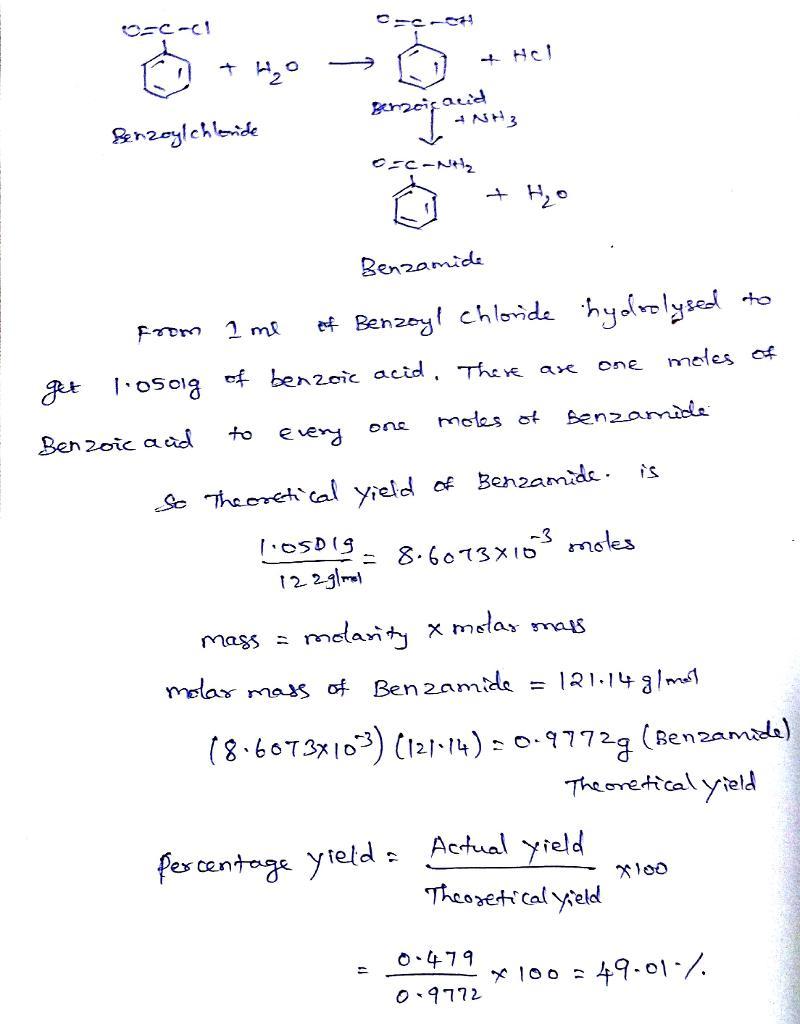
Consider the ammonolysis of benzoyl chloride by adding concentrated ammonium hydroxide to form the final product, benzamide. Rea
gizmo_the_mogwai [7]

Answer:

Explanation: see attachment below

4 0
2 years ago
Other questions:
  • What is the main difference between the alpine tundra and the arctic tundra? a. The alpine tundra includes trees. b. The alpine
    10·2 answers
  • Caculate the mass of oxygen needed to burn 175.0grams of octane
    5·1 answer
  • Instrumental methods need only a microscopic sample to return an accurate result. Why is this so?
    7·1 answer
  • The lab procedure involves several factors, listed below. Some were variable and some were constant. Label each factor below V f
    8·2 answers
  • An unknown compound with a molar mass of 223.94 g/mol consists of 32.18% c, 4.50% h, and 63.32% cl. find the molecular formula f
    7·1 answer
  • Given the equilibrium constants for the following two reactions in aqueous solution at 25 ∘C HNO2(aq)H2SO3(aq)⇌⇌H+(aq) + NO2−(aq
    11·1 answer
  • 6. Find the number of centimeters in 1.00 x 10² yards. (1 yd = 3 ft, 1 ft = 12 in, 2.54 cm = 1
    5·1 answer
  • If a neutral atom has 10 neutrons and 8 electrons how many protons does it have????
    8·2 answers
  • For which of these processes is the value of ΔH expected to be negative?I. The temperature (of water) increases when calcium chl
    15·1 answer
  • The equilibrium reaction below has the Kc = 4.00 at 25°C. If the temperature of the system at equilibrium is increased to 100°C,
    11·1 answer
Add answer
Login
Not registered? Fast signup
Signup
Login Signup
Ask question!